
Last Tuesday, you might have stood in your garden or laundry room, looking at a simple task and wondering if today was a "good day" or a "pain day." For many people in Melbourne, the desire to stay active is often overshadowed by a genuine fear of injury or the crushing weight of persistent fatigue. It's exhausting to feel like your body is no longer your own, and even more confusing when you're trying to figure out how NDIS or Medicare funding fits into the picture. Finding the right exercise physiology for chronic conditions is about more than just fitness; it's about finding a clinical partner who acknowledges that you're likely feeling overwhelmed before offering a clear, safe way forward.
We believe that movement should be a tool for empowerment, not a source of anxiety. By following a structured, supervised health plan, you can begin to reduce pain levels and improve your ability to perform daily tasks like hanging out the laundry or tending to the garden. This article explores how accredited exercise physiology provides a clinical pathway to managing long-term illness and reclaiming your independence. We'll also break down the complexities of funding schemes, giving you the confidence to access the support you need without the administrative headache.
Key Takeaways
- Understand the vital distinction between general gym-based fitness and the clinical exercise prescribed by university-qualified Accredited Exercise Physiologists.
- Learn how targeted movement reshapes long-term health by reducing systemic inflammation and improving circulation for cardiovascular and metabolic conditions.
- Navigate the Australian healthcare system with ease by learning how to access exercise physiology for chronic conditions through Medicare CDM plans or NDIS funding.
- Discover how a structured health plan can help you reclaim your independence, making daily activities like gardening or hanging the laundry more manageable.
- Identify the value of a local clinical partnership in Templestowe that offers expert guidance and handles the complex paperwork on your behalf.
Understanding Exercise Physiology for Chronic Conditions
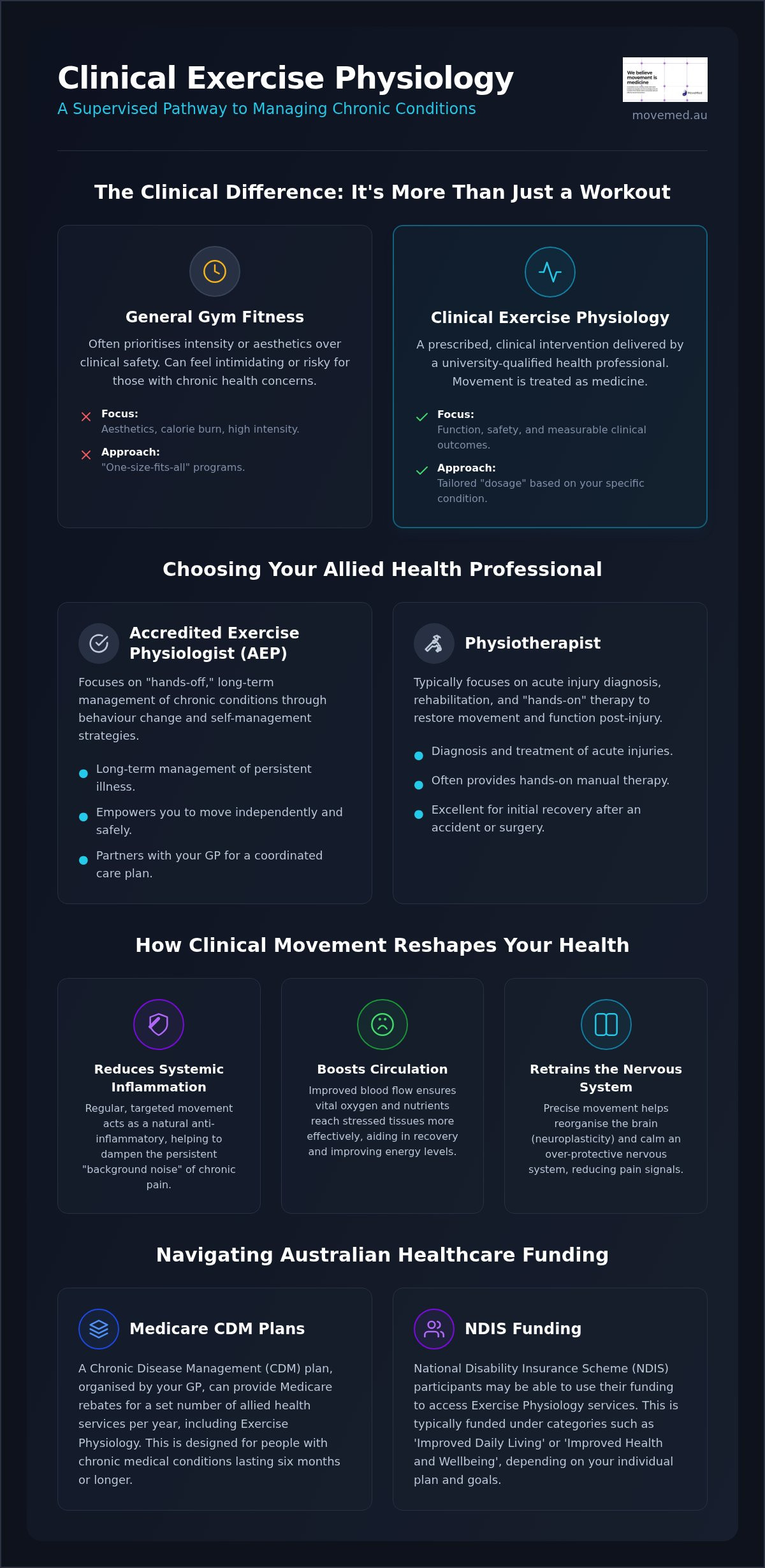
If you've ever felt that a standard gym is more intimidating than helpful, you aren't alone. An Accredited Exercise Physiologist (AEP) is a university-qualified allied health professional who understands that movement is a clinical intervention. In the Australian health system, this is often called "Exercise as Medicine." This approach treats physical activity as a prescribed dosage, carefully measured to manage symptoms. Using exercise physiology for chronic conditions allows us to treat movement as a path to recovery rather than just a way to burn calories.
To truly understand the foundation of this field, it helps to look at What is Exercise Physiology? and how it has evolved from a sports science discipline into a critical branch of medical care. Unlike a personal trainer, an AEP is an Accredited professional registered with ESSA (Exercise & Sports Science Australia). They focus on clinical outcomes like blood pressure regulation, glucose control, and systemic pain reduction rather than just aesthetic goals.
General fitness often prioritises intensity or aesthetics. Clinical exercise, however, prioritises function and safety. An AEP looks at how your heart, lungs, and muscles respond to movement under the specific pressure of a condition like fibromyalgia or chronic heart failure. This distinction is what makes the clinical pathway so effective for those who have previously found exercise too painful or exhausting to maintain.
The Role of an AEP in Your Healthcare Team
Safe movement begins with a clinical assessment. Your AEP works as a partner alongside your GP and specialists to ensure every prescribed movement is safe for your specific diagnosis. This collaboration is vital because a "one-size-fits-all" exercise plan is often risky for those with chronic illness. We focus on empowering you through long-term behaviour change, moving you from a state of "being treated" to a state of active self-management.
The ultimate goal isn't for you to be dependent on a clinic forever. We aim for sustainable behaviour change. This means teaching you how to monitor your own exertion levels and how to adjust your activity based on how you feel each morning. It's about giving you the confidence to move independently in your own home or local park, knowing exactly what your body can handle.
AEP vs Physiotherapy: Choosing the Right Support
People often wonder if they need a Physiotherapist or an Exercise Physiologist. While Physiotherapists typically focus on acute injury diagnosis and "hands-on" therapy, exercise physiology for chronic conditions is about the "hands-off" long-term management of health. These two roles often overlap and work best as part of a multidisciplinary team. If you're looking for more detail on these differences, check out our resource on what is exercise physiology.
The Clinical Science: How Targeted Movement Reshapes Long-Term Health
The human body is remarkably resilient. Even when living with a persistent illness, your tissues and systems retain the ability to undergo physiological adaptation (the process where the body gets stronger in response to specific stress). This is why exercise physiology for chronic conditions is so effective. It isn't about pushing through pain, but rather stimulating the body to improve its efficiency. Research from the Mayo Clinic highlights how exercise can help manage chronic conditions by improving heart health, joint mobility, and overall resilience.
On a cellular level, targeted movement acts as a natural anti-inflammatory. Regular, clinical activity helps reduce systemic inflammation (long-term swelling in the body's tissues) while simultaneously boosting circulation. Improved blood flow ensures that oxygen and nutrients reach stressed areas more effectively. This biological shift is a cornerstone of recovery, helping to dampen the persistent "background noise" of chronic pain that often accompanies long-term illness.
We also consider neuroplasticity, which is the brain's ability to reorganise itself. In chronic pain, the nervous system often becomes over-protective, sending pain signals even when there is no new injury. Precise movement helps retrain the brain to distinguish between "hurt" and "harm," gradually lowering the sensitivity of these signals. Finding the right "dosage" is key. We call this the Goldilocks zone: an amount of activity that is enough to trigger a positive change, but not so much that it causes a flare-up.
Managing Symptoms Without Flaring Up
Success in a clinical programme depends on careful monitoring of fatigue and pain. We use specific techniques to ensure you stay within your safe limits, focusing on how your body responds both during and after a session. Pacing is a clinical tool for energy conservation that involves breaking activities into smaller, manageable chunks to prevent total exhaustion. By focusing on gradual progression, we ensure your body has time to recover and adapt. If you're ready to find your own balance, our team can help you partner with a local expert to guide your recovery.
The Mental Health Connection: Confidence and Agency
Living with a chronic condition often feels like losing your agency. You might start to feel "broken" or limited by what you can't do. As physical capacity improves, we often see a profound shift in mental resilience. Moving from a state of fear to a state of capability reduces anxiety and builds self-efficacy. In our community-based clinical settings, many people find that the social connection is just as healing as the physical movement itself. It’s about more than just a stronger body; it’s about feeling capable and independent again.
A Roundup of Chronic Conditions Managed by Exercise Physiologists
The Role of an Accredited Exercise Physiologist extends far beyond the gym floor. These specialists are trained to manage cardiovascular health by helping patients regulate blood pressure and recover from heart disease in a safe, monitored environment. For those living with metabolic conditions like Type 2 Diabetes, exercise physiology for chronic conditions provides a structured way to improve insulin sensitivity and manage blood glucose levels. We also focus on bone health, using weight-bearing movements to combat the progression of Osteoporosis and maintain skeletal integrity. By treating movement as a clinical dosage, we can address the underlying physiological needs of your body while respecting its current limits.
Arthritis and Joint Pain Management
Joint pain often makes people want to stop moving, but this usually leads to more stiffness and a loss of muscle support. Clinical movement helps by stimulating the production of synovial fluid (the body's natural joint lubricant) while simultaneously strengthening the muscles that protect your joints. For those with hip or knee Osteoarthritis, we often recommend the evidence-based GLA:D® program to improve daily function. If your discomfort is centred in the spine, you might find that clinical pilates for back pain offers the specific stability and spinal support you need to move without fear of a flare-up.
Neurological and Age-Related Conditions
Maintaining independence as we age requires a focus on balance and falls prevention, particularly for our Templestowe seniors. Neurological support for conditions like Parkinson’s, Multiple Sclerosis (MS), or stroke recovery involves specific exercises that promote better coordination and neuroplasticity. Physical activity has also been shown to support cognitive function by increasing blood flow to the regions of the brain responsible for memory and focus. To learn more about building physical resilience in later life, explore our guide on strength training for seniors Templestowe.
Chronic Pain and Fibromyalgia
For those managing the complexities of chronic pain, finding a balance between clinical activity and deep rest is essential. Restorative practices such as Massoga® Massage Yoga can provide a powerful adjunct to your rehabilitation, using a combination of Yin yoga and massage to help calm the nervous system and promote recovery.
Conditions like Fibromyalgia require a gentle, highly specific approach to movement. The primary goal is to desensitise a nervous system that has become over-reactive, teaching the brain that movement is safe rather than a threat. Hydrotherapy is an excellent entry point for many, as the warmth and buoyancy of the water reduce the impact on painful tissues. Combining these supervised sessions with chronic pain management techniques can help you build a sustainable routine that prioritises your long-term relief and energy conservation.
Navigating the Australian Healthcare System: Funding and Referrals
Accessing professional support shouldn't feel like a full-time administrative job. In Australia, the path to exercise physiology for chronic conditions often starts at your local GP clinic. Through a Chronic Disease Management (CDM) plan, you can access a Medicare rebate of $63.40 per session for up to five allied health services each calendar year. This scheme is designed specifically for those with complex needs that have been present for six months or longer. If you have private health insurance, it's also worth checking your "Extras" cover. Many funds provide rebates for EP services without needing a GP referral, though the amount depends on your specific level of cover.
We understand that the paperwork can be overwhelming when you're already dealing with pain or fatigue. Our role is to act as your advocate, helping you understand which funding stream best supports your long-term goals. Whether you are using Medicare, private insurance, or a specialised scheme, the focus remains on providing a clinical pathway that prioritises your safety and independence.
NDIS Exercise Physiology in Melbourne’s East
For NDIS participants, exercise physiology is typically funded under the "Improved Health and Wellbeing" or "Improved Daily Living" categories. As of July 2026, the maximum hourly rate for these capacity-building supports is $161.99. Our AEPs help you bridge the gap between clinical therapy and community participation. We focus on goals like improving mobility to use public transport or building the strength to manage household tasks independently. There's a distinct difference between general recreation and the therapeutic support provided by an AEP, as every session is mapped directly to your NDIS plan goals. You can find more detail in our ndis exercise physiology guide.
DVA and TAC: Specialised Funding Pathways
We are proud to serve the veteran community across Templestowe and Doncaster. For eligible veterans with a Gold or White Card, DVA provides fully funded exercise physiology to manage chronic conditions or service-related injuries. Similarly, if you're recovering from a transport accident, TAC funding covers clinical exercise to help you return to work and daily life. WorkSafe Victoria also provides specific rates for consultations, with an initial assessment starting at $131.12 as of July 2026. For local veterans, our dva funded exercise physiology resource explains how to get started with a D904 referral.
Navigating these systems can feel daunting, but you don't have to do it alone. We take the time to sit with you, explain the requirements, and handle the complicated paperwork so you can focus on your health. If you're unsure which funding pathway applies to you, contact our Templestowe team for a confidential chat about your options.
Why a Local Clinical Partnership in Templestowe Makes the Difference
Choosing the right clinic is about finding a team that understands your local environment and the specific challenges you face. In the Eastern suburbs of Melbourne, we provide exercise physiology for chronic conditions that is deeply rooted in the community. Our Templestowe clinic serves as a hub for residents in Doncaster, Bulleen, and Warrandyte, offering a clinical environment that feels like a supportive neighbourhood ally rather than a sterile medical chain. We've built strong relationships with local hydrotherapy pools and community centres, ensuring your transition from clinic-based therapy to community participation is seamless and stress-free.
Your First Appointment: What to Expect at MoveMed
Your journey begins with a comprehensive clinical assessment. This isn't just a physical check; it's a deep dive into your medical history and current capacity. We take the time to listen to your experiences with pain and fatigue, acknowledging that these factors are often invisible to others. Together, we'll set meaningful, practical goals. For some, it’s the ability to walk to the local shops without resting; for others, it’s being able to play with grandchildren on the floor or manage the gardening. Once we understand your "why," we create a personalised management plan that outlines a safe, evidence-based pathway forward.
A Long-Term Partner in Your Health Journey
As your capacity grows, your programme needs to grow with you. We provide ongoing support and regular programme adjustments to ensure you're always moving in the "Goldilocks zone" (the space we discussed earlier where you're challenged but not overloaded). The MoveMed commitment is about more than just physical metrics; it’s about the quiet confidence that comes from knowing your body is capable again. We're here to guide you through the setbacks and celebrate the milestones, ensuring you never feel like you're navigating your health journey alone. If you're ready to start your next chapter, Book your initial consultation at MoveMed today.
Your Path to a More Capable Future
Managing a long-term illness is a marathon, not a sprint. We've explored how university-qualified AEP Accredited Professionals use the clinical science of movement to retrain your nervous system and strengthen your body's resilience. Whether you're navigating the complexities of NDIS funding or seeking a Medicare-rebated plan through your GP, the right support is available right here in Melbourne's east. Choosing exercise physiology for chronic conditions means choosing a partner who understands your pain and has the specialist knowledge to help you move past it safely.
Our specialised Templestowe clinic is more than just a place to exercise; it's a community hub where participants find the expert-led care they deserve. As a registered NDIS, DVA, and TAC provider, we handle the logistics so you can focus on your recovery. You don't have to manage the paperwork or the physical burden alone. By focusing on small, sustainable gains, you can return to the activities that define your life, from gardening to walking the dog. Start your journey to better health: Book a MoveMed consultation today. Your path to a more capable, confident life is ready when you are.
Frequently Asked Questions
Do I need a GP referral to see an exercise physiologist for a chronic condition?
You don't necessarily need a GP referral to see us as a private client or under the NDIS. However, if you wish to claim the Medicare rebate or access support through DVA or TAC, a specific referral from your doctor is required. For Medicare, this is usually organised through a Chronic Disease Management plan. We recommend chatting with your GP to see if you're eligible for these funded pathways before your first visit.
Can I use my NDIS funding for exercise physiology at MoveMed?
Yes, MoveMed is a registered provider for NDIS participants, and you can certainly use your funding here. Most participants access our services under the "Improved Health and Wellbeing" or "Improved Daily Living" categories of their plan. As of July 2026, the maximum hourly rate for NDIS exercise physiology is $161.99. We work closely with you to ensure your clinical goals align perfectly with your broader NDIS plan for greater independence.
What is the difference between exercise physiology and a personal trainer?
The main difference lies in clinical expertise and university qualification. While a personal trainer focuses on general fitness and aesthetics for relatively healthy individuals, an Accredited Exercise Physiologist is an allied health professional. We are trained to manage complex medical needs and understand how exercise physiology for chronic conditions requires a deep knowledge of pathology. Every programme we design is evidence-based and tailored to your specific medical history and physical limitations.
Is exercise physiology covered by Medicare in Australia?
Yes, Medicare provides rebates for exercise physiology sessions if you have a Chronic Disease Management (CDM) plan from your GP. This plan allows you to claim a rebate of $63.40 per session for up to five services each calendar year. It's an excellent way to access professional exercise physiology for chronic conditions while reducing your out-of-pocket costs. We can help you navigate the paperwork to ensure your claims are processed smoothly.
How often should I attend exercise physiology sessions for chronic pain?
Most people find that attending one to two sessions per week provides the best balance for managing chronic pain. This frequency allows us to monitor your progress closely and make immediate adjustments to your programme based on your daily pain levels. Consistency is vital for retraining your nervous system and building physical resilience. Over time, as your confidence grows and your symptoms stabilise, we may transition you to a more independent home-based routine.
Will exercise physiology help with my fatigue levels?
Exercise physiology is highly effective at managing persistent fatigue, particularly through a clinical technique called pacing. We don't believe in "pushing through" exhaustion; instead, we teach you how to use your available energy more efficiently. By gradually increasing your activity levels in a controlled way, we can help improve your cardiovascular efficiency and muscular endurance. This approach often leads to a noticeable increase in your daily energy and a reduction in post-exertional malaise.
Is hydrotherapy better than gym-based exercise for arthritis?
Hydrotherapy is often an ideal starting point for arthritis because the warmth and buoyancy of the water reduce the load on your joints. This allows you to move with less pain while still building strength. However, gym-based clinical exercise is also important for long-term bone health and functional strength. Many of our clients find that a combination of both provides the best results, allowing them to enjoy the soothing benefits of water alongside the practical strength of land-based movement.
What should I wear to my first exercise physiology appointment?
We suggest wearing comfortable, loose-fitting clothing that allows you to move freely without restriction. Activewear or a simple t-shirt and shorts are perfect choices. It's also important to wear supportive, closed-toe shoes like sneakers or trainers to ensure your safety during physical tasks. If you are attending a hydrotherapy session, please remember to bring your swimwear and a towel. We have private changing facilities available at our Templestowe clinic for your convenience.


