

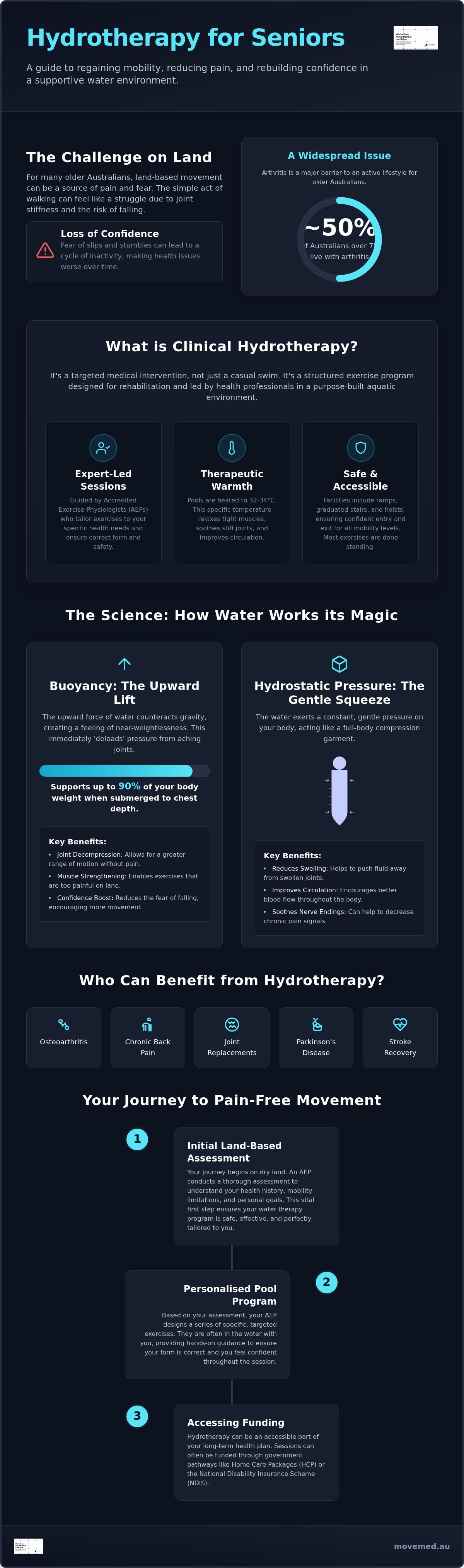
Did you know that nearly half of all Australians over the age of 75 currently live with the persistent ache of arthritis? It's a frustrating reality when the simple act of walking to the letterbox or playing with grandkids becomes a source of dread due to joint stiffness or a fear of falling. Many locals find that hydrotherapy for seniors offers the only pain-free way to stay active when land-based movement feels impossible. You likely feel that traditional exercise is simply too risky, leaving you stuck between wanting to stay healthy and fearing a trip or a stumble.
We understand that this loss of confidence can feel overwhelming, but it doesn't have to be your permanent state. In this guide, you'll discover how clinical water therapy reduces chronic pain and improves mobility through low-impact, expert-led exercise. We will explain why the physics of buoyancy (the upward force that supports your weight) is so effective for recovery. You will also learn how this clinical approach differs from a casual swim and find a clear roadmap for using Home Care Packages or NDIS funding to help you regain your independence.
Key Takeaways
- Learn why clinical water therapy is a targeted medical intervention led by Accredited Exercise Physiologists, offering a structured approach that goes beyond a standard leisure swim.
- Discover how buoyancy supports up to 90% of your body weight, allowing you to strengthen muscles without the joint pain often felt during land-based exercise.
- Understand the therapeutic benefits of hydrostatic pressure and warm water temperatures, which work together to reduce swelling and improve your circulation.
- Find out how to navigate government funding pathways to make hydrotherapy for seniors an accessible and affordable part of your long-term health plan.
- Prepare for your first visit by learning about the initial land-based assessment, a vital step in ensuring your pool program is safe and effective.
What is Water Therapy? Understanding Hydrotherapy for Seniors
When joint pain makes every step on solid ground feel like a struggle, the weightlessness of water offers a profound sense of relief. While you might be familiar with the general concept of What is Hydrotherapy?, clinical hydrotherapy for seniors is a specialised medical intervention rather than a casual dip in the local pool. It is a structured exercise program conducted in a purpose-built, heated environment designed specifically for rehabilitation and chronic disease management. This isn't about swimming laps or leisure. It's about targeted movement.
These sessions take place in water heated to between 32°C and 34°C. This warmth isn't just for comfort; it actively relaxes tight muscles and increases blood flow to stiff joints. Unlike a standard community pool, clinical centres feature accessibility aids like ramps, graduated stairs, and hoists to ensure you can enter and exit the water with total confidence. The primary goal is simple. We want to help you regain the mobility needed to enjoy your daily life with less pain and greater independence.
The Role of the Accredited Exercise Physiologist
You might wonder how this differs from a standard water aerobics class. The key lies in clinical oversight. At MoveMed, sessions are led by Accredited Exercise Physiologists (AEPs) who understand the complex relationship between ageing and physical function. An AEP doesn't just lead a group; they translate your individual health assessment into specific movements that target your unique needs. They are often in the water with you, ensuring your form is correct and your safety is never compromised. This level of precision is what turns a pool session into a powerful medical treatment. It's a partnership focused on your progress.
Who is Water Therapy For?
This therapy is particularly effective for those managing osteoarthritis, chronic back pain, or recovering from a hip replacement. The reduced gravity allows for movements that would be far too painful on land. It's also a vital tool for neurological recovery. For those living with Parkinson’s or recovering from a stroke, the water provides a safe, supportive environment to practice balance and coordination without the fear of a fall. Many of our clients in Doncaster and Templestowe find that hydrotherapy for seniors is the only time they feel truly light and mobile. You don't even need to be a swimmer to participate. Most clinical sessions occur in waist-deep water where your feet remain firmly on the pool floor. If you can stand, you can benefit.
The Science of Buoyancy: Why Water Therapy Works for Ageing Joints
Stepping into the pool isn't just about getting wet; it's about entering a precision-engineered environment where the laws of physics work in your favour. While land-based exercise often feels like a battle against gravity, the water creates a unique space where your body can heal without the usual constraints of weight and impact. For many, this environment is the only place where they can move through their full range of motion without the sharp, limiting pain of joint-on-joint friction.
The therapeutic power of water comes from more than just its temperature. It involves a combination of buoyancy, pressure, and resistance that targets the underlying causes of stiffness and instability. By understanding these principles, you can see why hydrotherapy for seniors is considered a clinical gold standard for rehabilitation rather than just a gentle activity.
Buoyancy and Joint Decompression
When you are submerged to chest depth, the water effectively supports up to 90% of your body weight. This creates a state of near-weightlessness that immediately "deloads" your spine, hips, and knees. Buoyancy is the upward force that counters gravity to protect arthritic joints. By removing the heavy burden of your own weight, you can perform exercises like squats or lunges that might be impossible on a gym floor.
Beyond the physical relief, there is a significant psychological benefit to this decompression. Many seniors live with a constant, underlying fear of falling during traditional workouts. In the water, that fear evaporates. You can challenge your balance and push your limits knowing the water will catch you, which builds the confidence needed to regain your independence on land.
Hydrostatic Pressure and Circulation
While buoyancy lifts you up, hydrostatic pressure (the force exerted by the water against your body) works from the outside in. This pressure acts like an invisible, all-encompassing compression sleeve. It is particularly effective at assisting venous return, helping your heart pump blood back from your lower limbs and significantly reducing oedema (swelling) in the ankles and feet. This gentle "squeeze" also provides constant sensory feedback to your brain, which helps improve proprioception (your body's awareness of its position in space) and overall balance.
This environment also allows for safe strength building through viscous resistance. Unlike a heavy dumbbell, water provides resistance that is perfectly proportional to the speed of your movement. If you move slowly, the resistance is light; if you push harder, the water pushes back. This ensures you are always working at a level that is safe for your current stage of recovery. If you're ready to see how these physical principles can help you move again, you can book a clinical assessment with our team to start your journey.
Water Therapy vs. Standard Swimming: Which is Better for Rehabilitation?
Many people assume that any time spent in a pool is beneficial for their health. While swimming laps is a fantastic cardiovascular workout for the general population, it often isn't the right choice for someone managing chronic pain or recovering from surgery. The physical demands of swimming are horizontal and repetitive. This can place significant strain on the neck and shoulders, making it difficult for those with a limited range of motion to maintain proper form. In contrast, hydrotherapy for seniors focuses on vertical, controlled movements that mimic daily life activities like walking, stepping, and reaching.
The Problem with Standard Lap Pools
Most public lap pools are kept at 26-28°C to accommodate active swimmers. For a senior with osteoarthritis or fibromyalgia, this temperature can cause a "cold shock" response where muscles tighten up to preserve heat. This tension, known as muscle guarding, makes it harder to move and can actually increase your pain levels. Additionally, public pools often lack the accessibility features we take for granted in a clinical setting. Navigating a slippery ladder or a crowded lane can be intimidating if you're worried about your balance. Clinical hydrotherapy centres use ramps and graduated stairs, ensuring your journey into the water is as safe as the exercise itself.
Why Clinical Supervision Matters
Exercising in a warm-water environment places unique demands on your heart and lungs. Without professional monitoring, it's easy to over-exert yourself because the water masks the usual signs of sweat and fatigue. Our Accredited Exercise Physiologists (AEPs) provide 1-on-1 or small-group supervision to monitor your heart rate and ensure your technique is perfect. This clinical focus prevents you from aggravating existing injuries while building the foundational strength needed for the next stage of your journey.
For many of our clients, this pool-based work is the perfect bridge to more advanced strength training for seniors in Templestowe. By combining the social support of a small group with the precision of medical guidance, you aren't just swimming; you are following a methodical roadmap to recovery. This supervised approach ensures that every movement you make in the water translates to better confidence and stability when you return to solid ground.
How to Access Funded Hydrotherapy in Templestowe and Surrounds
Navigating the various government funding streams in Australia can often feel like a full-time job. We understand that the paperwork is frequently the biggest barrier to starting the care you need. Whether you are managing the long-term effects of arthritis or recovering from a recent surgery, there are several pathways designed to make hydrotherapy for seniors accessible and affordable. Our team acts as your partner in this process, helping you understand which budget applies to your situation so you can focus entirely on your movement journey.
Navigating the Home Care Package (HCP)
If you are currently receiving a Home Care Package, you have the flexibility to include clinical exercise as part of your support plan. To access aged care funded therapy, the first step is a conversation with your Case Manager. They need to ensure the service aligns with your goals of staying safe and independent at home. A formal clinical recommendation from an Accredited Exercise Physiologist (AEP) is often the key to securing this funding. By focusing on balance and strength in the water, you are making a proactive investment that can reduce your risk of falls and hospitalisations. This is a highly cost-effective use of your package funds that pays dividends in your quality of life.
NDIS and DVA Support
For those living with a disability, NDIS exercise physiology is typically funded under Capacity Building categories. This funding is specifically for activities that help you improve your daily function and community participation. Similarly, veterans holding a DVA Gold or White card can access aquatic therapy after obtaining a D902 referral from their GP. We also work closely with the TAC and WorkCover for individuals recovering from transport accidents or workplace injuries. Our clinic serves locals across Templestowe, Doncaster, and Bulleen, and we are happy to handle the complicated administrative side of these claims for you. We believe that high-quality care should be accessible, and we are here to help you navigate the systems that make it possible. If you are ready to explore your funding options, you can contact our team today to discuss your specific needs.
Starting Your Journey: What to Expect in a MoveMed Session
Starting a new clinical program can feel daunting, especially if you've been managing chronic pain or a loss of confidence in your movement. We want you to feel entirely at ease from the moment you walk through our doors. Clinical hydrotherapy for seniors is a methodical process designed to build your strength without ever pushing you beyond your safe limits. It's a partnership where we handle the technical details so you can focus on how your body feels in the supportive warmth of the water.
To ensure you're prepared for your first visit, we recommend packing the following essentials:
- Swimwear: Choose something comfortable that you feel confident moving in.
- Towel and Toiletries: For use in the accessible change rooms after your session.
- Water Bottle: It's easy to forget to hydrate when you're surrounded by water.
- Medications: Bring any "as needed" items, such as asthma puffers or GTN spray, to keep poolside; if you also need to track your blood sugar levels, you can visit First Medical Training Ltd for essential testing supplies.
- Non-slip Footwear: Clean sandals or water shoes help you navigate the poolside safely.
Your First Aquatic Assessment
Your journey doesn't actually begin in the pool. Before you enter the water, your Accredited Exercise Physiologist (AEP) will conduct a thorough land-based assessment. This is where we evaluate your current range of motion, your comfort level in water, and your specific physical baselines. We don't just look at your injury; we look at your life goals. Whether you want to walk to the local Templestowe shops without pain or simply have the energy to play with your grandkids, these goals form the heart of your treatment. Your AEP will create a bespoke plan before you even get your toes wet, ensuring every exercise is tailored to your unique needs.
A typical session lasts 45 minutes and follows a reliable structure. We begin with a gentle warm-up to acclimatise your muscles to the heat, followed by targeted exercises that use the water's resistance to build strength. We finish with a cool-down period of assisted stretching, leaving you feeling relaxed rather than exhausted.
Beyond the Pool: Long-Term Well-being
Hydrotherapy for seniors is often the first step in a broader health journey. As your pain decreases and your confidence grows, you might find you're ready to integrate other forms of clinical movement. Many of our clients eventually transition into clinical reformer pilates in Templestowe to further challenge their core stability and posture. We also offer a "Step Down" program, which helps you move from closely supervised clinical sessions toward more independent exercise in the pool. Our goal isn't to keep you in therapy forever; it's to give you the tools and the resilience to enjoy a healthier, more active 2026. Movement is medicine, and we're here to help you find the right dose.
Reclaim Your Independence Through Clinical Water Therapy
Your journey toward pain-free movement doesn't have to be a struggle against gravity or confusing paperwork. By choosing hydrotherapy for seniors, you are opting for a precision-engineered environment where buoyancy and warmth work together to restore your mobility. Whether you are managing chronic arthritis or recovering from surgery, our Accredited Exercise Physiologists are here to guide you through every step of the process. You don't even need to be a swimmer to see significant results; you just need a willingness to take that first step into the pool.
We are proud to be local Melbourne experts and registered NDIS, DVA, and Aged Care providers. Our team handles the clinical assessments and administrative hurdles, helping you navigate the funding systems so you can focus entirely on your recovery. It's time to stop letting joint stiffness dictate your daily life and start moving with confidence again. We invite you to book your clinical water therapy assessment at MoveMed today. Let's work together to build a more resilient, active future for your 2026. You deserve to move without fear.
Frequently Asked Questions
Do I need to know how to swim to do hydrotherapy?
You don't need to be a swimmer to participate. Most clinical sessions take place in waist-deep water where your feet remain firmly on the pool floor. Your Accredited Exercise Physiologist stays close to ensure your safety at all times. Because the water supports your weight, you can focus on balance and mobility without the fear of sinking or falling. This makes it an ideal environment for those who aren't confident in deep water.
Will Medicare cover the cost of my water therapy sessions?
Medicare can provide rebates for sessions if you have a Chronic Disease Management plan from your GP. In 2026, this rebate is approximately $61.80 to $63.40 per session for up to five allied health sessions per calendar year. While there is usually a gap payment involved, this rebate helps make hydrotherapy for seniors more affordable. You'll need to speak with your doctor to see if your condition meets the eligibility criteria.
What should I bring to my first hydrotherapy appointment?
For your first session, you should pack the following essentials in a small bag:
- Comfortable swimwear and a clean towel
- A water bottle to maintain hydration
- Any essential medications, such as asthma puffers or heart medication
- Clean sandals or reef shoes for walking safely on wet surfaces
We provide all the specialised clinical equipment and buoyancy aids required for your individualised exercise program.
Is the water in a hydrotherapy pool different from a normal pool?
The primary difference is the temperature and accessibility. Clinical pools are heated to between 32°C and 34°C, which is significantly warmer than a standard 26°C lap pool. This warmth is essential for relaxing tight muscles and increasing circulation to stiff joints. Additionally, these pools feature specialised equipment like ramps and hoists. These features ensure that seniors with limited mobility can enter and exit the water with total confidence and dignity.
How often should seniors attend hydrotherapy for the best results?
Most clients see the best results with one to two sessions per week. Consistency is the key to improving joint range of motion and building muscle resilience over time. During your initial assessment, your exercise physiologist will recommend a frequency based on your specific goals and current physical capacity. We monitor your progress closely and adjust the intensity of your program as you become stronger and more confident in the water.
Can I do hydrotherapy if I have a skin condition or open wound?
You cannot enter the pool if you have an open wound, even if it is covered by a waterproof bandage, due to infection risks. If you have a chronic skin condition like eczema or psoriasis, the chlorine may cause irritation. We recommend speaking with your GP before starting, as they can advise if the pool chemicals are safe for your skin. For those concerned about maintaining their skin's moisture barrier, the experts at Beauty on Latrobe offer a comprehensive guide to clinical hydration. Safety and hygiene are our priorities for all participants.
Hydrotherapy for seniors is a clinical medical intervention led by an Accredited Exercise Physiologist. Unlike aqua aerobics, which is often a general fitness class led by an instructor, hydrotherapy involves an individualised program tailored to your specific injuries or health conditions. We focus on therapeutic outcomes like pain reduction and neurological recovery rather than just general cardiovascular fitness. Every movement is chosen for its clinical benefit to your unique recovery journey.
Is hydrotherapy safe for people with heart conditions?
It is often safe, but you must obtain medical clearance from your GP or cardiologist first. The warmth and water pressure can place extra demand on your cardiovascular system, so we monitor your heart rate and exertion levels throughout the session. Our clinicians are trained to adjust exercises to ensure they remain within a safe intensity. This supervised approach allows you to improve your heart health without over-straining your body.


