
A safe exercise program for preventing osteoporosis in Warrandyte can combine weight-bearing, resistance and balance activities, with the plan adapted to your bone health and abilities. If you have osteoporosis, begin at a low level and progress gradually; people at higher risk, including those with a previous fracture, are advised to exercise under professional supervision.
It’s understandable to feel unsure where to start, especially if you’re concerned about falls or injury, or which movements suit your body. Exercise isn’t one fixed routine: the right approach depends on what you can do comfortably, what you want to maintain in daily life and how your program can progress. That can make the first steps feel more manageable.
This guide explains who may benefit from bone-health exercise and what an individual assessment with MoveMed can clarify. You’ll learn how activities can be adapted, which safety considerations matter and how exercise may contribute to osteoporosis prevention or management. The aim is to help you understand your options and feel ready to take a considered next step.
Key Takeaways
- Bone health exercise can support strength and balance, with multidirectional weight-bearing movements forming part of a well-rounded approach.
- An exercise prescription should reflect your bone health, fracture risk, movement ability and experience, rather than follow a one-size-fits-all routine.
- If you have osteoporosis or a previous fracture, supervised exercise can help you build capacity with appropriate movements and gradual progressions.
- Assessment helps identify which exercises to adapt, including movements that may increase strain or fall risk.
- Combining resistance, weight-bearing and balance activities can support bone health and everyday function over time.
Who Can Benefit from Bone Health Exercise Programs?
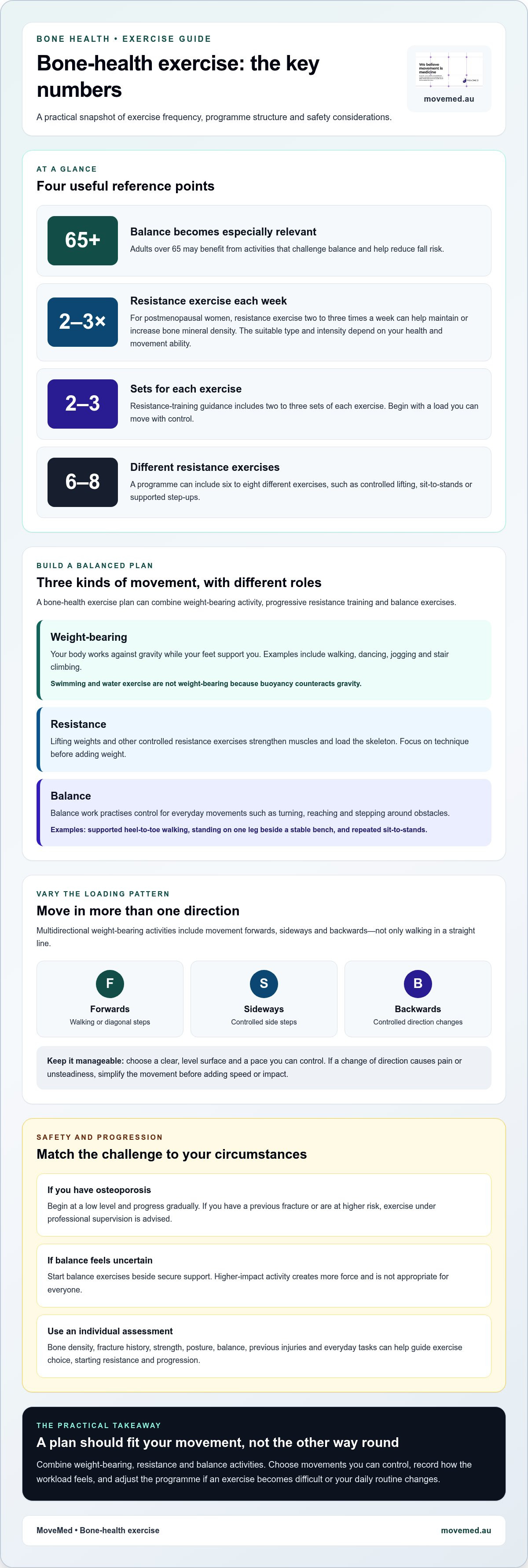
Bone health exercise can help adults at different life stages, especially when bone density or confidence with movement is a concern. Bone mineral density is highest in your 20s and gradually declines with age. Regular strength and weight-bearing activity can help support bones and muscles. Adults over 65 may also benefit from activities that challenge balance and help reduce fall risk.
Weight-bearing exercise makes your body work against gravity while your feet support you. Walking, dancing, jogging and stair climbing are examples. Resistance exercise, such as lifting weights, strengthens muscles and loads the skeleton. For postmenopausal women, resistance exercise two to three times a week can help maintain or increase bone mineral density. The suitable type and intensity depend on your health and movement ability.
Bone strength responds to the forces placed through it, so a variety of exercise matters. Weight-bearing impact exercise includes movements where your feet meet the ground, such as brisk walking or dancing. Higher-impact activity creates more force, but isn’t appropriate for everyone. A clinician can help match impact to your bone health, fracture history and balance. Swimming and water exercise are not weight-bearing because buoyancy counteracts gravity.
Does Medicare or private health insurance cover osteoporosis-focused exercise programs in Australia? Medicare and private health insurance don’t automatically cover exercise simply because it focuses on osteoporosis. Eligibility for a contribution depends on the relevant Medicare arrangements or your insurer’s policy and the service provided.
Balance work trains the control needed for everyday movements such as turning, reaching and stepping around obstacles. Examples include supported heel-to-toe walking, standing on one leg beside a stable bench and repeated sit-to-stands. Start beside secure support if your balance is uncertain. These exercises don’t replace weight-bearing or resistance work; they add a separate challenge for steadiness and coordination.
Multidirectional weight-bearing activities involve moving forwards, sideways and backwards, rather than only walking in a straight line. Controlled side steps, diagonal steps and direction changes while dancing challenge your legs and balance in different ways. Choose a clear, level surface and a pace you can control. If a change of direction causes pain or unsteadiness, simplify the movement before adding speed or impact.
What types of exercise help prevent osteoporosis? A useful program can combine weight-bearing activity, progressive resistance training and balance exercises. Walking can help establish a routine, while strength exercises apply controlled force to bones and muscles. Add movements in different directions, such as side steps or dancing, to vary the loading pattern. For an exercise program for preventing osteoporosis in Warrandyte, your age, bone density, previous injury and current capacity help determine which activities may suit you.
Individual assessment and exercise prescription
An individual assessment connects your bone health, movement and goals to a practical exercise plan. It helps identify suitable resistance, balance and weight-bearing activities, then guides how to progress them.
Tailored osteoporosis programs
A tailored program matches exercise choice and difficulty to your bone density, fracture history, current strength and daily activities. This matters because bone loss and confidence with movement vary, even among people with the same diagnosis. For example, someone who walks comfortably but struggles with stairs may need different strength exercises from someone who finds standing balance difficult.
An assessment can consider your medical history, previous injuries, posture, balance and ability to manage everyday tasks. A DXA scan measures bone mineral density, while your symptoms and movement help guide how exercise should be introduced. These details inform the type of loading, starting resistance and balance challenge, rather than relying on the same routine for everyone.
A useful prescription sets out which movements to practise, how often to do them and how to progress. Resistance-training guidance includes two to three sets of each of six to eight different exercises. Options might include controlled lifting, sit-to-stands or supported step-ups. Your starting load should allow controlled movement; focus on technique before adding weight.
Walking can support an active routine, but an individual plan may include other exercises to address strength or balance goals. Recording completed sessions, effort and symptoms can show whether the workload remains manageable. If a movement becomes difficult or your daily routine changes, the program can be adjusted rather than abandoned.
Physiotherapy exercise sessions
An individual exercise physiology session is a one-to-one appointment where an accredited exercise physiologist observes your movement and guides suitable exercises. This can help if you need support with technique, balance or adapting a movement to your current ability. For example, a sit-to-stand can be adjusted by changing the chair height or using hand support.
During a session, you can practise exercises and receive feedback on posture, control and effort. The exercise physiologist can adjust resistance or range of movement if a task feels too demanding. A written plan helps you repeat the movements between appointments. Sharing how lifting, walking or household tasks feel gives useful context for future adjustments.
For people with osteoporosis, resistance sessions can include two to three sets, with exercise selection matched to ability and goals. Progress should follow controlled technique, not pressure to lift heavier quickly. A simple log of exercises and how they felt can help track changes across sessions and guide the next adjustment.
If you want support turning assessment findings into a practical routine, an individual exercise assessment can help guide the next steps.
Is osteoporosis exercise safe?
Exercise can support bone health, but choices should reflect your fracture risk and movement ability. Professional guidance is especially valuable if you have osteoporosis or a previous fracture.
Supervised osteoporosis exercise
Supervised exercise is guided by a qualified health professional, such as an exercise physiologist or physiotherapist. For people at higher risk, including those with a previous fracture, a supervised program developed by one of these professionals is recommended. They can observe your technique and adjust exercise intensity to suit your needs.
The LIFTMOR trial used supervised exercise sessions twice weekly over eight months. That describes the trial’s schedule, not a universal prescription. In Warrandyte, a physiotherapist or exercise physiologist can guide bone-health exercise, considering your diagnosis, fracture history and balance. Their supervision can help you practise resistance or impact movements with appropriate control.
Are there physiotherapists or accredited exercise physiologists in Warrandyte who specialise in bone health? Physiotherapists and exercise physiologists can develop supervised exercise programs for people with osteoporosis. The relevant considerations include your fracture history, balance, movement ability and current exercise experience.
Starting exercise safely
Beginners can start with low-level activity and progress gradually. This approach helps reduce injury risk, including fractures, while you build confidence and control. For example, practise a supported movement before making it faster or adding resistance. If you have osteoporosis, discuss your exercise choices with a doctor, physiotherapist, exercise physiologist or another health professional.
How can beginners safely start an osteoporosis-prevention exercise program? Begin gently, progress slowly and use controlled movements, with professional guidance if you have osteoporosis or a previous fracture. Mention any falls, pain or difficult daily tasks during an assessment, as these can guide exercise selection and supervision.
Exercise choices and recommendations
For people with osteoporosis, recommendations include weight-bearing impact exercise at least three days per week, with 50 impacts per session. Resistance training is advised two to three times per week, with five to eight exercises per session. Your fracture risk and capacity help determine how these activities are introduced.
How much weight-bearing and resistance exercise is recommended for osteoporosis prevention? The recommendations above apply to people diagnosed with osteoporosis; an exercise professional can adapt the starting level to your needs. People with osteoporosis should avoid loaded forward bending, such as sit-ups or toe touches, sudden forceful movements, forceful twisting and activities that increase the risk of falling.
Are there osteoporosis exercise classes or programs in Warrandyte, Victoria? A physiotherapist or exercise physiologist can develop supervised exercise suited to osteoporosis and individual ability. Group exercise may provide structure, while individual supervision allows closer attention to movement and progression. Your diagnosis and fracture history guide which format and exercises are appropriate.
Exercise assessment and modification
An exercise assessment connects bone health with movements you can perform comfortably. It can consider your history, balance, strength, fitness and everyday tasks, such as climbing stairs or carrying groceries. These details help shape a program around your starting ability, rather than relying on a general routine. For people with low bone density, exercise selection and resistance need careful consideration.
Tell your health professional if you have low bone density or a previous fracture. This information can guide changes to your exercise program, including higher resistance and weight-bearing exercise where appropriate. For example, a supported sit-to-stand can build leg strength, while a step-up practises a movement used on stairs. The starting version should match your control and confidence.
Assessment looks at how you move, not just which activities you enjoy. A professional may observe your posture while lifting, your steadiness when turning or how you manage a step. These observations can reveal where you need more support or a different exercise variation. The aim is to choose physical activity that supports bone strength and suits your current capacity.
Resistance should feel challenging without compromising technique. One exercise guide suggests choosing a weight you can repeat 8-12 times. As your control improves, the resistance can be increased in a limited amount, such as up to 0.5 kg. These figures are reference points, not a reason to lift through pain or force a movement.
Recovery is part of the plan. Healthy Bones Australia advises allowing at least one day between resistance-training sessions. This spaces demanding sessions rather than placing them on consecutive days. Your schedule can also account for walking, balance practice and daily activity, so the overall workload remains manageable through the week.
Modifications can change an exercise’s position, support, range or resistance. If standing balance is difficult, holding a stable bench can make a movement more controlled. If bending forwards under load is unsuitable, a professional can select another exercise for the same functional goal. Adapting the exercise isn’t a failure; it keeps the plan suited to your needs.
Reviewing progress helps identify when the plan needs adjusting. Note which exercises you completed, the resistance used and whether your balance or technique felt different. Changes in walking confidence or difficulty with household tasks can also be useful to share. These examples help guide the next session, building on what works and addressing what remains challenging.
For people in Warrandyte, assessment can help make a plan practical for everyday life. Work, home routines, available space and activity preferences all affect what you can sustain. A stable chair, clear walking path and light hand weights can support home practice when they suit your plan. Regular review keeps exercise relevant as your fitness and capacity change.
Exercise for preventing and managing osteoporosis
Exercise supports bone health through repeated loading, stronger muscles and better movement control. The right combination can differ between preventing bone loss and managing an osteoporosis diagnosis.
Exercise in osteoporosis care
Exercise is one part of osteoporosis care, giving bones and muscles regular physical demands. Resistance movements ask muscles to work against a load, while weight-bearing activity places force through the skeleton. Balance practice serves a different purpose: it rehearses control during daily movement and can support confidence when turning or reaching.
The LIFTMOR trial found improvements in lumbar spine and hip bone mineral density, posture, balance and physical function after supervised high-intensity resistance training. These findings show why exercise planning considers more than bone density alone. For example, being better able to rise from a chair can matter in daily life alongside changes measured by a scan.
Exercise needs to fit the person, not just the diagnosis. Someone with osteopenia who moves confidently may have different goals from someone with osteoporosis and a history of spinal fracture. Posture, muscle strength, pain, balance and experience with exercise all help shape suitable movements. A demanding routine may not suit someone who needs to build control first.
Exercise works best as an ongoing part of bone health care, rather than a short burst of activity. Healthy Bones Australia advises continuing regular workouts for at least 6-12 months, as stopping can mean losing benefits gained. A walking routine, strength exercises and balance practice can be planned around work, household tasks and recovery, making movement easier to sustain.
Australian exercise recommendations
Healthy Bones Australia recommends a mix of progressive resistance, weight-bearing exercise and balance activities for bone health. Each type addresses a different part of physical capacity. Walking provides weight-bearing activity, lifting challenges muscles, and controlled stepping or supported standing practises balance.
Impact recommendations also vary with bone health and fracture risk. People with normal bone health may be suited to higher-impact activity, while people diagnosed with osteoporosis may need a more moderate approach. Jumping and brisk changes of direction, for example, place different demands on the body. Choose activities that match your diagnosis and movement ability.
For a practical routine, consider how each activity contributes to your goals. Resistance work can target leg and back muscles; weight-bearing movement can load the skeleton; balance exercises can practise steady foot placement. A professional can help combine these elements, account for fracture history and adapt the plan as your confidence and capacity change.
The guide recommends progressive resistance: 2 days per week, 2-3 sets of 8 repetitions. For people diagnosed with osteoporosis, recommendations include 4 balance-training sessions per week and 30 minutes of varied balance exercises per session.
MoveMed: Exercise Physiology Consultations
MoveMed provides Exercise Physiology Consultations for people seeking guidance to turn bone-health recommendations into a structured exercise plan. Accredited exercise physiologists assess your needs and design, deliver and evaluate exercise interventions suited to your health goals and abilities. This support may help if you have osteoporosis, low bone density, a previous fracture or are unsure how to progress resistance and balance exercises.
Your consultation can connect exercise choices with everyday goals, such as building strength for stairs or improving confidence with movement. MoveMed also provides Hydrotherapy, Aged Care Funded Therapy and NDIS Funded Therapy when these services suit your care needs.
If you’d like to discuss exercise support for bone health, contact MoveMed or visit movemed.au.
Make bone-health movement part of your routine
A lasting routine can start with a goal that matters in your day, such as feeling steadier when walking or finding everyday lifting easier. Use that goal to shape what you practise, and notice how your confidence with movement changes over time. Progress is personal; consistency and a plan that fits your life can help you keep moving.
For an exercise program for preventing osteoporosis in Warrandyte, MoveMed’s Exercise Physiology Consultations can help translate your goals into guided exercise. Hydrotherapy and Aged Care Funded Therapy are also available when relevant to your care needs. The right starting point is a conversation about what you want to do, what feels difficult and how exercise can support your independence.
When you’re ready to take that step, discuss bone-health exercise with MoveMed. You can build your next move with support and a clear focus on the activities that matter to you.
Frequently Asked Questions
What are the risk factors for osteopenia and osteoporosis?
Ageing and early menopause are recognised risk factors for lower bone density. Bone mineral density naturally starts to decline after age 30, and menopause before age 45 is associated with increased risk. A previous minimal-trauma fracture is also a reason to take bone health seriously. If these factors apply to you, discussing your bone health with a health professional can help clarify appropriate next steps.
How can exercise help?
Exercise can support the muscles that protect and move your body, while balance activities practise steadiness during daily tasks. Leg strength, for example, can help you rise from a chair, while controlled stepping can prepare you for changes in direction. Regular activity is most useful when it matches your abilities and becomes part of your routine, rather than a short-term effort.
What is bone mineral density (BMD)?
Bone mineral density (BMD) describes the amount of mineral in a measured area of bone and provides an indication of bone strength. A DXA scan measures BMD and can help identify whether bone density is lower than expected. Your result is one part of understanding bone health, alongside factors such as fracture history and movement. A health professional can explain what your scan result means for your exercise choices.


