
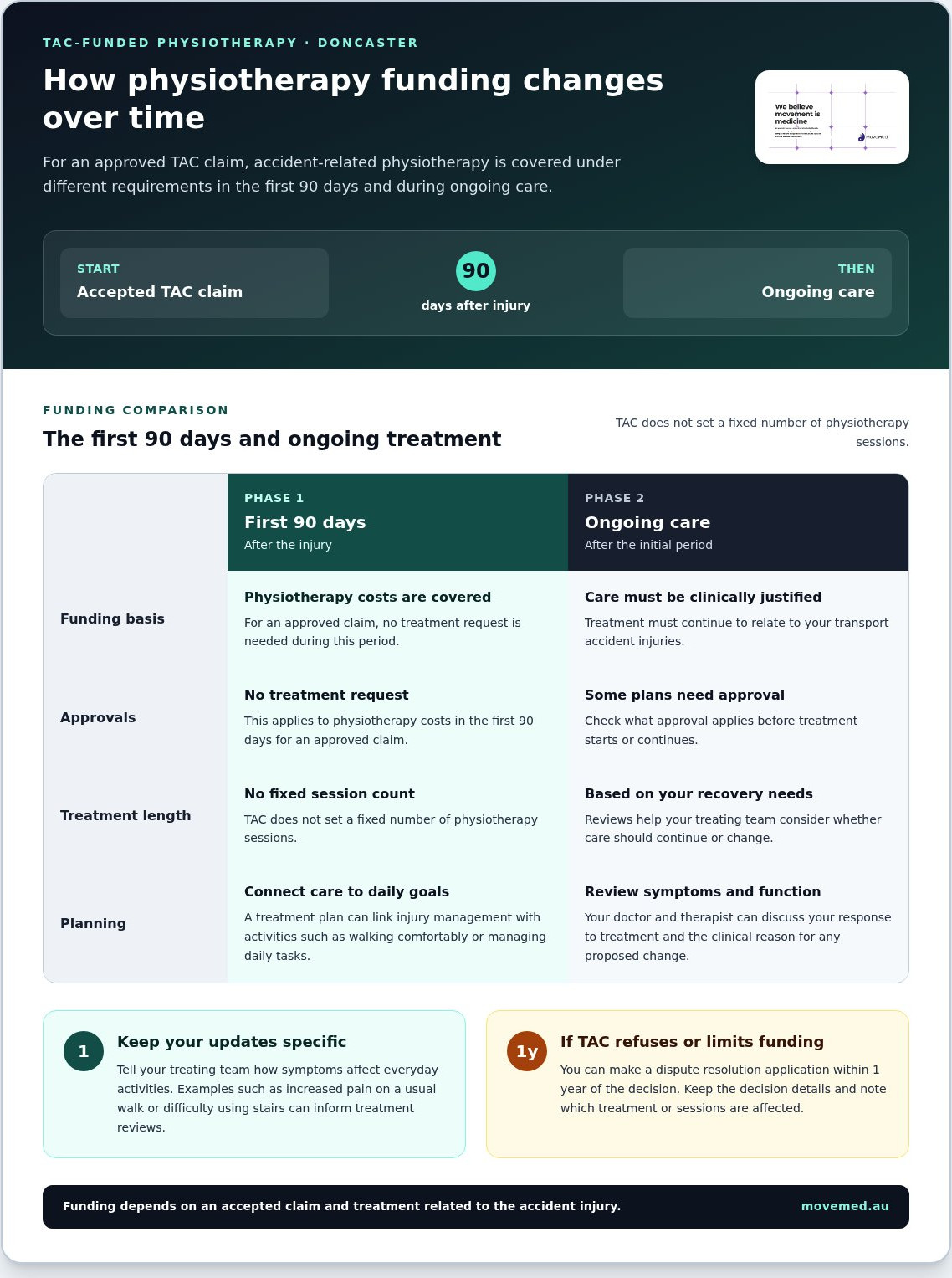
TAC rehab for pedestrian accident injuries in Doncaster may be funded when you’re injured in a Victorian transport accident and your TAC claim is accepted. For an approved claim, physiotherapy costs are covered during the first 90 days after the injury without a treatment request. Ongoing care needs to relate to your accident injuries and be clinically justified; TAC doesn’t set a fixed number of sessions.
An injury can leave you unsure what care is covered, what happens next and how to rebuild confidence in everyday movement. Understanding the process can make it easier to focus on recovery while you work through your claim.
This guide explains who may be eligible, what TAC-funded rehabilitation can involve and how an assessment helps shape a plan around your injury and goals. You’ll also learn how reviews and communication with your treating team can support a gradual return to activity, and how MoveMed’s TAC-funded therapy may fit into your rehabilitation in Doncaster.
Key Takeaways
- If you’re injured in a Victorian transport accident as a pedestrian, an accepted TAC claim may make accident-related rehabilitation available, regardless of fault.
- For an approved claim, physiotherapy costs are covered during the first 90 days after injury without a treatment request; ongoing care must be clinically justified.
- TAC doesn’t set a fixed number of physiotherapy sessions, so treatment planning and reviews help keep care connected to your recovery needs.
- A rehabilitation assessment can help shape practical goals around movement, daily activities and a gradual return to activity.
- MoveMed’s Exercise Physiology Consultations can support a structured rehabilitation plan when exercise-based care is appropriate for your accident-related needs.
Communication with TAC case managers and treating doctors
Clear updates help your TAC case manager and treating doctor understand how your injury affects daily activities. Keep your TAC claim number handy when discussing treatment, referrals or funding decisions.
Treatment approvals and funding limits
Some treatment plans need approval before care starts or continues, so ask what approval applies to your proposed treatment. TAC-funded care must relate to your transport accident injury and meet the requirements for that service. If TAC refuses or limits funding, you can make a dispute resolution application within 1 year of the decision.
These are TAC-listed amounts, not a statement of any clinic’s fees.
Ask your treating doctor to explain why the proposed treatment suits your injury, then share that information with your case manager. If a request is declined, keep the decision details and note which treatment or sessions are affected. This information can help you explain the issue in a dispute resolution application.
Treatment planning and progress reviews
A treatment plan connects injury management with practical goals, such as walking comfortably or managing daily tasks. Your treating doctor and therapist can review symptoms, function and response to treatment, then explain whether the plan should continue or change. Extended TAC-funded physiotherapy may require a treatment plan or review.
Before an appointment, note any changes since your last review, such as increased pain during a usual walk or difficulty using stairs. Tell your treating team which activities matter most to you. These specific examples help them discuss treatment options and progress with your case manager.
Keep your claim number, appointment dates and treatment questions together so you can give your team a clear update. Tell your case manager when symptoms affect a planned activity, and ask your treating doctor to explain the clinical reason for any proposed change. This helps you discuss referrals, treatment limits and the next review.
“No-gap” treatment depends on how your accepted claim and provider billing are handled. A last-minute cancellation or missed appointment may leave you with an out-of-pocket consultation fee. If your TAC claim is still being processed, you may begin treatment privately and seek reimbursement, but TAC funding may not be available until the claim is resolved. Contact your case manager promptly about a missed appointment or change in funding.
Physiotherapy eligibility for drivers, passengers, pedestrians and cyclists
TAC physiotherapy may be available to drivers, passengers, pedestrians and cyclists injured in a Victorian transport accident. Eligibility depends on an accepted claim and treatment related to the accident injury. TAC rehab for pedestrian accident injuries in Doncaster follows the same claim and treatment requirements.
Eligibility after a transport accident
Whether you were injured as a pedestrian in Doncaster or as a passenger elsewhere in Victoria, fault does not determine access to TAC physiotherapy. You need an accepted TAC claim, and treatment must relate clinically to your transport accident injury. A pedestrian does not need to have gone to hospital immediately to potentially qualify.
Even jaywalking does not automatically prevent TAC benefits, although responsibility for the accident may affect common law damages. A claim generally needs to be lodged within 1 year of the accident. The TAC may accept a claim up to 3 years afterwards if it considers there are reasonable grounds for the delay.
To lodge a claim, apply online or call the TAC on 1300 654 329. A GP referral isn’t required to book physiotherapy after you have a claim number, though an indication from your treating doctor that physiotherapy is appropriate remains relevant. If your claim is pending or disputed, treatment may be possible, but TAC funding may wait until the claim is resolved. For TAC rehab for pedestrian accident injuries in Doncaster, keep your claim details available when discussing treatment and next steps.
Initial assessment and treatment planning
At an initial physiotherapy assessment, discuss the accident, your symptoms and how movement affects everyday tasks. For example, tell the treating professional if walking to a bus stop or climbing stairs is difficult. This connects the treatment plan to your injury and the activities you want to regain.
Assessment findings guide treatment choices and whether a review or further plan is needed. TAC does not set a fixed number of physiotherapy sessions; continued care needs clinical justification. Exercise-based rehabilitation may also be considered when it suits your injury-related needs and recovery goals.
Medicare and private health insurance have separate funding arrangements. TAC funding is tied to an accepted transport accident claim and treatment related to its injuries, rather than general healthcare needs.
There is no suburb-based provider list that determines eligibility in Doncaster East or nearby suburbs. The key consideration is whether treatment relates to your accepted claim and meets the requirements for that service. A clinic’s location alone does not establish funding.
If you’re planning your next steps after a pedestrian injury, structured rehabilitation planning can help you consider how exercise-based care may support your return to activity.
Rehabilitation assessments and plans
A rehabilitation assessment turns injury-related difficulties into practical treatment priorities. In Victoria, clear findings also help connect a TAC claim with clinically relevant care.
The first appointment and assessment
Prepare for your first appointment by noting the accident, your symptoms and the tasks you find difficult. These might include walking to a bus stop, standing at work or lifting groceries. Bring your TAC claim details and relevant medical information so the treating professional can understand your injury and its effect on your routine.
The assessment can cover pain, movement, strength and day-to-day function. Describe what has changed since the transport accident, including activities you have stopped or adapted. Specific examples, such as avoiding stairs because of knee pain, give the assessment a practical focus.
Next, identify goals that matter to you. You might want to walk around your neighbourhood, return to household tasks or resume work duties. A rehabilitation plan connects those goals with appropriate treatment and records how progress will be reviewed. It should explain the clinical reasons for each recommendation.
Workplace and ergonomic assessments
A workplace assessment looks at the tasks you need to perform and the demands they place on your injured body. For example, a pedestrian recovering from a leg injury might discuss standing for long periods, moving between work areas or using stairs. These details help show the difference between your current capacity and job demands.
An ergonomic assessment considers how your workstation and work habits fit your needs. This may include chair height, desk position, reaching for frequently used items and opportunities to change posture. The aim is to identify practical adjustments that support safer, more manageable work tasks during rehabilitation.
Give your treating team clear information about your role, usual duties and any tasks that trigger symptoms. A job description or list of daily duties can make the discussion more specific. Your treating doctor can consider relevant medical information when assessing how work demands relate to your injury.
Coordination matters when several people contribute to your care. With your consent, the treating team can share relevant assessment findings with your doctor and TAC case manager. A clear update might describe a change in walking tolerance, the work task that remains difficult and the next review point in your treatment plan.
Progress reviews compare your current function with the goals in your plan. If walking improves but stairs remain difficult, that example can guide discussion about the next rehabilitation focus. Keep brief notes between appointments about activities you have tried and any symptoms that affect them.
Ask for each recommendation to be explained in plain language. Understanding the reason for an assessment, treatment or workplace adjustment helps you take an active role in decisions about recovery and returning to everyday activities.
Rehabilitation goals and return to activity
Recovery is not only about reducing pain. It also involves rebuilding the movement and confidence needed for daily life. For an accepted TAC claim, rehabilitation planning can include a return to activity, with goals shaped around your injury and priorities.
Start with a specific task you want to manage again. You might aim to walk to a local bus stop, prepare a meal while standing or carry a light shopping bag. Your treating team can break the activity into manageable steps and discuss what makes it difficult now. Clear goals give you something practical to track between appointments.
Progress may involve changing how long or how often you do an activity, then reviewing how your body responds. If a short walk feels manageable, discuss making it part of your routine before adding a longer route or uneven ground. If symptoms increase during an activity, note what you were doing and share that example with your treating team. This information can guide the next step.
Returning to work may involve more than being able to perform one task. Consider the full demands of your role, including commuting, standing at a counter, moving between rooms or concentrating through a shift. Discuss these duties with your treating doctor and identify which feel manageable now. A gradual plan can link increased work demands with changes in your capacity.
For a return-to-work conversation, prepare a brief list of duties and barriers. Note, for example, whether repeated stair use, prolonged standing or lifting affects your movement. You and your treating team can discuss practical adjustments, such as alternating tasks or arranging seated work where suitable. Share relevant recommendations with your employer so expectations and duties are clear.
Everyday activities matter too. Track how you manage dressing, household chores, local errands or getting in and out of a car. Choose one activity to practise, notice what helps, then discuss your experience at the next appointment. This connects rehabilitation with the routines you want to regain, rather than focusing only on exercises in isolation.
TAC may cover return-to-activity planning when it is approved and relates to transport accident injuries. Outpatient rehabilitation can take place at home or in a community centre, helping connect practice with real tasks. If returning to a previous activity remains difficult, tell your treating team what happens and which part of the task is the obstacle.
Recovery can involve changes in pace. A day with more movement may call for a lighter routine afterwards, while steady practice can help build consistency. Keep your goals realistic and discuss them with your treating team as your capacity changes. A clear plan helps you work towards greater independence, one meaningful activity at a time.
TAC-funded rehabilitation services
An eligible pedestrian injured in a Victorian transport accident may receive TAC-funded rehabilitation linked to an accepted claim. Treatment must relate to the accident injuries and meet the requirements for the relevant service.
Rehabilitation may include physiotherapy, exercise physiology and occupational therapy. The right option depends on your injury, clinical needs and the activity you’re working towards. For example, a practitioner may recommend movement-based care for walking difficulties, or occupational therapy to help manage everyday tasks.
TAC may also fund psychology for mental health and trauma following a transport accident. Massage and myotherapy may be covered when clinically indicated. These services address different needs, so the treatment plan should explain how each proposed service relates to your accident injuries.
Hydrotherapy delivered by a physiotherapist may form part of rehabilitation when water-based treatment is appropriate. It can provide a setting for guided movement as you work on function. TAC-funded outpatient rehabilitation can take place at home or in a community centre, depending on the service and care plan.
A claim number is listed as a prerequisite for TAC-funded rehabilitation services. If you were injured in a Victorian accident involving a vehicle, keep your claim details handy when discussing treatment with a practitioner. Funding depends on your claim and the applicable requirements for the service, not the treatment name alone.
Some services have specific payment arrangements. For example, TAC-listed physiotherapy includes individual and group sessions, while hydrotherapy is listed when provided by a physiotherapist. These are TAC service rates, not a quote for a particular provider. Ask how proposed treatment will be billed and whether approval is needed before it begins or continues.
Choose treatment based on the outcome you want to work towards. If pain makes walking difficult, discuss how physiotherapy or exercise physiology could address movement and function. If an injury affects dressing or household activities, ask whether occupational therapy is relevant. The clinical reason for the service and its connection to your accident matter.
Before starting, organise your claim number, describe the activities affected, and discuss the proposed care with your treating team. If you need structured exercise as part of accident-related rehabilitation, discuss an exercise-based rehabilitation plan as a practical next step.
MoveMed: Exercise Physiology Consultations
MoveMed offers Exercise Physiology Consultations to support rehabilitation when exercise-based care suits your injury-related goals. MoveMed’s accredited exercise physiologists assess your capacity one-on-one and prescribe a personalised program. It can focus on movements or activities you want to regain, such as walking comfortably or managing daily tasks.
TAC may fund exercise physiology after a transport accident. Funding depends on your accepted claim and the relevant treatment requirements, so discuss the proposed care with your treating team. MoveMed also offers Hydrotherapy in a warm-water pool, providing a low-impact setting for guided movement as part of rehabilitation.
If you’re in Doncaster or nearby and want to discuss exercise-based support for your recovery, contact MoveMed. They can talk through your goals and the next step.
Shape recovery around what matters to you
A meaningful next step in TAC rehab for pedestrian accident injuries in Doncaster is to name the parts of life you want to reclaim. That might mean feeling more confident on the footpath, returning to a valued role or taking part in a regular family activity. Bring one clear priority to your next conversation with your treating team, then use it to guide rehabilitation decisions.
Progress can be easier to recognise when you notice changes in everyday moments, not only during appointments. A brief note about what felt easier or remained difficult can help you discuss what comes next. Your goals can evolve as your capacity changes, and your care should stay connected to the activities that matter to you.
MoveMed offers Exercise Physiology Consultations, Hydrotherapy and Aged Care Funded Therapy. If you’d like to talk about exercise-based support for your recovery, plan your next steps with MoveMed. Each step towards a valued activity is a step towards rebuilding confidence.
Frequently Asked Questions
What is TAC physiotherapy?
TAC physiotherapy treats injuries related to a Victorian transport accident and may be funded under an accepted TAC claim when care meets the relevant requirements. It may help address pain, movement difficulties and everyday function. For example, a pedestrian with a sore ankle may work on walking and balance. A treating doctor’s indication that physiotherapy is appropriate can also support decisions about care.
Do I pay anything at the appointment?
For an approved claim, TAC covers physiotherapy costs during the first 90 days after injury without a treatment request. The billing arrangement for your appointment depends on the claim and service. A missed appointment or last-minute cancellation may incur an out-of-pocket consultation fee. Ask about the appointment’s billing terms when arranging care, and keep any payment records if your claim is still being processed.
What Is the TAC and What Does It Cover?
The Transport Accident Commission (TAC) administers benefits for people injured in Victorian transport accidents. Under the Transport Accident Act 1986, it may pay for eligible, accident-related treatment and rehabilitation. Depending on the accepted claim and service requirements, this can include allied health care, rehabilitation planning and support for returning to activity. A treatment must relate to the transport accident injury, rather than an unrelated health need.
Can I use TAC funding for allied health treatment?
Yes, TAC may fund allied health treatment connected to injuries from an accepted transport accident claim. Services may include physiotherapy, occupational therapy, exercise physiology and psychology. Rehabilitation counselling, hydrotherapy provided by a physiotherapist, massage or myotherapy may also be relevant when clinically indicated. For example, occupational therapy may help if an injury makes dressing or household tasks difficult. The proposed service must meet its applicable treatment requirements.
Can my treatment change during my recovery?
Yes, your treatment plan can be reviewed as your symptoms, movement and daily needs change. If walking improves but stairs remain difficult, tell your treating team so they can discuss the next clinical priority. A change to services or extended care may involve a treatment plan, review or additional approval. Share relevant updates with your TAC case manager and treating doctor to keep everyone informed.
How many sessions will I have under TAC?
TAC does not set a fixed number of physiotherapy sessions for transport accident injuries. The amount of care depends on clinical need and whether treatment remains reasonable and justified for your injury. Your treating professional can review progress, such as whether walking or work tasks are becoming easier, and explain the reasons for continuing, changing or ending treatment. Extended physiotherapy may require a treatment plan or review.
Need help with a TAC claim?
You can lodge a TAC claim online or by calling 1300 654 329. Keep details of the accident, your injuries and any treatment needs together so you can refer to them when completing the claim. A claim generally needs to be made within 1 year of the accident; TAC may accept one up to 3 years later where it considers there are reasonable grounds for the delay.
What are the TAC eligibility rules for pedestrians injured in a road accident?
A pedestrian injured in a Victorian transport accident may qualify for TAC benefits by lodging a claim that TAC accepts. Treatment eligibility depends on whether care relates to the accident injuries and meets relevant requirements. Fault does not rule out TAC physiotherapy, and immediate hospital attendance is not essential to potential eligibility. If you were jaywalking, TAC benefits may still apply, though responsibility may affect common law damages.


