

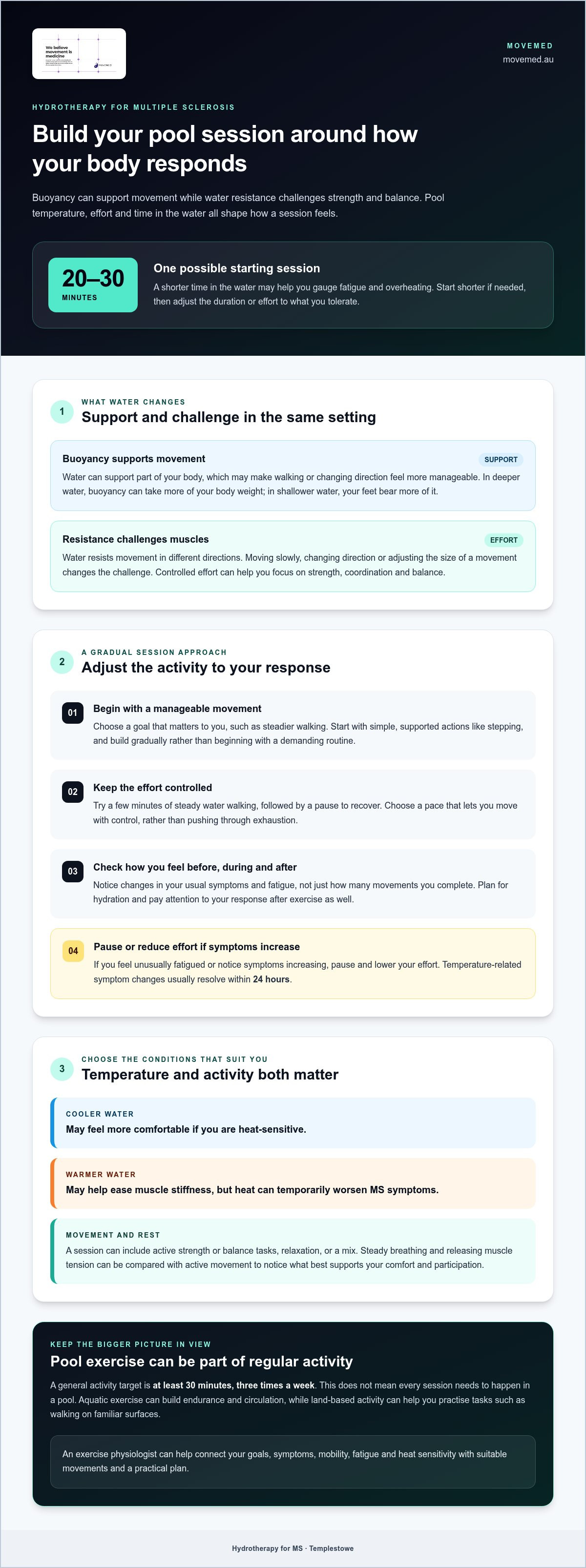
Water can make movement easier while still challenging your muscles. For people considering hydrotherapy for multiple sclerosis (MS) in Templestowe, buoyancy can support movement and water resistance can work your strength and balance. A shorter session, such as 20 to 30 minutes in the water, may help limit fatigue and overheating as you learn what you can tolerate.
If heat sensitivity makes exercise feel unpredictable, it’s understandable to wonder whether a pool will help or worsen symptoms. Pool temperature, exercise intensity and time in the water all matter, so the right approach should reflect how your body responds.
This article explains how water-based exercise works, what buoyancy and resistance can offer, and why pool temperature matters for MS. You’ll also learn what to consider when choosing between individual and group sessions, and how a gradual, tailored approach can help you build confidence with movement.
Key Takeaways
- Water’s buoyancy can make movement easier, while resistance and turbulence provide ways to challenge strength and balance.
- Starting with a shorter session, such as 20 to 30 minutes, can help you gauge fatigue and build up gradually.
- Individual and group sessions offer different ways to approach aquatic exercise; your goals and support needs can guide the fit.
- Pool temperature matters when you’re heat-sensitive: cooler water may be more comfortable, while warmer water can help ease muscle stiffness.
- Plan for hydration and pay attention to how your symptoms respond during and after exercise so you can adjust your effort.
Low-impact strength, cardiovascular and balance exercise
Hydrotherapy and land-based exercise can both support movement, but they offer different settings. In water, buoyancy supports your body while resistance challenges your muscles. On land, you can practise tasks such as walking on familiar surfaces. Neither has to replace the other. The choice depends on the movements, strength and balance you want to work on.
For people with multiple sclerosis (MS), regular, moderate activity can support strength and balance. A general activity target is at least 30 minutes, three times a week, but that doesn’t mean every session must happen in a pool. Aquatic exercise can build endurance and circulation, while gentle, regular movement may also support bladder and bowel control and help decrease spasticity. The pace matters: choose effort that lets you move with control rather than push through exhaustion.
Pool exercise can combine several aims in one session. For example, repeated leg movements can challenge muscle strength, while stepping in different directions asks your balance system to respond. Moving continuously through an aquatic circuit can build cardiovascular endurance. A water session of 20 to 30 minutes is one example of a duration that may help limit fatigue, overheating and overexertion. Start shorter if needed, then adjust duration or effort to what you tolerate.
Start with a goal that matters to you, such as making it easier to walk around the shops. Break it into a manageable activity and build gradually rather than beginning with a demanding routine. For example, alternate a few minutes of steady water walking with a pause to recover. A small, repeatable start can make it easier to keep exercising when fatigue, changing symptoms or low confidence affect your routine.
Relaxation exercises can also be useful to compare with active exercise. A session might include steady breathing and deliberately releasing muscle tension, rather than repeated strength or balance tasks. Notice how you feel afterwards, then compare that response with an active aquatic session. This can help you work out whether movement, rest or a mix best supports your comfort and willingness to participate.
Monitor how your body responds before, during and after exercise, not just how many movements you complete. Heat can temporarily worsen MS symptoms, so watch for a change in your usual symptoms as your body warms. Such temperature-related changes usually resolve within 24 hours. If you feel unusually fatigued or notice symptoms increasing, pause and reduce your effort rather than treating the session as a test of endurance.
An exercise physiologist can help turn your goals into a practical plan, while building confidence and understanding. They can connect a goal, such as steadier walking, with suitable strength and balance activities. Mood matters too: low confidence or frustration can make regular exercise harder to sustain. A clear, achievable goal and a way to track your response can help you recognise progress without judging success by intensity alone.
Buoyancy and resistance in hydrotherapy
Water changes how movement feels: it supports part of your body while resisting each movement. That support can help if walking or changing direction on land feels difficult. For example, stepping sideways in water may feel more manageable than the same movement on a firm surface because buoyancy assists your body as you move.
The support you feel varies with how deeply you’re immersed. In deeper water, buoyancy can take more of your body weight; in shallower water, your feet bear more of it. An exercise professional can use this to adapt a movement without changing its purpose. A supported leg lift, for instance, can focus on controlling the leg before progressing to a larger range of movement.
Water provides resistance in more than one direction. Moving your arm slowly through the water creates a different challenge from moving it quickly or changing direction. A small, controlled push forwards works differently from sweeping your arm out to the side. These adjustments let you work on muscle strength and coordination at a manageable level, then change the challenge as your ability or fatigue changes.
Resistance comes from your movement, not a fixed weight. This can make aquatic exercise useful for practising a movement repeatedly in a supported environment. For example, walking forwards, backwards and sideways in water asks your legs and trunk to respond to changing directions. Aim for controlled effort, not speed: rushing can make it harder to maintain balance and notice how your body responds.
Hydrotherapy can also support relaxation. Warm water may help ease muscle tension, while gentle, repeated movements give you time to focus on breathing and posture. Relaxation doesn’t mean avoiding activity. Depending on your comfort and function, a session can move from calm, familiar actions towards more challenging tasks.
Do you need a GP or specialist referral for MS hydrotherapy in Templestowe? There’s no single referral rule for every funding pathway: some may require supporting documentation, while a clinical assessment helps set suitable movements and goals. Discuss your MS symptoms, mobility, fatigue and heat sensitivity as part of planning.
Can NDIS or a chronic disease management plan cover sessions? NDIS hydrotherapy is a recognised therapeutic support focused on physical function and independence for participants living with MS. A chronic disease management plan is a separate funding pathway and doesn’t automatically mean pool-based therapy is covered.
At an assessment, expect to discuss your goals, symptoms, walking and how you respond to activity. A first session can then begin with simple movements, such as supported stepping, before progressing according to your control and comfort. To explore hydrotherapy and exercise support, consider how water-based movement could fit your goals and funding pathway.
Individual and group hydrotherapy services
Choosing between individual and group hydrotherapy depends on the support and setting that suit you. An individual session can focus closely on your symptoms, balance and mobility. A group session may offer a shared routine with other participants. If you’re considering hydrotherapy for multiple sclerosis (MS) in Templestowe, start by thinking about how you prefer to learn and move.
Individual sessions allow activities to be adjusted to your current function. If fatigue affects your walking, for example, you can practise a controlled step or turn with pauses as needed. The exercise focus can adapt as your confidence and symptoms change. This may suit you if you have a specific movement goal or want more time to get familiar with aquatic exercises.
A group session follows a different rhythm. You might practise a shared sequence of gentle walking, arm movements and balance tasks. The routine is common to the group, but your effort and range of movement can reflect your abilities. Exercising alongside others may help you enjoy a regular routine, though the shared pace may feel less suitable if you need frequent changes.
Consider practical needs as well as exercise goals. If you need close attention to balance or regular adjustments to activities, individual sessions may make those changes easier. If you can follow a shared routine and feel motivated by exercising with others, a group could suit you. Neither format is automatically right for everyone living with MS.
MS symptoms can vary between sessions, so a useful plan needs flexibility. On a day when your legs feel less steady, the focus might be controlled movement. When you feel more capable, activities could offer a greater challenge through resistance or changes in direction. The session should respond to how you feel, rather than expecting the same effort every time.
Some people prefer to learn a movement pattern individually before practising it in a group. For example, getting familiar with a stepping sequence can make it easier to follow a shared routine. Others may enjoy the group setting from the start. For hydrotherapy for multiple sclerosis (MS) in Templestowe, your goals, mobility and comfort in a shared environment can help guide your choice.
To weigh up the options, choose an everyday goal, such as turning more confidently while walking. Then consider whether individual attention or a shared routine would help you practise it. Think about how fatigue affects your participation, too. Your preferences can shape a session around your needs and make aquatic exercise more relevant to daily life.
Pool temperature and heat sensitivity
With MS, a rise in body temperature can temporarily worsen symptoms, making water temperature an important part of exercise planning. A pool that feels comfortable to one person may feel too warm to someone with heat sensitivity. Activity matters too: steady, demanding movement can raise body heat differently from gentle exercises focused on relaxation.
Published temperature guidance varies. A general guide for aquatic exercise gives a range of 25 to 35 degrees, while another recommendation describes 30 to 32 degrees as ideal. The National Multiple Sclerosis Society recommends water below 29 degrees. These figures do not point to one suitable temperature for everyone, so consider your heat sensitivity and planned exercise together.
Warmer water can promote muscle relaxation and ease tension, which may help when spasticity makes movement feel restricted. Cooler water may suit people with heat sensitivity or those planning more intense activity. For example, gentle supported movement may feel different in a warmer pool than a brisk aquatic exercise session. Your symptoms and the effort involved matter as much as the pool temperature.
Pre-cooling is one approach to consider: entering a cooler pool before and after hydrotherapy may help offset heat-related symptom increases. In summer, early morning or evening sessions can help you avoid the hottest part of the day. In winter, later morning or evening sessions are suggested, after blankets have been removed and the air has cooled the water.
During a session, pay attention to changes from your usual symptoms rather than relying only on how the water feels. For example, if fatigue or sensory symptoms increase as you exercise, pause and allow your body to cool. Temporary symptom changes related to a rise in body temperature usually resolve within 24 hours. That timeframe describes temporary changes, not a reason to ignore new or concerning symptoms.
Do Templestowe hydrotherapy clinics have warm-water pools accessible for people with mobility needs? Hydrotherapy pools may use hoists, ramps and water wheelchairs to support access for different mobility needs. Pool temperature and access equipment vary, so accessibility isn’t the same at every pool in the area.
When planning aquatic exercise, consider temperature, movement and effort together. You might begin with gentle activity in cooler water, then observe how your symptoms respond during and afterwards. If stiffness or spasticity is your main concern, warm water may feel more relaxing, while heat-sensitive symptoms may make cooler water preferable. These observations can help shape a pool routine around your comfort and mobility.
Is hydrotherapy safe for MS, and what risks or precautions should be considered?
Hydrotherapy can be part of an exercise plan for MS, but the session needs to suit your symptoms, mobility and tolerance. Fatigue, overheating and overexertion are practical risks to manage. A suitable plan starts with your current abilities and adjusts activity as your response becomes clearer.
Begin with a short session and increase the duration or effort gradually. For example, start with gentle supported movement rather than trying to complete a demanding circuit straight away. A gradual approach helps you notice how your body responds before adding activity. Focus on controlled movement, not matching another person’s pace.
Heat sensitivity needs particular attention. A rise in body temperature can temporarily increase MS symptoms, so notice changes during exercise and afterwards. If sensory symptoms worsen and haven’t settled within 30 minutes after exercising, reduce the intensity for safety. That might mean pausing, choosing gentler movements or shortening the next session.
Hydration is another simple precaution. Keep water nearby and drink during the session; an icy bottle by the pool can keep fluids accessible. Plan rest breaks around your fatigue rather than waiting until you feel exhausted. For instance, pause between walking exercises if your movement becomes less controlled.
Pool access also needs practical planning. Hoists, ramps and water wheelchairs may support entry and movement for people with different mobility needs. Consider how you’ll enter and leave the pool, and whether the equipment suits your mobility. A comfortable exercise plan depends on being able to reach the water and move safely within it.
An exercise physiologist or physiotherapist can help develop a programme around your individual needs and goals. They can consider symptoms, balance, heat sensitivity and the movements you want to practise. For example, if turning while walking is difficult, the plan can include controlled direction changes rather than only straight-line movement. This makes the session purposeful while keeping its demands connected to your function.
During each session, use a simple check-in: note how you feel before entering the water, monitor symptoms while exercising, then notice your response afterwards. If fatigue builds or symptoms change, pause and reduce your effort. These observations can help shape future sessions, including which movements feel manageable and when you need to rest.
For a safer starting point, discuss your symptoms, heat sensitivity and mobility goals with an exercise professional before building intensity. You can plan a tailored aquatic exercise approach that accounts for your needs and helps you progress at a manageable pace.
MoveMed: Exercise Physiology Consultations
MoveMed offers Exercise Physiology Consultations and Hydrotherapy in Templestowe to help you plan movement around your MS symptoms, mobility and goals. An accredited exercise physiologist can consider how heat sensitivity, fatigue and balance affect your activity, then guide a personalised, evidence-based exercise approach.
This can be a useful next step if you’re unsure how to begin, want support adapting aquatic exercise, or need to connect movement with everyday goals such as walking more confidently. MoveMed also offers NDIS Funded Therapy and Aged Care Funded Therapy for eligible clients.
Share what you’d like to work towards and what makes exercise difficult. Contact MoveMed to discuss your next step.
Make your next movement goal your starting point
Choosing hydrotherapy for multiple sclerosis (MS) in Templestowe can help you focus on what you want daily movement to make easier. Start with a personal goal, such as feeling steadier during a turn or building confidence with regular activity. That goal can guide a conversation about how aquatic exercise fits alongside your routine and what support would help you take part.
You don’t need to have every detail worked out before taking the next step. Bring your questions about symptoms, pool temperature, session format or funding, and explain what matters most to you. A clear conversation can help turn those questions into a practical direction for your exercise journey.
Contact MoveMed about hydrotherapy to discuss a suitable next step. Progress can begin with one goal and a plan shaped around you.
Frequently Asked Questions
Why hydrotherapy for MS?
Hydrotherapy offers a way to practise movement in water, where buoyancy supports your body and water provides resistance. This combination can help you work on functional goals, such as changing direction or moving your arms with control. It may be useful if land-based activity feels uncomfortable or difficult to manage. Exercises still need to suit your symptoms, mobility and response to exertion.
How many people can I expect in a session?
There’s no single group size for hydrotherapy sessions. Some sessions are individual, while group sessions involve other participants; the format determines how much of the exercise routine is shared. Before choosing, consider whether you’d prefer focused attention or the structure of exercising with others. If you need close support with a particular movement, such as getting in and out of the water, raise it when planning.
What is Multiple Sclerosis?
Multiple sclerosis (MS) is a neurological condition that affects the brain and spinal cord. It can affect how messages travel between the brain and body, so symptoms and their impact vary between people. For example, one person may experience changes in balance, while another may find fatigue affects daily tasks. This variation is why exercise planning focuses on your current function and goals, not the diagnosis alone.
What is the duration of each session?
There’s no single session duration that suits everyone with MS. A short starting session gives you a chance to notice how your body responds to the water and activity. For example, you might track whether fatigue affects your movement later that day. A plan can then build around your tolerance and exercise goals. Appointment length is separate from the time spent exercising in the pool.
What are the benefits of hydrotherapy for people with multiple sclerosis?
Hydrotherapy can provide a low-impact setting to practise movements that matter in daily life. For example, stepping, reaching and changing direction in water can help you work on coordination and confidence with movement. Aquatic exercise may also support endurance and circulation. These are possible exercise-related benefits, not a treatment for MS itself; activities should be selected around your symptoms and functional aims.
How can heat sensitivity affect people with MS during hydrotherapy?
Heat sensitivity can make some MS symptoms temporarily more noticeable as body temperature rises. You may find that a warm pool or sustained activity affects you differently from a cooler, gentler session. Notice changes from your usual symptoms and pause if exercise feels harder to control. Planning around pool temperature, effort and rest can help you participate while paying attention to your response.
How often should someone with MS attend hydrotherapy, and how long are sessions?
General MS exercise guidance includes moderate physical activity for at least 30 minutes, three times a week. That is an overall activity target, not a prescription to spend that long in a pool each session. Water sessions may need to be shorter to account for fatigue, heat sensitivity and exertion. Build a routine around your tolerance, and consider other suitable activities as part of your weekly movement.


