
What if your NDIS plan felt less like a mountain of paperwork and more like the genuine physical freedom to walk to the local shops or play with your grandkids without constant pain? It's a common frustration to feel stuck behind clinical jargon and complex budget categories while your physical progress seems to have hit a standstill. You might be anxious about choosing the wrong provider or simply exhausted by the effort of trying to organise your own recovery. We understand that behind every line item in your plan is a person who just wants to move better and feel stronger.
This guide will show you exactly how ndis exercise physiology acts as a clinical bridge between your funding and your real-world health goals. You'll discover how to reclaim your independence and manage chronic conditions through expert, movement-based therapy that's tailored specifically to your life. We'll explore the 2026 funding updates, clarify which budget categories to use, and explain how a local clinical partner can help you reduce pain and improve your mobility. By the end of this article, you'll have a clear, jargon-free roadmap to making the most of your NDIS support for a healthier, more active future.
Key Takeaways
- Understand why ndis exercise physiology is a university-qualified clinical service designed to bridge the gap between your disability and your physical capability.
- Discover how targeted movement can improve your functional mobility for everyday tasks, such as getting out of bed or walking to the local Manningham shops.
- Learn how to identify the correct funding categories in your plan, specifically within the Capacity Building budget for Improved Daily Living.
- Gain a clear understanding of when to choose an exercise physiologist for long-term health management versus a physiotherapist for acute injury diagnosis.
- Prepare for your first consultation by knowing exactly which plan details and health goals will help your local Templestowe clinical partner build your roadmap.
What is NDIS Exercise Physiology? Understanding Clinical Movement Support
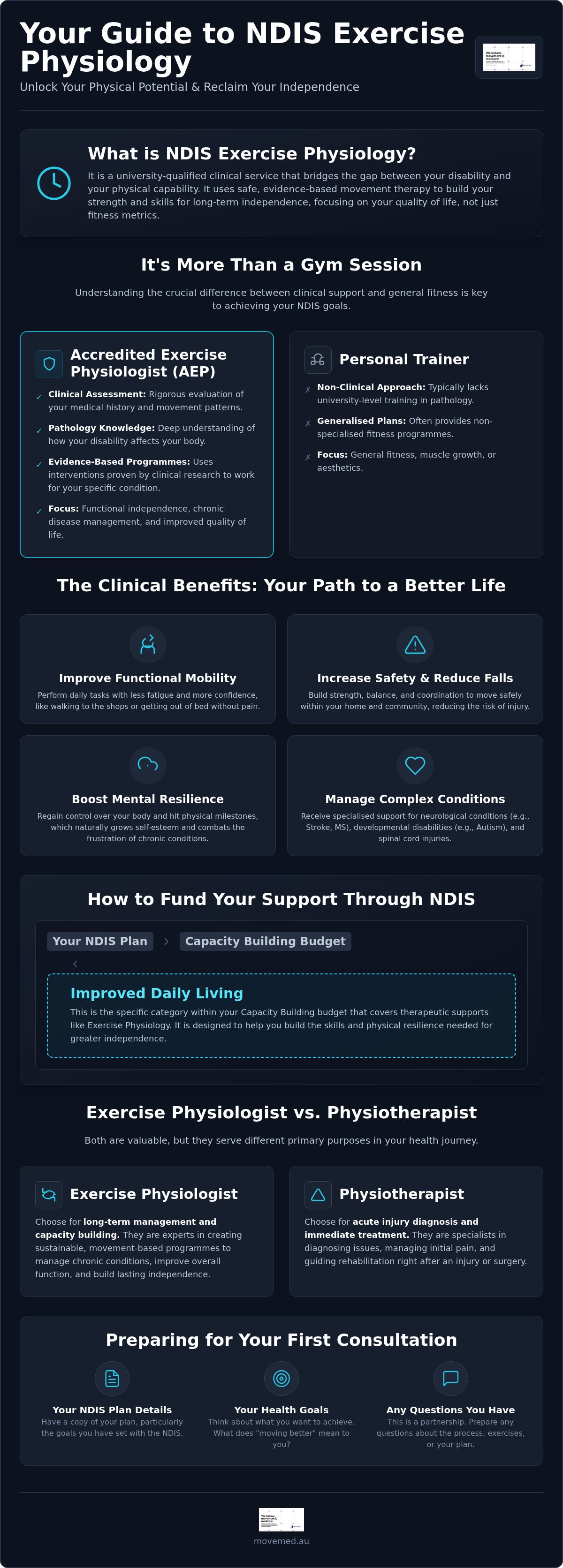
It's easy to assume that exercise physiology is just a fancy term for a gym session, but the reality is far more specialised. An Accredited Exercise Physiologist (AEP) is a university-qualified allied health professional with deep expertise in the pathology of disability. They aren't just there to help you lift weights. Instead, they act as a clinical partner in your healthcare journey, ensuring every movement you make is safe and purposeful. Within the NDIS framework, the focus is always on capacity building. This means we work together to develop the skills and physical strength you need to live as independently as possible. We focus on the long game.
The Difference Between Exercise Physiology and General Fitness
A standard personal trainer usually focuses on general fitness or aesthetics. Clinical ndis exercise physiology is different. It starts with a rigorous assessment of your physical function and medical history. We don't use a one-size-fits-all approach. Every programme is tailored to your specific disability, whether you're managing a neurological condition, a physical impairment, or chronic pain. We prioritise safety above all else. Our goal is to improve your functional independence, helping you perform daily tasks with less fatigue and more confidence. It's about quality of life, not just muscle growth. To achieve this, we focus on:
- Clinical Assessment: We evaluate your movement patterns and health history before any activity begins.
- Evidence-Based Interventions: Every exercise is chosen because clinical research proves it works for your specific condition.
- Pathology Knowledge: We understand how your disability affects your heart, lungs, and musculoskeletal system.
Why the NDIS Funds Exercise Physiology
The NDIS funds supports that are considered reasonable and necessary to help you reach your goals. For many participants, physical movement is the key to unlocking community participation. If you can't move comfortably, it's much harder to catch a bus, attend a social group, or hold down a job. This is why the scheme recognises ndis exercise physiology as a vital therapeutic support. It helps you build the physical resilience required to engage with the world around you. Exercise physiology is a clinical intervention for disability management that transforms physical potential into daily capability.
The Clinical Benefits: How Exercise Physiology Supports Your Goals
How does a clinical exercise programme actually change your Tuesday morning? For many participants, the value of ndis exercise physiology is found in the small, essential victories. It might be the ability to get out of bed without a sharp spike in back pain, or the confidence to walk through the local Manningham shopping centre without needing to sit down every five minutes. These aren't just physical improvements; they're the building blocks of independence. By focusing on functional mobility, we help you translate clinical strength into the movements you need for real life.
Beyond the physical, there's a powerful mental shift that happens when you reclaim control over your body. Managing a chronic condition is exhausting, and the frustration of slow physical progress can take a toll on your resilience. The role of ndis exercise physiology in complex care is to provide a consistent, evidence-based path forward. When you start to hit milestones, your self-esteem naturally grows. We work with participants who have complex needs, including those with physical disabilities and neurological conditions, to ensure their movement journey is both safe and empowering.
Support for Specific Conditions
Our clinical team specialises in managing the unique challenges presented by neurological conditions like Stroke, Multiple Sclerosis (MS), and Parkinson's. We also provide targeted support for individuals with intellectual and developmental disabilities, including NDIS and Autism. For those with spinal cord injuries or permanent physical disabilities, the focus shifts to maintaining secondary health and preventing the complications that often arise from reduced mobility. We look at the whole person, not just the diagnosis.
Integrating Hydrotherapy and Clinical Pilates
Standard gym equipment isn't always the right fit for everyone. This is why we integrate specialised modalities like hydrotherapy and Clinical Reformer Pilates into our NDIS programmes. Hydrotherapy offers a weightless environment where you can practice movement without the impact of gravity; this is often a game-changer for chronic pain management. Meanwhile, Clinical Pilates focuses on core stability and postural support, helping you build a foundation of strength that protects your joints. At MoveMed, we combine these approaches to create a holistic plan that reflects your specific NDIS goals. If you're ready to see how a tailored programme can work for you, partnering with a local expert is the first step toward a more mobile future.
Navigating the NDIS: Which Budget Categories Cover Exercise Physiology?
Opening your NDIS plan for the first time can feel like trying to decode a foreign language. You know you want to move better and reduce your pain, but finding the right "bucket" of money to pay for it shouldn't be your job alone. Most participants find their funding for ndis exercise physiology tucked away in the Capacity Building section of their plan. This part of your budget is specifically designed to help you learn new skills and build the physical capacity you need to reach your long-term goals. It's about investing in your future independence.
Improved Daily Living vs. Improved Health and Wellbeing
Improved Daily Living is often the most flexible category. It covers therapeutic supports that help you gain more independence in your day-to-day life. If your goal is to dress yourself more easily or walk to the local shops without help, this is likely where your funding sits. Improved Health and Wellbeing is more specific, focusing on physical activity and nutrition to manage the impact of your disability. It's a good idea to check your NDIS Exercise Physiology coverage before you book your initial assessment. In some specific cases, you might even be able to use Core Supports if your needs are urgent, though this usually requires a conversation with your planner or Local Area Coordinator.
Self-Managed, Plan-Managed, or NDIA-Managed?
Whether you are self-managed, plan-managed, or NDIA-managed, we make the clinical partnership as smooth as possible. Self-managed participants enjoy the most flexibility, while plan-managed individuals appreciate us sending invoices directly to their provider to save them the paperwork. If you have a Support Coordinator, they can be a fantastic ally in helping you allocate your budget correctly. When your plan review approaches, be sure to tell your planner how movement has helped you. Using specific examples of physical progress makes it much easier for them to justify continued funding for your clinical programme. We are here to help you prepare those reports so your progress is clearly documented and your goals remain the priority.
Exercise Physiology vs. Physiotherapy: Choosing the Right Support
It's one of the most frequent questions we hear: "Do I need a physio or an exercise physiologist?" While both are university-trained allied health professionals, they play very different roles in your NDIS journey. Think of it as the difference between fixing a specific problem and building a stronger system. Physiotherapy is often your first stop for an acute injury or a new pain. They focus on diagnosis and "hands-on" manual therapy to get you moving again. In contrast, ndis exercise physiology is about what happens next. We take over once the initial crisis has passed, focusing on "hands-off" movement-based rehabilitation to ensure you stay strong and independent for years to come.
The best outcomes usually happen when these two professions work together. A physiologist might consult with your physiotherapist to understand the specifics of a recent surgery before designing your long-term strength programme. This multidisciplinary approach ensures your care is seamless. While one professional settles your symptoms, the other builds your capacity. It's a partnership that covers every stage of your recovery, from the moment you get hurt to the day you reach your most ambitious physical goals.
When to Choose a Physiotherapist
You should generally see a physiotherapist if you are in the "acute" phase of an injury. This means the pain is new, sharp, or caused by a recent accident or surgery. They are the experts in initial diagnosis and use manual techniques like joint manipulation or soft tissue massage to reduce your immediate discomfort. If you need someone to physically move your limbs or help settle a flare-up so you can sleep, a physio is the right choice. They provide the clinical "reset" your body needs before you can begin more active training.
When to Choose an Exercise Physiologist
Once your pain is manageable, ndis exercise physiology becomes your primary tool for long-term health. We are the specialists in "functional" movement. We help you build the endurance needed for community participation, such as walking through the park or managing a full day of social activities. If you want to create a sustainable exercise routine that you can eventually do at home or in a local gym, an AEP is your guide. We focus on managing chronic diseases and permanent disabilities through tailored movement programmes that evolve with you. If you're unsure which path is right for your specific goals, you can book a consultation with our clinical team to find the best starting point for your journey.
Accessing NDIS Exercise Physiology in Templestowe: Your MoveMed Journey
Choosing a healthcare provider shouldn't feel like a transaction with a faceless corporation. At MoveMed, we are deeply rooted in the Manningham community, serving our neighbours in Templestowe Lower and the surrounding suburbs. We believe that the best clinical outcomes happen when you feel at home in your clinic. When you start your journey with us, you aren't just another plan number; you're a partner in a shared mission to reclaim your physical independence. Our team handles the clinical complexity so you can focus entirely on your movement and health.
Your first visit is about understanding where you are and where you want to be. To make the most of this initial consultation, please bring your current NDIS plan, any specific health goals you've identified, and any relevant referral information from your GP or specialist. We'll conduct a thorough clinical assessment to see how your body moves and where the opportunities for growth lie. From there, we'll design a personalised programme that targets your specific needs, whether that's reducing chronic pain or building the stamina to enjoy a walk through Westerfolds Park. We know that plan reviews can be stressful. To support you, we track your physical progress meticulously. We provide the NDIA with detailed reports that translate your hard work into clinical data, proving the value of your ndis exercise physiology sessions. This evidence is vital for ensuring your funding continues to support your needs in the future.
Our Local Clinical Facilities
Our Templestowe Lower clinic is designed to be a safe, welcoming space for all abilities. Here, you can access specialised equipment and expert guidance, including NDIS Clinical Pilates in Templestowe. If water-based therapy is more suitable for your condition, we also coordinate with local hydrotherapy centres to ensure your recovery is low-impact and effective. This integrated approach means you don't have to juggle multiple providers to get the holistic care you deserve. We make sure every part of your ndis exercise physiology programme is accessible and effective.
Taking the First Step
Ready to begin? Booking your initial assessment is a low-friction process. You can contact us directly or have your Support Coordinator or Plan Manager reach out on your behalf. We are here to guide you through the initial paperwork and service agreements so there are no surprises. Our goal is to empower you to move better, live more independently, and feel confident in your body again. Your journey toward better health starts with a single, supported step right here in your local community.
Your Path Toward Greater Physical Independence
Reclaiming your physical confidence doesn't happen overnight, but it does begin with a single, purposeful choice. We've explored how ndis exercise physiology acts as a clinical bridge, turning your plan's funding into real-world functional gains like improved mobility and reduced chronic pain. By choosing a partner who understands the nuances of the NDIS, you can stop worrying about budget categories and start focusing on your progress. Our team of Accredited Exercise Physiologists (AEPs) is here to guide you through every milestone with expert clinical support.
As a trusted local Templestowe provider, MoveMed offers more than just a gym programme. We provide specialised Clinical Reformer Pilates and hydrotherapy to ensure your journey is safe, effective, and tailored to your unique needs. You don't have to navigate the complexity of disability management alone. If you're ready to move better and live more independently, we're ready to help you take that next step. Start your NDIS journey with MoveMed today and discover what your body is truly capable of achieving. Your future of better health and increased freedom is waiting.
Frequently Asked Questions
Do I need a GP referral to see an NDIS Exercise Physiologist?
No, you don't strictly need a GP referral to access ndis exercise physiology as a participant. Because the NDIS is a self-directed scheme, you have the freedom to choose a provider that aligns with your specific goals. However, we often find that having a medical history or referral from your doctor provides valuable clinical context. This partnership with your GP ensures our team can design the safest and most effective programme for your unique health needs.
Can I use NDIS funding for hydrotherapy at MoveMed?
Yes, you can certainly use your NDIS funding for hydrotherapy sessions as part of your clinical programme. We integrate water-based therapy for participants who need a low-impact environment to manage chronic pain or improve mobility. Our team coordinates with local hydrotherapy centres to provide expert-led sessions. This approach allows you to practice movement patterns without the full impact of gravity, making it an excellent tool for building confidence and physical strength.
How many hours of exercise physiology can I get in my NDIS plan?
The number of hours allocated for therapy depends entirely on your individual goals and the clinical evidence provided to the NDIA. Typically, a plan will include funding for an initial assessment followed by a set number of hours for ongoing treatment. We work closely with you to determine a sustainable frequency of sessions that fits your budget while ensuring you have enough support to make meaningful progress toward your independence.
Is exercise physiology the same as personal training under the NDIS?
No, exercise physiology is a clinical allied health service, whereas personal training is a general fitness service. Accredited Exercise Physiologists are university-qualified professionals who specialise in clinical interventions for people with disabilities and chronic conditions. While a personal trainer focuses on general fitness goals, an EP focuses on pathology, safety, and functional outcomes. This clinical expertise is why the NDIS recognises exercise physiology as a vital capacity-building support for participants.
What happens during my first NDIS exercise physiology appointment?
Your first appointment is a thorough clinical assessment designed to build a roadmap for your health journey. We'll sit down together to discuss your medical history, your current NDIS goals, and any physical challenges you're facing. Our team then performs a series of movement tests to evaluate your strength, balance, and mobility. This information allows us to create a personalised, evidence-based programme that is safe and directly linked to the outcomes you want to achieve.
Can MoveMed help with NDIS progress reports for my plan review?
Yes, we provide detailed progress reports to support your NDIS plan reviews and ensure your funding continues. We meticulously track your physical milestones and translate your hard work into the clinical data that the NDIA requires. These reports are essential for demonstrating the value of ndis exercise physiology and justifying your ongoing support needs. We handle the technical documentation so you can focus on your movement and reaching your goals.
Is exercise physiology covered for participants with mental health conditions?
Yes, exercise physiology is a proven clinical tool for supporting participants with psychosocial disabilities or mental health conditions. Structured physical activity helps regulate stress hormones, improves sleep quality, and builds emotional resilience. We focus on creating a supportive environment where movement helps you regain confidence and self-esteem. This holistic approach empowers you to engage more fully with your community and manage the daily challenges associated with your condition through regular, guided exercise.
Can I do NDIS exercise physiology sessions at home or only in the clinic?
Most of our sessions take place at our specialised Templestowe Lower clinic where you have access to professional equipment, including our Clinical Reformer Pilates studio. This clinical setting allows us to monitor your progress safely and adjust your programme in real-time. If you have specific requirements regarding your location, we encourage you to discuss these with us during your initial assessment. We'll always guide you toward the setting that best supports your safety and independence.


