
What if the most effective prescription for your chronic pain isn't a pill from the chemist, but a specific sequence of movement tailored to your unique biology? If you’ve spent months or even years relying on passive treatments like massage or heat packs without seeing lasting change, it’s natural to feel frustrated. You might be anxious about whether it is even safe to exercise with your condition, or perhaps you are simply overwhelmed by the paperwork involved in NDIS or TAC claims. Understanding what is exercise physiology is the first step toward moving past that uncertainty and toward a life where you feel in control of your body again.
We agree that managing a long term health condition is exhausting, especially when you are worried about doing more harm than good. This guide promises to demystify the role of Accredited Exercise Physiologists (AEPs) and show you how clinical movement acts as a bridge between a medical diagnosis and true physical freedom. We will preview the specific ways exercise can treat the root cause of your illness, explain how to navigate the 2026 GP Chronic Condition Management Plan, and outline how Templestowe residents can access funded support to start their journey toward better health.
Key Takeaways
- Discover what is exercise physiology and how university-qualified Accredited Exercise Physiologists (AEPs) use clinical movement to treat the root cause of chronic illness.
- Clarify the difference between passive treatments and active therapy, ensuring you choose the right allied health professional for your specific stage of recovery.
- Learn how to manage persistent pain, osteoarthritis, and other complex conditions through evidence-based programs like GLA:D® and clinical Pilates.
- Demystify the initial assessment process to ease any anxiety about exercising with a medical condition or injury.
- Find out how to access funded sessions through the NDIS, TAC, or Medicare Chronic Condition Management Plans at our Templestowe clinic.
Defining Exercise Physiology: More Than Just a Workout
If you have ever wondered what is exercise physiology, you are likely looking for something deeper than a standard gym routine. It is a clinical discipline where movement is prescribed with the same precision as a pharmaceutical drug to treat chronic disease and complex injuries. While general fitness often focuses on aesthetics or athletic performance, Exercise physiology uses evidence-based protocols to restore function and manage persistent pain. This philosophy, known as "Exercise is Medicine", shifts the focus from merely managing a condition to actively reclaiming your physical independence.
The core of this practice is long-term behavioural change. We don't just give you a list of movements to perform in our clinic; we partner with you to build the skills and confidence needed for self-management. This ensures that the progress you make during our sessions translates into your real life at home in Templestowe. It is about creating a sustainable path forward that respects your body's current limits while steadily expanding them.
The Role of an Accredited Exercise Physiologist (AEP)
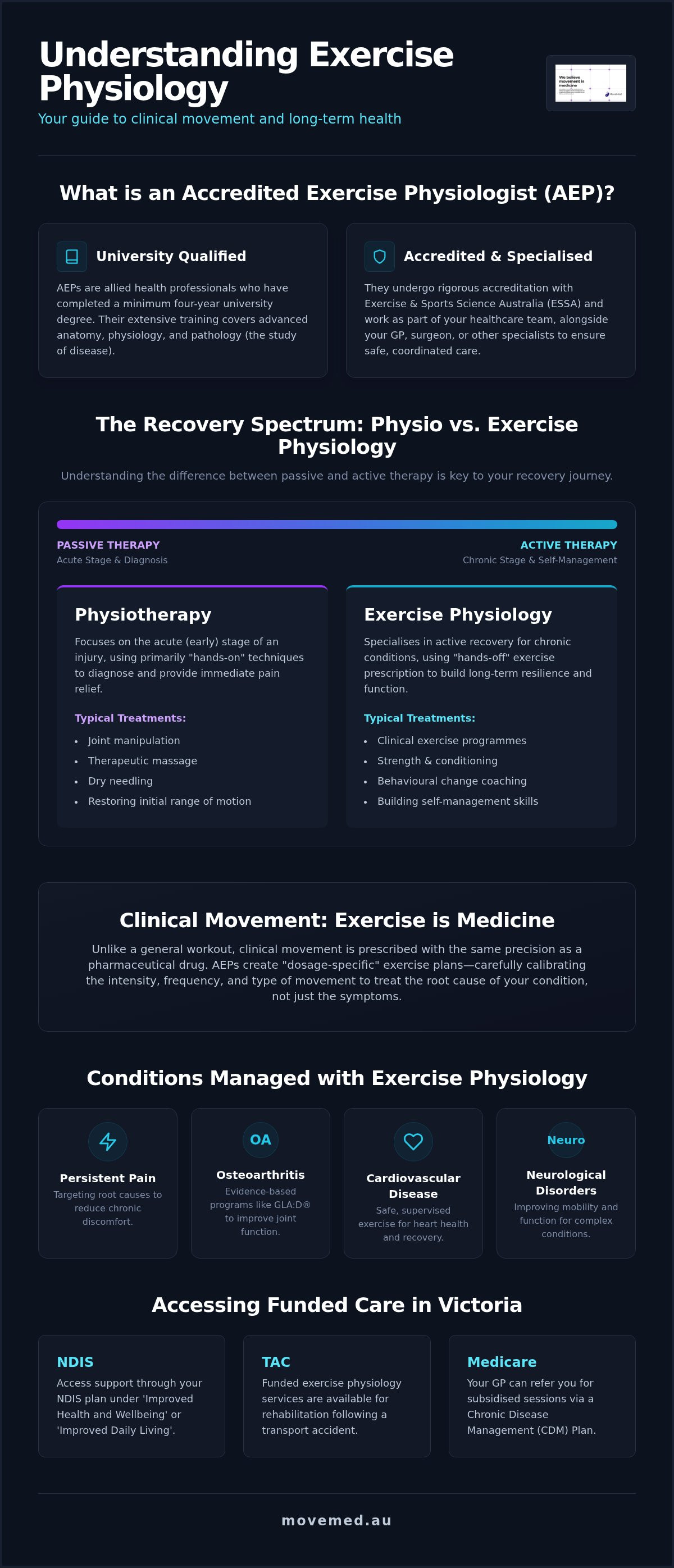
An Accredited Exercise Physiologist (AEP) is a university-qualified allied health professional. In Australia, this means completing a minimum four-year degree followed by rigorous accreditation with Exercise and Sports Science Australia (ESSA). Their training covers advanced anatomy, physiology, and pathology (the study of disease). This deep clinical knowledge allows them to understand how different medical conditions interact with physical activity. They aren't just trainers; they are specialists who work as part of your broader healthcare team alongside your GP, surgeon, or specialist to ensure your recovery is coordinated and safe.
Why Clinical Movement Matters for Your Recovery
Clinical movement targets the root cause of your injury or illness instead of just addressing the surface-level symptoms. For example, while a massage might temporarily soothe a tight muscle, a clinical exercise programme builds the underlying strength and stability required to prevent that tightness from returning. AEPs prescribe "dosage-specific" exercise tailored to your unique medical history. This means we carefully calibrate the intensity, frequency, and type of movement to match your specific needs. This supervised approach is especially critical for those with high-risk conditions, such as cardiovascular disease or neurological disorders, where exercising safely requires expert oversight and constant adjustment.
EP vs. Physiotherapy: Understanding Your Allied Health Team
If you are feeling confused about what is exercise physiology and how it differs from physiotherapy, you are not alone. Many of our clients arrive at our clinic unsure which professional is best suited to their needs. While both roles are university-qualified allied health disciplines, they operate at different points on the recovery spectrum. It isn't a matter of choosing one over the other; rather, it's about understanding how they work together to support your journey. At MoveMed, we often see these professionals collaborate to provide comprehensive injury rehabilitation in Templestowe Lower, ensuring no part of your recovery is left to chance.
The Passive vs. Active Therapy Spectrum
The easiest way to distinguish the two is by looking at the "hands-on" versus "hands-off" approach. Physiotherapy typically focuses on the acute stage of an injury. This involves diagnosis and passive treatments like joint manipulation, massage, or dry needling to reduce immediate pain and restore initial range of motion. It's the essential first step when you're in the middle of a flare-up or immediately following an accident.
In contrast, Exercise Physiologists specialise in active recovery. Once your initial pain is managed, the focus shifts to functional strength and long-term resilience. Understanding what is exercise physiology helps you recognise when it's time to move from the treatment table to the gym floor. This transition is vital; while passive therapy provides relief, active therapy builds the capacity your body needs to prevent the injury from returning. We guide you through this shift, helping you reclaim your confidence in movement without the fear of re-injury.
Choosing the Right Professional for Your Goals
To help you decide where to start, consider your current physical goals and the nature of your condition. While physios are masters of the "quick fix" for acute pain, EPs are the specialists for long-term lifestyle modification and chronic disease management. To make this clearer, we've outlined the typical focus areas below:
| Your Current Goal | Primary Professional |
|---|---|
| Acute injury diagnosis and pain relief | Physiotherapist |
| Managing chronic disease (Diabetes, Cardiac) | Exercise Physiologist |
| Functional strength and lifestyle change | Exercise Physiologist |
| Initial post-operative rehabilitation | Physiotherapist |
| Return-to-work or long-term sports rehab | Exercise Physiologist |
For those seeking a holistic approach to their physical health, we also integrate Clinical Reformer Pilates in Templestowe into our programmes. This allows us to bridge the gap between clinical rehab and functional fitness in a supportive, expert-led environment. If you're still unsure which path is right for you, we invite you to chat with our team to discuss your specific needs.
Conditions Treated: When Should You See an Exercise Physiologist?
Many people assume that seeing an EP is only necessary if you are an elite athlete or recovering from a significant sports injury. In reality, the answer to what is exercise physiology covers a much broader clinical spectrum. It is about using movement as a primary intervention for complex health challenges like persistent lower back pain, osteoarthritis, and metabolic conditions. For those living with Type 2 Diabetes or obesity, we use clinical exercise to improve insulin sensitivity and manage weight effectively. We also focus heavily on the mental health benefits of movement; clinical exercise is a proven tool for reducing symptoms of depression and anxiety by regulating the body's physiological stress response and improving sleep quality.
Managing Chronic Disease with Exercise
AEPs play a critical role in the long term management of cardiovascular disease and hypertension (high blood pressure). By prescribing specific, heart-safe aerobic and resistance exercises, we help strengthen the cardiac muscle and improve overall circulation. For those living with neurological conditions such as Multiple Sclerosis (MS) or Parkinson’s disease, exercise is a vital neuro-rehabilitative tool. It helps maintain balance, coordination, and gait stability, which are essential for daily safety. We also design specialised programmes for bone health, helping clients with Osteoporosis or Osteopenia build bone mineral density through carefully graded, weight-bearing activities. This proactive approach ensures you are not just surviving with a condition, but thriving despite it.
Specialist Programmes: GLA:D® and Beyond
Our clinic offers targeted pathways for those who might find traditional gym environments intimidating or physically inaccessible. One of our most impactful offerings is the GLA:D® programme, an evidence-based initiative specifically designed for individuals living with hip or knee osteoarthritis. This programme focuses on neuromuscular exercises that strengthen the muscles supporting your joints, often significantly reducing pain and improving quality of life. If land-based movement feels too painful due to joint inflammation or excess weight, hydrotherapy provides a low-impact entry point. The warmth and buoyancy of the water allow you to perform movements that might be impossible on land. This often serves as a confidence-building bridge to strength training for seniors in Templestowe, which is a cornerstone of fall prevention and maintaining your independence as you age.
The MoveMed Approach: What Happens in an EP Session?
Stepping into a new clinical environment can feel intimidating, especially if you have been dealing with persistent pain or a complex medical diagnosis. We often hear from clients who worry that they will be expected to perform high-intensity workouts they aren't ready for. At MoveMed, our priority is to replace that anxiety with a sense of partnership. Understanding what is exercise physiology in a practical sense means seeing it as a collaborative journey where your safety and comfort are the primary focus. We don't just see a patient; we see a person with a history, goals, and a specific path to recovery.
Your Initial Clinical Assessment
Your first session is essentially a discovery session. Rather than jumping straight into movement, we spend significant time reviewing your medical history, current medications, and lifestyle factors. This clinical context is vital; it ensures that every recommendation we make is safe for your specific health profile. Once we have established the background, we move into functional testing. This involves measuring your movement patterns, strength, and balance through gentle, objective assessments. It isn't a test of "fitness" in the traditional sense. It's a way for your EP to understand exactly where your body is today so we can map out where it can go tomorrow.
Developing Your Personalised Management Plan
Following your assessment, we design a management plan that is entirely unique to you. These plans aren't "one size fits all" templates. We tailor them to fit your life, whether that involves exercising in our Templestowe clinic or following a structured programme in your own home. For many of our clients, we integrate clinical pilates for back pain as a core component of their recovery. This method allows for precise, low-impact strengthening that targets the deep stabilising muscles often weakened by chronic injury. It's an empowering way to build resilience without the fear of a flare-up.
The journey doesn't end with a plan. We provide ongoing support and use objective clinical data to track your progress over time. We might measure improvements in your range of motion, power output, or even your confidence levels during daily tasks. This evidence-based approach ensures that we can adjust your "dosage" of exercise as you improve, keeping you on the most efficient path toward reclaiming your independence. If you are ready to see how clinical movement can change your daily life, we invite you to book an initial consultation with our expert team today.
Accessing Care in Victoria: NDIS, TAC, and Medicare Funding
Navigating the financial side of allied health can often feel as complex as the medical conditions themselves. For residents in Templestowe, Doncaster, and Bulleen, accessing clinical support shouldn't be stalled by administrative confusion. While we have explored what is exercise physiology from a clinical perspective, it's equally important to understand the funding pathways available in Victoria. Most chronic conditions qualify for some form of financial assistance. Our team acts as your advocate to ensure you receive the full support you are entitled to, handling the complicated paperwork so you don't have to.
One of the most common routes is the Medicare rebate via a GP Chronic Condition Management Plan (GPMP). This plan replaced older terminology like EPC or CDM plans in July 2025. As of May 2026, this plan provides a rebate of $63.40 per session for up to five allied health visits per calendar year. It is a vital resource for those managing long term issues like heart disease or diabetes. We work closely with local GPs to ensure your plan is implemented effectively and your progress is reported back accurately.
NDIS and Disability Support
For NDIS participants, Exercise Physiology is usually funded under "Improved Health and Wellbeing" or "Therapeutic Supports". The primary goal here is capacity building. We work with participants across the Manningham area to improve their ability to perform activities of daily living (ADLs). Whether that involves building the strength to get in and out of a car independently or improving balance to navigate the local shops, our programmes are designed to increase your autonomy. We understand the specific reporting requirements of the NDIS and provide the detailed clinical evidence needed for your plan reviews, ensuring your funding continues to match your needs.
TAC, WorkCover, and DVA Schemes
Recovery after a road accident or workplace injury requires a structured, evidence-based approach to get you back to your normal life. The Transport Accident Commission (TAC) provides specific funding for EP services, with the 2026/27 standard rate set at $122.29 for a one hour consultation. Similarly, WorkCover schemes use clinical movement to facilitate a safe, sustainable return to work by rebuilding the functional capacity required for your specific job role. We also proudly support our veteran community through Department of Veterans’ Affairs (DVA) funding. If you have served, you may be eligible for clinically prescribed exercise to manage service-related injuries or chronic pain. Our role is to bridge the gap between these funding bodies and your recovery, ensuring a seamless journey from your initial referral to your final goal.
Reclaiming Your Independence Through Movement
Understanding what is exercise physiology is the first step toward moving away from the frustration of persistent pain and toward a life of physical confidence. We have explored how Accredited Exercise Physiologists use clinical movement to treat the root cause of illness, bridging the gap between a medical diagnosis and true physical freedom. Whether you are navigating the complexities of NDIS funding or seeking a safe way to manage osteoarthritis, the focus remains on a partnership that respects your body's limits while steadily expanding them.
As a registered provider for NDIS, TAC, and WorkCover, MoveMed offers the local expertise Templestowe and Doncaster residents need to navigate the healthcare system with ease. Our university-qualified team is ready to help you translate clinical evidence into real-world progress. Book your initial Exercise Physiology assessment at our Templestowe clinic today and start your journey toward lasting health. You have the right to feel strong and capable in your own body again; we are here to help you get there.
Frequently Asked Questions
Do I need a referral to see an Exercise Physiologist at MoveMed?
No, you don't need a formal referral to see us as a private patient. You can simply call or book online to start your journey. However, if you intend to claim rebates through Medicare, TAC, WorkCover, or the DVA, a referral from your GP or specialist is required. Many of our local Templestowe clients begin as private participants while they organise the necessary paperwork with their doctors.
Is Exercise Physiology covered by Medicare in Australia?
Yes, Medicare provides rebates for exercise physiology services for patients with chronic medical conditions. To access this, you must have a GP Chronic Condition Management Plan (GPMP) in place. As of May 2026, the Medicare rebate is $63.40 per session for up to five allied health visits each calendar year. This is a practical way to discover what is exercise physiology and how it supports your long term health.
What should I wear to my first Exercise Physiology appointment?
Wear comfortable, loose-fitting clothing that allows you to move your limbs freely without restriction. Sturdy, closed-toe footwear like runners or sneakers is essential for safety during our functional testing and movement assessments. You don't need expensive high-performance gym gear; everyday activewear or a simple tracksuit is perfectly fine. We want you to feel relaxed and focused on your movement rather than your outfit.
How many sessions will I need to see results?
The number of sessions required varies depending on your specific diagnosis and physical goals. Most clients begin to notice improvements in their mobility and confidence within 4 to 6 weeks of consistent clinical exercise. Because we focus on long term behavioural change and functional strength, your programme is built for sustainable progress. We use objective clinical data to track your milestones and adjust your plan as you improve.
Can I do Exercise Physiology if I have a severe injury or disability?
Absolutely, exercise physiology is specifically designed for individuals with complex medical histories and significant physical challenges. AEPs are university-trained to adapt clinical movement for those with limited mobility, chronic pain, or neurological conditions. Whether we are using hydrotherapy for buoyancy or chair-based strength training, we ensure your programme is safe and effective for your current capacity. We specialise in helping you move safely despite your limitations.
Is Exercise Physiology the same as personal training?
No, it is a clinical allied health service rather than a general fitness programme. While personal trainers work with the healthy population, AEPs are university-qualified to treat people with chronic diseases and medical injuries. Understanding what is exercise physiology means recognising the difference between standard gym workouts and "dosage-specific" exercise prescribed to manage a medical condition safely. We focus on clinical outcomes rather than just aesthetic fitness.
Does private health insurance cover Exercise Physiology sessions?
Most Australian private health funds provide rebates for exercise physiology under their "extras" or "ancillary" cover. The exact amount you can claim back depends on your specific policy and your remaining annual limits. We recommend contacting your insurer to verify your coverage for "Exercise Physiology" before your first visit. Many funds use specific item codes, such as 102 for an initial assessment, to determine your rebate amount.
What is the difference between an EP and a Physiotherapist?
The primary difference is the stage of treatment and the style of intervention. Physiotherapists often focus on the acute stage of an injury using "hands-on" techniques like massage, taping, or joint manipulation to reduce immediate pain. Exercise Physiologists take over during the sub-acute and chronic stages, using "hands-off" active recovery. We focus on building functional strength and long term self-management to ensure your pain don't return once the initial treatment ends.


