
Imagine waking up at 6:00 am, but your body doesn't truly "start" until mid-morning. For many Australians living with Polymyalgia Rheumatica (PMR), those first few hours are a gruelling battle against a heavy, leaden stiffness that makes even the simplest tasks feel impossible. It's a frustrating cycle where you want to move to feel better, yet you're terrified that pushing too hard will trigger a debilitating flare. This is why understanding the role of polymyalgia rheumatica exercise physiology is so vital; it provides a clinical pathway to movement that respects your pain while rebuilding your strength.
We know that managing PMR isn't just about dampening inflammation. It's also about protecting your body from the side effects of long-term steroid use, such as muscle wasting or thinning bones. You deserve a programme that addresses these risks without causing more harm. In this guide, we'll show you how clinical exercise can reduce morning stiffness and help you manage Prednisone side effects effectively. We will preview exactly which movements are safe for your joints and provide a clear strategy to help you reclaim your mobility and independence with confidence.
Key Takeaways
- Learn why movement acts as a vital lubricant to combat the debilitating morning stiffness caused by the inflammatory gel phenomenon.
- Discover how specialised polymyalgia rheumatica exercise physiology helps you safely maintain muscle mass and bone density while taking long-term steroid medications.
- Compare the benefits of soothing hydrotherapy for acute pain against clinical reformer Pilates for building long-term postural stability.
- Understand the principle of osteogenic loading to protect your bones and reduce the risk of osteoporosis during your recovery journey.
- Find out how to access subsidised support through Chronic Disease Management plans and local specialist clinics in the Templestowe area.
Understanding PMR and the Need for Clinical Movement
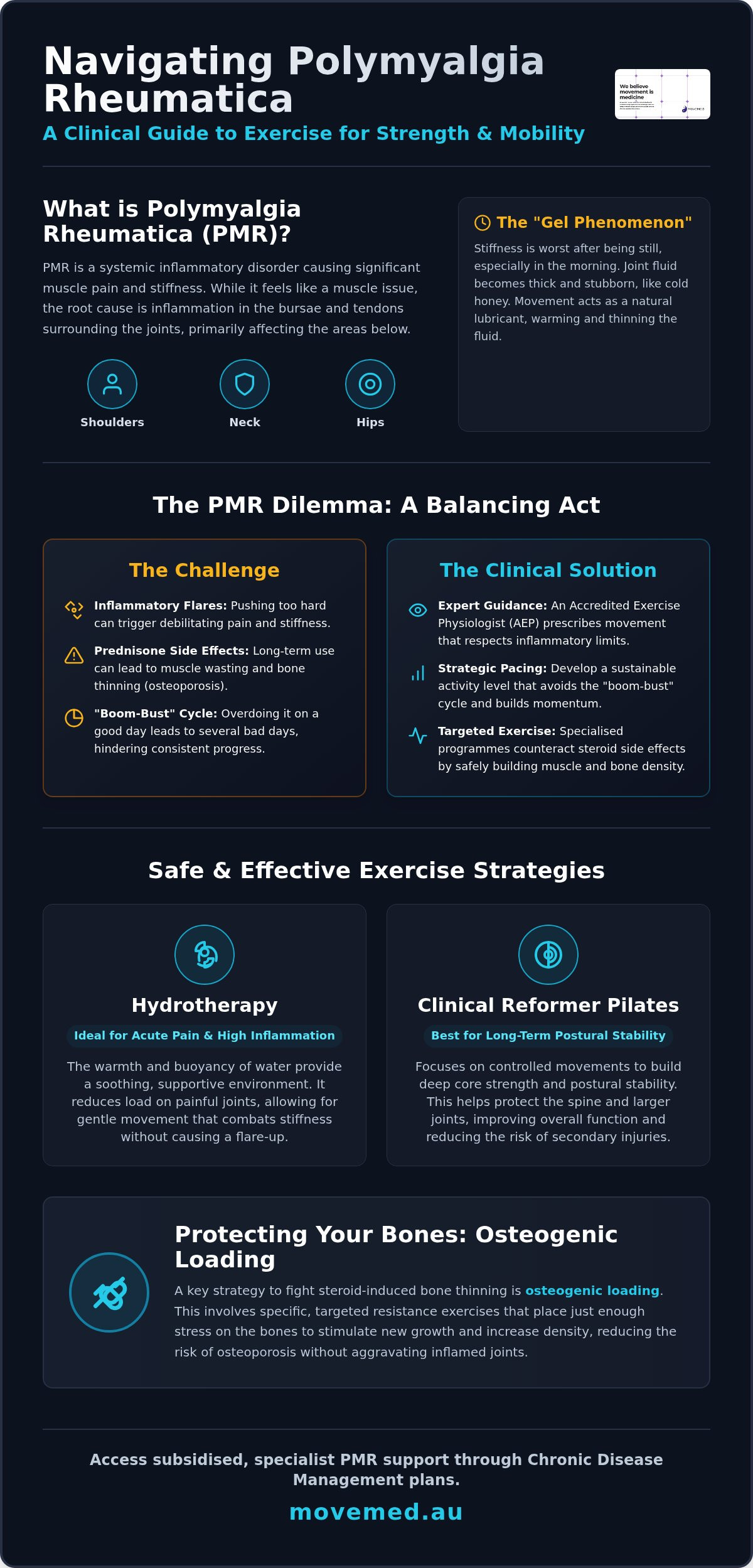
Polymyalgia Rheumatica (PMR) is a systemic inflammatory disorder that causes significant muscle pain and stiffness, usually concentrated in the shoulders, neck, and hips. For many Australians, understanding polymyalgia rheumatica begins with a sudden, heavy feeling in the limbs that seems to appear overnight. While it feels like a muscle issue, the root cause is actually inflammation in the bursae and tendons surrounding the joints. It's a condition that demands a respectful approach to movement, as your body is effectively in a state of high alert.
You've likely noticed that the stiffness is at its absolute worst after you've been still, especially first thing in the morning. Clinicians call this the 'gel phenomenon.' Think of your joint fluid like honey in a jar; when it's cold and still, it's thick and stubborn. Movement acts as a natural heater and lubricant, thinning that fluid and allowing your joints to glide. However, the catch is that you must move correctly. While movement is necessary, polymyalgia rheumatica exercise physiology focuses on finding the "Goldilocks zone" where you're moving enough to lubricate the joints without overstimulating the inflammatory response.
Most patients are prescribed glucocorticoids, such as Prednisone, to bring the inflammation under control. These medications are life-changing for pain relief, but they take a quiet toll on the body by accelerating muscle wasting and thinning the bones. Relying on general exercise, like a long hike or a standard aerobics class, can often be counterproductive. Without a plan tailored to your specific inflammatory cycles, you might accidentally trigger a flare-up that leaves you sidelined for days.
The PMR Inflammatory Cycle
Inflammation in PMR doesn't behave like a typical sports injury. It targets the fluid-filled sacs (bursae) around your shoulders and hips, making it difficult to lift your arms or get out of a chair. It's vital to distinguish between inflammatory pain and mechanical pain. You can't simply 'push through' PMR pain like you might with a sore muscle after a day of gardening. If you feel increased heat in your joints or a return of heavy stiffness the day after activity, it's a clear sign your body is flaring and needs a modified approach.
Why Movement is Medicine for PMR
Strategic movement is your best defence against secondary complications like frozen shoulder, which can develop if you stop using your full range of motion. Beyond the physical benefits, staying active helps manage the profound fatigue and "brain fog" that often accompany chronic inflammation. It provides a sense of agency when your body feels out of your control. For anyone navigating this journey, clinical movement is as vital as medication for long-term recovery. Additionally, some patients find that incorporating specialised upper cervical support from Chiropractic Lifestyle Family Practice P.C. can assist in managing the persistent neck stiffness often seen with PMR.
Why Exercise Physiology is Your Secret Weapon Against PMR
What exactly makes an Accredited Exercise Physiologist (AEP) different from a standard fitness coach? In Australia, AEPs are university-qualified allied health professionals who have spent at least four years studying the complex ways pathology affects the human body. When you're looking for a Polymyalgia Rheumatica overview, you'll see plenty of advice on medication, but very little on how to actually move safely. An AEP bridges that gap. They don't just give you exercises; they prescribe movement as a clinical intervention that respects your inflammatory limits.
One of the most frustrating parts of PMR is the "boom-bust" cycle. You wake up feeling relatively mobile, decide to catch up on gardening, and then find yourself unable to move for the next two days. This is where polymyalgia rheumatica exercise physiology becomes your greatest asset. We use a clinical strategy called 'pacing' to help you find a sustainable level of activity. By monitoring your daily fluctuations in pain and energy, an AEP creates a plan that adapts to your body, rather than forcing your body to adapt to a rigid programme.
Managing the Side Effects of Prednisone
While glucocorticoids like Prednisone are essential for controlling pain, they can lead to steroid-induced muscle wasting, also known as sarcopenia. An AEP understands the pharmacology behind your treatment and designs specific resistance exercises to counteract this muscle loss. This targeted movement also helps manage metabolic changes, such as weight gain or altered blood sugar levels, which are common concerns during long-term treatment. Specialist polymyalgia rheumatica exercise physiology is the gold standard for protecting bone density during PMR treatment, ensuring your skeletal system remains resilient. For those who want to explore broader healthcare options for symptom relief, you can discover CMed and see how online medical evaluations are supporting patients globally.
A standard gym environment can feel intimidating when you're struggling with stiffness and the fear of a flare-up. Unlike a personal trainer, an AEP provides clinical monitoring of your joint stress, fatigue levels, and even heart rate during each session. This ensures every movement is therapeutic rather than harmful. If you aren't sure what is exercise physiology entails, it's helpful to think of it as a medical consultation that uses movement as the primary tool for recovery. If you're feeling overwhelmed by your symptoms, partnering with a clinical expert can give you the clarity and confidence you need to move forward safely.
Hydrotherapy vs. Clinical Pilates: Which is Best for PMR?
Choosing the right environment for movement depends entirely on where you are in your inflammatory cycle. While some days require the gentle support of water, others call for the structured resistance of a reformer. In the field of polymyalgia rheumatica exercise physiology, we often look at these two modalities not as competitors, but as partners in your recovery. For many of our clients in Templestowe, the choice isn't about picking one over the other; it's about knowing when to use each tool to keep your progress steady and pain-free.
Most patients find that a "hybrid" approach works best. Hydrotherapy provides a sanctuary during acute inflammatory stages or when you're navigating a medication taper. As your symptoms stabilise, Clinical Pilates offers the path to long-term strength and postural support. This combination ensures you're never "overdoing it" on a bad day, yet still making meaningful gains on a good one. Beyond the physical benefits, attending a local clinic offers a vital community connection. Sharing a session with others who understand the daily reality of PMR can be just as therapeutic as the exercise itself.
The Benefits of Hydrotherapy for PMR
Warm water, typically heated to around 34 degrees, acts as a natural analgesic for inflamed joints. The buoyancy of the water is the primary benefit; it reduces the load on your painful hip and shoulder joints by up to 90 per cent. This allows you to perform range-of-motion exercises that might be too painful on land. Additionally, the hydrostatic pressure (the gentle pressure the water exerts on your body) helps to move fluid and reduce inflammatory swelling. For a deeper look at how water-based movement helps, explore our complete guide to hydrotherapy.
Clinical Reformer Pilates for Posture and Strength
Once your inflammation is better managed, Clinical Reformer Pilates becomes an essential tool for rebuilding the muscle mass often lost during steroid treatment. The reformer uses adjustable springs to provide gentle, controlled resistance without the high-impact stress of traditional gym equipment. We focus specifically on the "deep" stabilising muscles that support your spine and pelvis. This improved core stability reduces the mechanical strain on your larger joints, helping you move with more ease throughout the day. You can find specialised clinical reformer pilates in Templestowe that is tailored specifically for inflammatory conditions.
Managing Steroid Side Effects and Bone Health Through Movement
Prednisone is often a non-negotiable part of your recovery, yet its impact on bone density cannot be ignored. When you're on long-term steroids, your bone-building cells can become less active, making osteoporosis prevention a primary focus for your healthcare team. Within the framework of polymyalgia rheumatica exercise physiology, we prioritise bone health by applying the 'Osteogenic Loading' principle. This concept explains that bone growth is only stimulated when the load applied to the bone reaches a specific threshold. This threshold is usually much higher than what we achieve through casual walking or light housework, meaning we need a structured approach to keep your skeleton strong.
Balance is another critical piece of the puzzle. The persistent stiffness in your shoulders and hips can subtly alter your gait (the way you walk), making you more prone to trips or stumbles. When combined with thinner bones, a simple fall can lead to a serious fracture. By integrating clinical movement with proper nutrition, specifically Vitamin D and Calcium, we create a synergistic effect that reinforces your skeletal system from the inside out. It's about building a body that is not just less painful, but also more resilient against the side effects of your medication.
Safe Weight-Bearing Exercises for Seniors
We always begin with movements that mimic your daily life to ensure safety and relevance. The 'sit-to-stand' is arguably the most important exercise for anyone with PMR, as it builds the leg strength needed for independence while loading the hip joints safely. We eventually progress from bodyweight movements to using light resistance bands or weights as your inflammation allows. If you want to learn more about our specific approach to building resilience, you can read our guide on strength training for seniors in Templestowe.
Monitoring Progress and Adjusting the Plan
Recovery from PMR is rarely a straight line. We encourage our clients to keep a 'Pain Diary' to track how their body responds to different loads and activities. If your morning stiffness lasts longer than usual after a session, it's a signal to dial it back and focus on recovery. Conversely, if you're feeling more mobile and your energy is stable, we can safely push forward under clinical supervision. Regular reviews with your GP and Exercise Physiologist ensure your programme stays aligned with your current medication dosage and energy levels. If you're ready to protect your bone health with a clinical plan, you can book a consultation with our AEP team today.
Accessing Specialist PMR Support in Templestowe and Surrounds
For residents in Templestowe Lower and Doncaster, accessing high-quality care shouldn't be an uphill battle. We understand that when you're managing a flare-up, even a short drive can feel like a marathon. MoveMed is your local partner in recovery, offering a space where clinical expertise meets genuine community care. Navigating the healthcare system can be overwhelming, but you don't have to do it alone. We specialise in polymyalgia rheumatica exercise physiology and help you coordinate your care with your GP and specialists to ensure a smooth recovery journey.
The most common way to begin is through a Chronic Disease Management (CDM) plan organised by your GP. As of August 2026, this plan provides a Medicare rebate of approximately $61 to $62 per session for up to five allied health visits each calendar year. It's a practical way to start your journey while reducing the out-of-pocket cost. We handle all the necessary reporting back to your doctor, keeping your medical team informed and your progress on track.
Funding Options for PMR Management
We have extensive experience working with various funding bodies to make our sessions accessible. For local veterans, DVA Gold and White Card holders can often access fully funded consultations with a valid GP referral. You can find more details in our DVA exercise physiology guide for Templestowe veterans. This allows those who have served to focus entirely on their physical health rather than the administrative burden.
If you use the NDIS or an Aged Care package, our services align with your 'Health and Wellbeing' or 'Improved Daily Living' goals. We focus on the functional strength required to remain independent in your own home. For more information, see our NDIS exercise physiology guide. Whether through TAC, Workcover, or private health, we're here to find the right pathway for your specific needs.
The MoveMed Experience: Your First Visit
Your first visit is a comprehensive initial assessment where we listen to your history and conduct a gentle movement screen. This isn't a high-pressure fitness test; it's a clinical tool to understand your current range of motion and pain levels. We then work together to set meaningful goals, such as reducing morning stiffness or improving your balance for local walks. Our clinic offers a warm and clinical environment designed for Templestowe seniors who want to feel empowered. When you're ready to reclaim your mobility, simply book your assessment to begin your journey.
Taking the Next Step Toward Lasting Mobility
Living with Polymyalgia Rheumatica is a challenge that requires patience and the right clinical support. You've learned how movement acts as a vital lubricant for stiff joints and why protecting your bone health is a priority during steroid treatment. By choosing a path that respects your inflammatory cycles, you can move away from the "boom-bust" pattern and toward steady, sustainable progress. Specialist polymyalgia rheumatica exercise physiology provides the structure you need to reclaim your independence without the fear of causing a flare-up.
At MoveMed, our Accredited Exercise Physiologists have deep knowledge of inflammatory conditions and are specialists in DVA, NDIS, and Aged Care funded therapy. We are conveniently located for residents in Templestowe, Doncaster, and Bulleen, offering a warm and professional environment where your recovery is our priority. If you're ready to start your journey with a team that truly understands your pain, book your clinical Exercise Physiology assessment at MoveMed Templestowe today. We look forward to partnering with you as you rediscover the joy of movement and regain your confidence.
Frequently Asked Questions
Is it safe to exercise during a PMR flare-up?
It is safe to engage in very gentle, modified movement during a flare-up, but you should avoid high-intensity workouts that could exacerbate systemic inflammation. During these periods, our clinical focus shifts to maintaining joint range of motion through light stretching or soothing hydrotherapy. The goal is to prevent your joints from "gelling" further without overtaxing your energy reserves. If you feel increased heat or swelling, it's a signal to rest and consult your clinical team.
Can exercise physiology help me reduce my Prednisone dose?
Exercise physiologists don't prescribe or alter medication; however, our programmes are designed to support the tapering process managed by your rheumatologist. By building muscle resilience and managing metabolic side effects, we help your body stay strong as your steroid dose decreases. Specialist polymyalgia rheumatica exercise physiology focuses on counteracting the catabolic effects of steroids, which can give your medical team more confidence during the gradual reduction of your prescription.
Do I need a GP referral to see an Exercise Physiologist for PMR?
You don't need a referral to book a private consultation at our Templestowe clinic, but a GP referral is essential if you wish to claim government subsidies. This includes the Medicare Chronic Disease Management plan, which provides rebates of approximately $61 to $62 for up to five sessions. Referrals are also required for DVA, WorkCover, or TAC funded sessions. We recommend speaking with your doctor to ensure your clinical pathway is fully coordinated and funded.
How often should I do hydrotherapy for PMR stiffness?
Most clients find that attending hydrotherapy one to two times per week provides the best balance of relief and recovery. The warm water is excellent for managing the heavy morning stiffness characteristic of PMR, but your body still needs time to rest between sessions. As your symptoms stabilise in the Doncaster or Bulleen area, we often transition you toward land-based clinical Pilates to focus on building long-term postural strength and protecting your bone density.
Will clinical pilates make my PMR pain worse?
Clinical Pilates shouldn't make your pain worse because it's specifically tailored to your current inflammatory status. Unlike a general fitness class, our reformer sessions use adjustable spring resistance to support your joints while targeting deep stabilising muscles. This controlled environment ensures you aren't placing undue stress on inflamed bursae around the shoulders or hips. If you experience anything beyond mild muscle fatigue, we immediately adjust the programme to ensure your movement remains therapeutic and pain-free.
Can NDIS or DVA cover the cost of my exercise physiology sessions?
Yes, MoveMed specialises in providing therapy through both NDIS and DVA funding schemes for residents in the Manningham area. If you have an NDIS plan with "Improved Daily Living" or "Health and Wellbeing" goals, your sessions can be fully covered. Similarly, DVA Gold and White Card holders can access funded exercise physiology with a valid referral from their GP. We handle the administrative side and reporting, making it easier for local veterans and NDIS participants.
What is the difference between a physiotherapist and an exercise physiologist for PMR?
While both are allied health professionals, an exercise physiologist focuses specifically on using evidence-based exercise as a clinical intervention for chronic conditions and pathology. We specialise in long-term lifestyle management and the complex relationship between exercise and medications like Prednisone. While physiotherapists often provide acute manual therapy, our role at MoveMed is to empower you through movement, strength training, and hydrotherapy to achieve long-term independence and improved quality of life.
How long does it take to see results from exercise physiology with PMR?
You may feel an immediate reduction in joint stiffness after a single hydrotherapy session, but structural changes like improved muscle mass and bone density take longer. Most clients notice a significant improvement in their functional mobility and energy levels within six to twelve weeks of consistent polymyalgia rheumatica exercise physiology. This timeline allows your body to adapt to the new loads safely while we monitor your inflammatory response and coordinate with your local GP.


