

What if the most effective way to regain your strength didn't involve the jarring impact of a gym floor or the constant strain on your aching joints? For many Australian veterans, service-related injuries make traditional exercise feel like a battle in itself. You likely find that gravity is no longer your friend, and the very movements intended to help you often leave you feeling more exhausted and in pain. It's a common frustration, but it doesn't have to be your permanent reality.
Accessing dva funded hydrotherapy provides a clinical gateway to movement without the weight. By utilising the natural buoyancy of water, you can perform essential rehabilitation exercises that would be impossible on land. This guide is designed to help you navigate the process of securing funded care to reduce your chronic pain and improve your daily mobility. We'll break down the DVA Treatment Cycle rules, explain the role of your Exercise Physiologist, and provide a clear, stress-free path to reclaiming your physical independence through expert clinical support.
Key Takeaways
- Learn why clinical hydrotherapy is a targeted medical treatment led by Accredited Exercise Physiologists, rather than just a casual swim at the local centre.
- Understand how the "Science of Buoyancy" reduces joint stress by up to 90%, allowing you to exercise without the pain associated with land-based movements.
- Discover the straightforward process for accessing dva funded hydrotherapy through the DVA Treatment Cycle and your local GP.
- Compare the specific advantages of zero-impact aquatic therapy against land-based exercise to find the right entry point for your recovery.
- See how personalised clinical pathways can help you reclaim your independence and manage chronic service-related injuries with confidence.
What is DVA Funded Hydrotherapy?
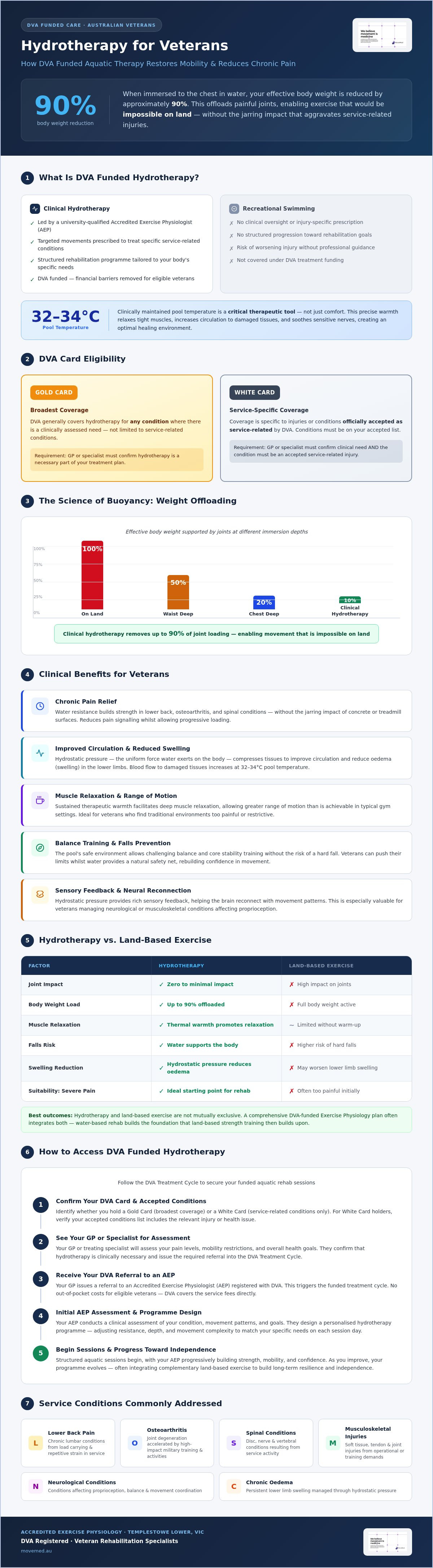
Hydrotherapy isn't just a leisurely soak or a few laps at the local centre; it's a specific form of clinical exercise performed in a heated pool, typically maintained between 32 and 34 degrees Celsius. This precise temperature is crucial. It helps to relax tight muscles, increase circulation, and soothe sensitive nerves without the strain of high-impact movement. For many veterans, dva funded hydrotherapy serves as a vital bridge between acute injury management and reclaiming full physical independence.
It's important to distinguish this from recreational swimming. While a dip in the ocean or a public pool can be pleasant, clinical hydrotherapy involves targeted movements prescribed to treat specific service-related conditions. These sessions are led by a professional who understands the mechanics of your injury, ensuring every movement serves a purpose in your recovery journey. You won't just be "going for a swim"; you'll be engaging in a structured rehabilitation programme designed for your specific needs.
The Department of Veterans’ Affairs recognises the profound impact of aquatic rehab on long-term health. Consequently, they cover the costs for eligible veterans, removing the financial barrier to high-quality care. This service often forms a core component of a comprehensive dva funded exercise physiology plan, where land and water exercises work together to build your strength and resilience.
Gold Card vs. White Card Eligibility
Understanding your coverage is the first step toward starting your sessions. If you hold a DVA Gold Card, the department generally covers hydrotherapy for any condition where there's a clinically assessed need. For White Card holders, the coverage is specific to injuries or conditions that have been officially accepted as service-related. Regardless of the card colour, you'll need a GP or specialist to confirm that hydrotherapy is a necessary part of your treatment. They'll look at your pain levels, mobility restrictions, and overall health goals to ensure this is the right path for you.
The Role of the Exercise Physiologist
An Accredited Exercise Physiologist (AEP) is more than just a trainer; they are university-qualified health professionals. At MoveMed, our AEPs specialise in translating clinical goals into safe, effective water-based movements. We don't believe in "one-size-fits-all" pool programmes. Instead, we focus on identifying the underlying cause of your discomfort. By adjusting the resistance and depth of your exercises, your AEP ensures you aren't just masking symptoms but actively strengthening the body to prevent future flare-ups. This partnership ensures your sessions are productive, safe, and tailored exactly to what your body needs on that particular day.
Clinical Benefits of Aquatic Therapy for Veterans
If you've spent years carrying heavy packs or enduring high-impact training, your joints likely feel the toll. Water changes the physics of movement. Through the "Science of Buoyancy", being immersed to the chest reduces your effective body weight by approximately 90%. This offloads painful joints, allowing you to move with a freedom that just isn't possible on land. It's a weightless environment where your recovery takes centre stage.
The therapeutic warmth of a heated pool facilitates muscle relaxation and an increased range of motion. By maintaining the water at a steady 32 to 34 degrees, we can increase blood flow to damaged tissues and soothe the nervous system. This makes dva funded hydrotherapy an ideal environment for those who find traditional gym settings too painful or restrictive. It's about creating a safe space where your body can heal without being pushed past its limits.
Managing Chronic Pain and Service Injuries
Veterans often deal with specific issues like lower back pain, osteoarthritis, or spinal conditions resulting from their time in service. Water resistance provides a unique way to build strength without the jarring impact of concrete or treadmill work. You can work on your mobility and muscle tone while the water acts as a gentle, consistent resistance tool. Hydrostatic pressure is the uniform force exerted by water against the body, which helps compress the tissues to improve circulation and effectively reduce swelling (oedema) in the lower limbs. This pressure also provides sensory feedback, helping your brain reconnect with your movements.
Falls Prevention and Balance
The safe environment of the pool allows for challenging balance training without the risk of a hard fall. You can push your limits and rebuild core stability while the water supports you, which significantly reduces the fear of falling. This serves as a natural progression toward land-based strength training for seniors Templestowe, ensuring you transition to everyday activities with confidence. Reclaiming your balance in the water is a powerful step toward reclaiming your independence in the community.
Beyond the physical, we also see significant mental health outcomes. The quiet, rhythmic nature of aquatic exercise helps manage symptoms of PTSD and anxiety. It provides a calm space to focus on your body's capabilities rather than its limitations. If you're ready to see how these clinical benefits apply to your recovery, our team at MoveMed can help you get started with a personalised programme.
Hydrotherapy vs. Land-Based Exercise: Which is Better?
Choosing between the pool and the gym isn't about finding a single "winner." Instead, it's about matching the exercise environment to your body's current needs and limitations. Land-based exercise requires you to manage gravity and ground reaction forces, which can be difficult if your service-related injuries are currently flared up. dva funded hydrotherapy removes these barriers by providing a zero-impact setting where movement feels fluid rather than forced.
One of the most significant differences lies in the "Resistance Factor." While a dumbbell only provides resistance in the direction of gravity, water offers 360-degree resistance. Every movement you make in the pool is met with gentle, consistent pressure from all sides. This leads to efficient muscle activation and helps re-engage stabilising muscles that may have become inactive due to chronic pain. For many veterans, the pool serves as the essential "entry point" when their pain thresholds make land-based training feel impossible.
When to Choose the Pool
If you're in the early stages of post-surgical rehab, such as after a hip or knee replacement, the pool is often the safest place to start. It allows you to practice walking and moving your joints without the risk of overloading the surgical site. It's also the best choice during severe flare-ups of chronic conditions like lower back pain or osteoarthritis. For those who find the clanging weights and high-intensity atmosphere of a traditional gym intimidating, the heated pool acts as a "gentle centre" where you can focus entirely on your own progress.
Transitioning to Land-Based Therapy
While the water provides a wonderful environment for healing, the ultimate goal for most is to build enough capacity for daily life on land. We don't want you restricted to the water forever. As your strength improves and your pain levels stabilise, we often introduce land-based modalities to complement your aquatic gains. A popular and effective progression is clinical reformer pilates Templestowe. This approach uses spring-loaded resistance to bridge the gap between the pool and the gym, helping you build a sustainable, long-term exercise habit that supports your independence.
Accessing Care: The DVA Treatment Cycle and Referral Process
Navigating the pathway to recovery shouldn't feel like an administrative burden. The process for accessing dva funded hydrotherapy is structured to ensure you receive the right care at the right time. Your journey begins with a visit to your GP to discuss your clinical needs. If they determine that aquatic therapy will assist in managing your service-related injuries, they'll provide a D904 referral form (or a clinical letter) addressed to an Accredited Exercise Physiologist.
This referral triggers the start of what the DVA calls the Allied Health Treatment Cycle. This framework allows for 12 sessions or 12 months of treatment, whichever occurs first. It's a collaborative process; at the end of each cycle, your Exercise Physiologist prepares an End-of-Cycle Report. This document communicates your progress, functional gains, and any ongoing clinical needs back to your GP. This ensures your medical team remains informed and your treatment plan stays aligned with your recovery goals.
Understanding the 12-Session Rule
The DVA uses this cycle-based approach to ensure that your care remains effective and evidence-based. It's not a limit on your total treatment, but rather a point of review to make sure you're getting the best possible outcomes. For veterans holding a TPI (Totally and Permanently Incapacitated) Gold Card, there are specific exceptions to these rules for certain chronic conditions, which often allow for more consistent ongoing care. To avoid any gaps in your treatment, we recommend booking your GP review once you reach your tenth session. This proactive approach keeps your momentum going without the stress of paperwork delays.
The MoveMed Referral Concierge
Our Templestowe team acts as your clinical guide, helping you handle the paperwork so you can focus on getting better. When you arrive for your first aquatic assessment, please bring your DVA card, your referral, and any relevant medical reports. We also ensure that your care is coordinated across all platforms. We'll check that your ndis exercise physiology plan or other funding streams don't conflict with your DVA entitlements. If you're ready to start your journey, you can contact our team at MoveMed today to discuss your referral.
Veteran Hydrotherapy in Templestowe Lower: The MoveMed Difference
MoveMed isn't just another clinic; we're a part of the Manningham community. We recognise the sacrifices made by our former service members, and our commitment to providing high-quality dva funded hydrotherapy is rooted in this respect. We don't believe in "one-size-fits-all" pool programmes. Every veteran who walks through our doors has a unique history and a unique set of physical challenges. Our Accredited Exercise Physiologists take the time to listen to your story, ensuring your aquatic rehab is as individual as your service record.
Our goal is your independence. While the water provides a soothing environment for recovery, the real win is teaching you the skills to manage your health long-term. We want you to feel confident in your body's ability to move, both in and out of the pool. This focus on empowerment ensures that the gains you make during your sessions translate into a better quality of life at home, not just temporary relief during the session.
Serving the Eastern Suburbs
We provide convenient access for veterans living across the eastern suburbs, including Doncaster, Bulleen, and Warrandyte. By partnering with local heated pool facilities, we ensure you have access to a professional, clinical environment close to home. Local expertise matters. It means you don't have to travel hours for care, making it easier to stay consistent with your recovery. Face-to-face support from a team that knows your local area adds a layer of reassurance that corporate health chains simply can't match. We're your neighbours, and we're invested in your long-term well-being.
Book Your DVA Assessment Today
Before we hit the water, we start with a comprehensive land-based initial assessment at our Templestowe Lower clinic. This is a vital step. It allows us to screen for any movement restrictions and establish a clear baseline for your recovery. During this session, we'll sit down together to set measurable, real-world goals. Whether you want to walk to the shops pain-free or get back into the garden, we'll map out exactly how dva funded hydrotherapy will get you there.
We're here to handle the clinical side of the DVA partnership so you can focus entirely on your progress. If you're ready to take that first step toward reclaimed mobility, organise your DVA-funded assessment at MoveMed today. Let's work together to turn your recovery goals into a reality.
Reclaim Your Mobility and Independence
You've served your country; now it's time to focus on your own recovery and long-term well-being. By choosing dva funded hydrotherapy, you're opting for a clinically-led environment where joint pain and stiffness don't have to dictate your daily life. We've explored how the natural properties of water can offload your injuries, and how the DVA referral process provides a clear, stress-free path to accessing this specialised care.
At MoveMed, our Accredited Exercise Physiologists act as your DVA Treatment Cycle experts. We're proud to serve the Templestowe and Manningham community, handling the complicated clinical paperwork so you can concentrate entirely on your physical progress. Every session in the water is a deliberate step toward a more active, confident future where you are back in control of your health. It's about moving forward with a team that understands your journey.
Ready to take the next step toward pain-free movement? Book Your DVA Hydrotherapy Assessment at MoveMed today and let us partner with you on your recovery. We look forward to helping you reclaim your independence.
Frequently Asked Questions
Is hydrotherapy fully covered by the DVA?
Yes, for eligible Gold and White Card holders, the department typically covers the full cost of your clinical sessions. This means there is no out-of-pocket expense for you when accessing dva funded hydrotherapy through an Accredited Exercise Physiologist. We handle the billing directly with the DVA, allowing you to focus entirely on your physical recovery and mobility goals without the stress of managing invoices or upfront fees.
Do I need a new referral for every 12 sessions of hydrotherapy?
Under the DVA Treatment Cycle, a single referral from your GP lasts for 12 sessions or 12 months. Once you reach the end of this cycle, your Exercise Physiologist will provide a report to your doctor outlining your progress. If you still have a clinical need for ongoing aquatic therapy to manage your service-related injuries, your GP can then issue a new referral to ensure your treatment continues without any unnecessary gaps.
Can I do hydrotherapy if I cannot swim?
Absolutely. You don't need to be a swimmer to benefit from clinical aquatic therapy. Most exercises are performed in chest-deep water where you can comfortably stand and maintain your balance. Our Exercise Physiologists are always present to guide your movements and ensure your safety. We focus on therapeutic exercises rather than swimming laps, making it an accessible option for veterans in the Templestowe and Doncaster areas regardless of their confidence in deep water.
What should I wear to a DVA hydrotherapy session?
You should wear standard swimwear or clean, lightweight clothing that you feel comfortable moving in while wet. Some veterans prefer a rash vest or aquatic shorts for extra coverage and warmth. It's also a good idea to bring a towel, a change of clothes, and non-slip poolside shoes to ensure your safety when walking around the centre. We aim to keep the environment professional and focused on your clinical outcomes.
How long does a typical hydrotherapy session last?
A typical clinical session usually lasts between 30 and 45 minutes. This duration is carefully chosen to ensure you get the most out of the water's therapeutic properties without over-fatiguing your muscles. Because the heated water and hydrostatic pressure work your body differently than land-based exercise, even a shorter session can be highly effective. Your Exercise Physiologist will monitor your tolerance and adjust the length of your programme based on your specific recovery needs.
Can I access hydrotherapy on a DVA White Card?
Yes, White Card holders can access dva funded hydrotherapy if the treatment is for a condition that the DVA has officially accepted as service-related. Your GP will need to confirm that there is a clinical necessity for aquatic rehab to manage that specific injury. For our local veterans in Bulleen and Warrandyte, we can help clarify how these rules apply to your specific situation during your initial land-based assessment at our clinic.
Will hydrotherapy help with my service-related PTSD?
While hydrotherapy is primarily a physical treatment, many veterans find it significantly supports their mental health. The quiet, rhythmic nature of the water and the soothing warmth of the pool can help reduce the physical symptoms of anxiety and PTSD. By providing a safe space to focus on movement and breathing, aquatic therapy often serves as a valuable adjunct to your broader mental health management plan, helping you feel more grounded and resilient.
What is the difference between hydrotherapy and water aerobics?
The main difference is the level of clinical supervision and individualisation. Water aerobics is typically a general group fitness class led by an instructor. In contrast, hydrotherapy is a clinical intervention led by an Accredited Exercise Physiologist. We create a personalised, evidence-based programme that specifically targets the underlying cause of your pain. Unlike general classes, our sessions are tailored to your service-related injuries and focused on achieving specific functional goals for your long-term recovery.


