
A plateau is a reason to reassess your plan, not proof that nothing will help. The question of what to try when physiotherapy stops working for back pain Doncaster East has no single answer, because your pain, daily demands and goals are personal.
It’s frustrating when back pain still limits your movement, work, sleep or everyday activities, especially if repeating the same exercises no longer feels useful. A stall doesn’t automatically point to a particular diagnosis. It may be a good time to review what has changed, how the plan fits your current capacity and whether a different active approach could suit you better.
This article explains why progress can slow and how to consider practical, evidence-informed next steps. You’ll learn how exercise physiology may help you build strength and confidence with a plan tailored to your goals, and where Clinical Reformer Pilates or supervised hydrotherapy may suit different movement preferences. MoveMed’s Accredited Exercise Physiologists support people in Doncaster East and nearby suburbs with personalised exercise guidance, helping you consider your options and choose a manageable way forward.
Key Takeaways
- A plateau means progress towards your goals may need reassessing; it doesn’t prove that nothing can help.
- Changing symptoms, unclear goals or a plan that needs adjusting may all contribute to stalled progress, without pointing to one diagnosis.
- When considering what to try when physiotherapy stops working for back pain Doncaster East, compare exercise physiology, Clinical Reformer Pilates and hydrotherapy against your movement preferences and goals.
- Bring a brief history of your symptoms and daily activities to an appointment to help shape a practical starting plan.
- MoveMed’s Accredited Exercise Physiologists can develop personalised exercise guidance and help you choose an active approach that suits you.
Back pain has not improved with physiotherapy: what might be happening?
It can be discouraging to keep hurting after you’ve genuinely tried physiotherapy and followed a plan. A plateau doesn’t mean you’ve failed or that nothing can help. It means you’re making limited progress towards the outcomes that matter to you, and it may be time to review what’s happening and what support could fit now.
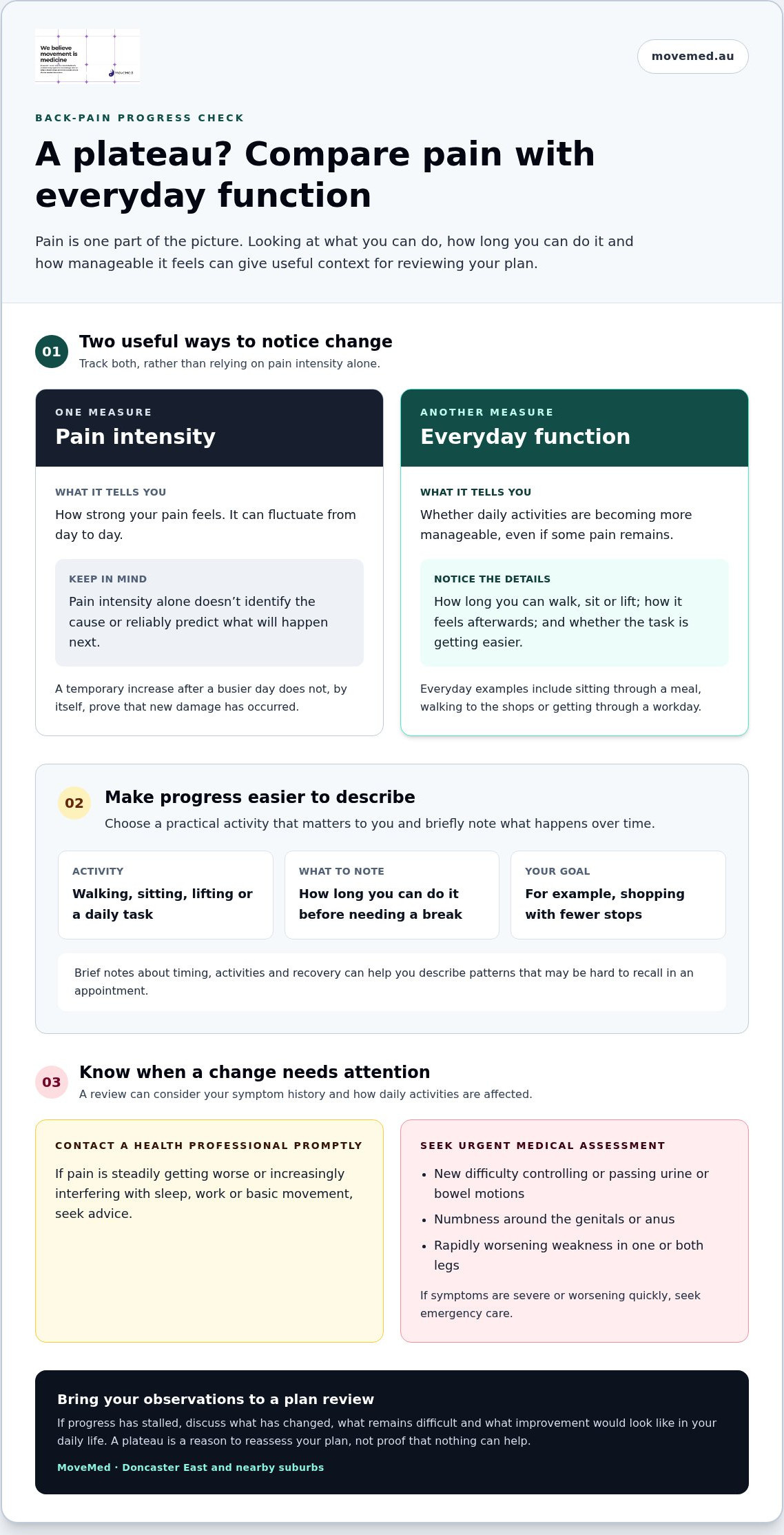
Progress is broader than a pain score. You might find you can sit through a meal or walk to the shops more comfortably, even if some pain remains. Or lifting, sleeping or getting through a workday may still be difficult. Consider how long you can do an activity, how it feels afterwards and whether it is becoming more manageable. These everyday changes give useful context for understanding your recovery.
Back pain can have different patterns and contributing factors, so the same approach won’t suit everyone. For general background on back pain and its classifications, see Understanding Back Pain. This information can help you frame questions, but it can’t explain the cause of your individual symptoms.
What does a plateau in back pain recovery mean?
A short-lived increase in discomfort after a busier day is different from a persistent lack of progress in the activities you’re working towards. Pain can fluctuate, and its intensity alone doesn’t identify the cause or reliably predict what will happen next. Look at the pattern over time: are walking, sitting, lifting or returning to valued activities becoming more manageable?
When should you seek further clinical assessment?
Arrange a clinical review if your symptoms change, keep worsening or continue to restrict daily life. A clinician can consider your symptom history and function rather than relying on pain intensity alone. This article can’t diagnose the cause of your back pain, and a new or changing symptom deserves individual assessment.
Some symptoms call for urgent medical attention. Seek urgent assessment if you develop new difficulty controlling or passing urine or bowel motions, numbness around the genitals or anus, or rapidly worsening weakness in one or both legs. These can signal a serious problem affecting nerves and shouldn’t wait for a routine exercise review. If symptoms are severe or worsening quickly, seek emergency care.
For other changes, such as pain that is steadily getting worse or increasingly interfering with sleep, work or basic movement, contact a health professional promptly for advice. Don’t assume a flare automatically means new damage, but don’t dismiss a meaningful change either. Note when it began, what has changed and which activities are affected. If you’re considering what to try when physiotherapy stops working for back pain Doncaster East, this clear picture can help guide a useful conversation about your next step.
Why might physiotherapy stop helping your back pain?
A treatment plan can be useful and still need a review. Your symptoms may change, daily demands may shift, or exercises that once felt appropriate may no longer match what you’re aiming to do. This doesn’t automatically mean the original approach was wrong or that another treatment will suit everyone. It may be worth discussing what has changed with your treating clinician.
Progress can also be hard to judge if the plan doesn’t include goals that matter to you. Feeling looser after a session may be worthwhile, but it doesn’t tell you whether you can manage a work shift, keep up with household tasks or return to an activity you value. Short-term symptom relief and broader changes in your capacity are both useful to discuss.
Could the plan need to change as your needs change?
Recovery happens alongside real life. Work duties may become more physical, caring responsibilities may increase, or you may feel less confident moving after a flare. Each change can affect which activities feel manageable. Your clinician may review the exercise type, level or pace, and how progress is measured, so the plan better reflects your current capacity and priorities.
There isn’t one correct adjustment for everyone. A plan might need clearer steps, a different way to build activity or more focus on a task you’ve been avoiding. The aim of a review is to understand what fits your circumstances, not to assume that a completely different treatment is automatically better.
How can you tell whether the approach is addressing your goals?
Choose a few practical markers to notice between appointments. For example, record how long you can walk before needing a break, whether a daily task feels easier to start, or how confident you feel doing an activity that matters to you. Brief notes can reveal patterns that are difficult to recall during a consultation.
Be specific about what remains hard and what improvement would look like in your life. “I want less pain” is understandable; “I’d like to complete my usual shopping without needing to stop as often” gives you and your clinician a functional goal to discuss. Pain still matters, but it’s one part of the picture, not a complete measure of progress.
Pain can vary from day to day. A temporary flare after doing more than usual does not, by itself, prove that new damage has occurred. Notice the timing, activities and recovery pattern, then share these details rather than making a major change to your plan based on one difficult day. If symptoms are changing or worsening, seek clinical advice.
For general information about why back pain and its treatment can vary, the National Institute of Neurological Disorders and Stroke outlines Causes and Treatments of Low Back Pain. It’s background reading, not a diagnosis or a substitute for individual assessment.
Stalled progress is a prompt to review your goals, symptoms and care plan. If you’re considering what to try when physiotherapy stops working for back pain Doncaster East, bring your notes and priorities into a conversation about a manageable next step. MoveMed’s exercise physiology support offers personalised exercise planning around your goals.
Exercise physiology, Clinical Pilates or hydrotherapy for back pain?
If your current plan has stalled, the next step doesn’t have to be more of the same. Exercise physiology, Clinical Reformer Pilates and supervised hydrotherapy are active options with different settings and movement styles. None is automatically the best choice for everyone. The right fit depends on your goals, current capacity, preferences and clinical needs.
This comparison can help you think through what to try when physiotherapy stops working for back pain Doncaster East. Use it to identify questions for a clinician, rather than to choose a treatment without individual guidance.
- Exercise physiology: An Accredited Exercise Physiologist develops individualised exercise planning around your health, function and goals. Sessions focus on selecting and progressing movement according to your needs and current capacity. This may suit you if you want a tailored exercise plan and clinical guidance as it develops.
- Clinical Reformer Pilates: This is supervised, land-based movement using a reformer. Exercises are selected and adapted to your physical needs, with a focus on controlled movement. You may prefer this format if you want structured guidance using equipment rather than exercising in water.
- Hydrotherapy: This involves guided exercise in water with supervision. Activities are selected around your needs. It may appeal if you’d like to explore water-based exercise as a different setting for movement.
When might exercise physiology be worth considering?
An Accredited Exercise Physiologist can plan and progress exercise with your health, daily function and personal goals in mind. Together, you can discuss a suitable starting point and how exercises might be adjusted as your tolerance and confidence change. This may be useful if you want a fresh exercise-management plan connected to activities you’re working towards. Exercise physiology doesn’t promise to remove pain or replace every other part of your care.
How do Clinical Pilates and hydrotherapy differ?
Clinical Reformer Pilates offers supervised movement on land, while hydrotherapy involves guided exercise in water. Your preference for one setting over another can help shape a discussion about which approach may fit your goals. Neither is automatically preferable; the choice depends on your needs, clinical guidance and the kind of movement environment that feels manageable to you.
If you’d like more detail about reformer-based movement, this guide to Clinical Pilates for back pain explores how it may fit into back-pain management. For general information about water-based therapy, MoveMed’s hydrotherapy guide can help you understand the approach. Use these resources to prepare questions and consider which option aligns with your preferences, rather than looking for one best answer for everyone.
How to choose your next step for back pain in Doncaster East
Choosing what to try when physiotherapy stops working for back pain Doncaster East starts with a clear picture of what has changed and what you want to do more comfortably. You don’t need to arrive with a perfect explanation. A few notes about your symptoms, activities and previous treatment can help make the next clinical conversation focused and practical.
Use this process to work towards a plan with your clinician:
- Review what’s changed. Note how your symptoms and daily activities have shifted since treatment began, including tasks that have become easier or harder.
- Clarify your priorities. Choose one or two meaningful goals, such as walking for longer, sitting through a work meeting or managing a household task with more confidence.
- Discuss suitable approaches. Talk through exercise options in light of your function, comfort, preferences and the kind of guidance you want.
- Agree on a starting plan. Set out what you’ll try, how it fits into your routine and what signs you’ll track. A manageable start is more useful than a plan that doesn’t fit your life.
- Review your response. Agree when you’ll check in with your clinician and use your progress notes to decide together whether the plan needs adjusting.
What should you prepare before discussing a new plan?
Keep your notes brief. Write down when the pain began, what has changed and which activities are affected. Include treatments or exercises you’ve already tried, noting what felt manageable and what was difficult. Add one or two practical goals. For example, you might want to walk further before resting or complete a daily task with less hesitation. These details help your clinician understand what matters to you.
How can you review whether the next approach suits you?
Choose a functional marker you can observe, such as how far you walk, how long you can sit comfortably or how confident you feel doing a regular task. Agree with your clinician on a suitable time to review it. Track tolerance, confidence and activity alongside pain; progress may vary from day to day, so one difficult session doesn’t tell the whole story.
Be open about barriers early. A busy work schedule, limited space at home, low confidence or difficulty fitting exercises into your routine can affect whether a plan is manageable. Sharing this isn’t a setback. It gives you and your clinician a chance to adapt the starting point, exercise format or way you track progress.
A clear functional goal gives you a practical way to notice meaningful progress, even when pain isn’t the only measure that changes. In Doncaster East, you can work with MoveMed’s Accredited Exercise Physiologists to discuss a personalised exercise plan around your goals and current capacity. Arrange an exercise physiology consultation to talk through a practical next step.
MoveMed’s active back-pain support near Doncaster East
If back pain is still limiting you after trying physiotherapy, a fresh exercise-management plan may help you focus on what you want to do next. MoveMed provides exercise physiology, Clinical Reformer Pilates and supervised hydrotherapy for people in Doncaster East and nearby eastern suburbs. Each approach can be considered in light of your needs and goals, rather than assuming one option suits everyone or every presentation of back pain.
MoveMed’s Accredited Exercise Physiologists develop personalised, evidence-based exercise plans to support recovery, capacity and independence. They can discuss your previous treatment experience, what you find difficult now and what you’d like to work towards. This can help clarify whether individual exercise planning, supervised movement on a reformer or guided exercise in water may fit your preferences and functional goals.
What does an exercise physiology approach focus on?
Exercise physiology uses planned movement to support your function and capacity. An Accredited Exercise Physiologist considers your assessment findings, current abilities and personal goals when selecting and progressing exercises. The plan may aim to identify factors that affect your movement and help build independence in activities that matter to you.
Your starting point is individual. If a particular movement or exercise feels difficult, the programme can be shaped around your current capacity and reviewed as your needs change. Exercise physiology isn’t a promise that pain will disappear, and it won’t suit every cause or presentation in the same way. The purpose is to develop a considered, active plan that connects exercise with your day-to-day priorities.
How can you take the next step with MoveMed?
Share what you’ve already tried, how your back pain affects your routine and which activities you hope to manage more comfortably. You can also explain what kind of support feels practical for you, whether that means a tailored exercise plan, structured Clinical Reformer Pilates or supervised hydrotherapy. These details give the team a starting point for discussing options with you, without assuming you need to repeat an approach that hasn’t felt useful.
MoveMed supports people across Doncaster East and nearby eastern suburbs, including Templestowe Lower, Templestowe, Doncaster, Bulleen, Warrandyte, Lower Plenty, Balwyn North and Box Hill. If you’re weighing up what to try when physiotherapy stops working for back pain Doncaster East, you can talk through your goals and previous treatment experience with the team. A conversation can help you explore a practical next step, with your priorities at the centre.
When you’re ready, Talk with MoveMed about your next step.
Make your next step one that fits your life
A pause in progress can be a chance to ask a more useful question: what would help you move towards the activities that matter to you? You don’t need to have every answer before seeking support. Start with one priority, such as feeling more confident with everyday movement, and share what has and hasn’t suited you so far.
If you’re weighing up what to try when physiotherapy stops working for back pain Doncaster East, a conversation with MoveMed can help you explore a practical direction. You can discuss your goals and previous experience, then consider whether an exercise-based approach feels appropriate for your needs. There’s no need to expect a quick fix; the focus is on finding a considered next step and building from there.
Talk with MoveMed about your next step and take the first step towards a plan shaped around what matters to you. Progress can begin with a clear goal and the right support to work towards it.
Frequently Asked Questions
Can back pain continue even when scans do not show a clear cause?
Yes, back pain can continue even if imaging doesn’t reveal a clear cause. Scan results are considered alongside your history and clinical assessment, and they don’t measure everything that may influence pain. If a report is unclear, ask your doctor to explain what it means for you and whether any further assessment is appropriate. Ongoing pain is real, even when a scan doesn’t provide a simple explanation.
Is it safe to exercise when you still have back pain?
It can be safe to exercise with back pain, but the type and amount should suit your situation. If you’re unsure, get advice before starting a new or more demanding activity. You can also ask how to adapt an exercise that feels uncomfortable, rather than assuming you must either push through or stop moving altogether. A clinician can help you make a considered choice based on your symptoms and circumstances.
What should I do if my back pain suddenly gets worse?
If your back pain suddenly gets worse, seek prompt medical advice, especially if the change is severe, rapidly progressing or makes it difficult to manage basic activities. Don’t wait for a routine exercise review if you feel seriously unwell or concerned about a sudden change. A health professional can assess what’s happening and advise how urgently you need care. If you’re uncertain, contact a medical service for guidance.
Can I change from physiotherapy to exercise physiology for back pain?
Yes, you can explore exercise physiology without assuming you need to stop other care abruptly. A useful first step is to bring any written exercise instructions or treatment summary you have, so the exercise physiologist can understand what you’ve already tried and avoid unnecessary duplication. You can also discuss how the change fits with your current care. If you’re considering what to try when physiotherapy stops working for back pain Doncaster East, start with that conversation.
Does Clinical Pilates help everyone with back pain?
No, Clinical Pilates won’t suit everyone, and a particular exercise may feel comfortable for one person but not another. Suitability depends on your presentation, movement needs and ability to take part in the chosen exercises. You can discuss any positions you find difficult, equipment concerns or previous experience before deciding whether to try it. The aim is to find an approach that feels appropriate for you, not to follow a fixed routine.
Is hydrotherapy suitable if movement on land is uncomfortable?
It may be an option to discuss, but discomfort with land-based movement alone doesn’t establish whether hydrotherapy is suitable. Consider practical factors such as your comfort in water, getting in and out safely, and any health issues that may affect participation. Share these details with a clinician before starting. They can help determine whether water-based exercise is a reasonable option for your circumstances or whether another approach should be considered first.
How do I measure progress if my back pain is still there?
Try keeping a short pain diary using the same simple rating scale each day, and note what was happening at the time, such as a long drive or a disrupted night’s sleep. Looking at the pattern over several entries can give you more context than judging progress from one difficult day. Bring the record to a review so you and your clinician can discuss any trends and decide whether your approach needs reassessment.
Can MoveMed help if I live in Doncaster East?
Yes. You can speak with MoveMed about your concerns and what you need from your next stage of care. You don’t have to decide in advance which approach is right or prepare a detailed account; a few notes or questions can help you explain what’s important. The team can discuss a practical way to take the conversation forward, so you can make an informed decision about your next step.


