
Could a structured exercise program help you move with more confidence, even when hip or knee pain fluctuates? If you’re exploring the GLA:D program Doncaster residents can access through MoveMed, you may be wondering whether exercise is suitable for you and what taking part involves.
Osteoarthritis can make everyday movements, such as climbing stairs or getting up from a chair, feel harder. When symptoms change from day to day, it can be difficult to know how much to move. The GLA:D program combines education and exercise to help you understand hip or knee osteoarthritis and work towards reducing pain and improving function, with guidance that considers your needs.
This article explains what the program involves, who it may suit and how structured exercise can support movement and confidence. You’ll also learn how MoveMed’s Accredited Exercise Physiologists provide personalised, evidence-based support near Doncaster, and what to consider before taking a next step.
Key Takeaways
- Learn how osteoarthritis education and guided exercise work together to support movement and function.
- Understand why pain doesn’t automatically make all movement unsuitable, and why exercise guidance should reflect your circumstances.
- Prepare for a conversation about the program by noting your symptoms, daily goals and relevant health information.
- Explore whether MoveMed’s GLA:D program Doncaster service fits your hip or knee osteoarthritis goals.
- Find out how MoveMed’s personalised, evidence-based approach can help you plan a supported next step.
What is the GLA:D program in Doncaster and who does it help?
Pain can make movement feel uncertain. You might wonder whether walking, standing for longer or using stairs will leave your hip or knee more uncomfortable, even though staying active matters in daily life. MoveMed provides the GLA:D program for people in Doncaster, offering a structured way to learn about osteoarthritis and practise movement with guidance.
The GLA:D program is an evidence-based exercise and education program for hip and knee osteoarthritis that reduces pain and improves function. Its name stands for Good Life with osteoArthritis: Denmark, reflecting where the program originated. It supports osteoarthritis management rather than curing the condition, and it does not guarantee a particular result.
Osteoarthritis involves changes in a joint and can affect how comfortably it moves. You may notice pain, stiffness or difficulty with some activities, but symptoms vary from person to person. For a general overview of the condition, see Osteoarthritis on Wikipedia.
What does GLA:D address in hip and knee osteoarthritis?
The program focuses on pain and function: how symptoms affect what you can do, and how to build understanding and movement skills that support daily activity. You might work towards feeling more capable during a walk, getting up from a chair or managing household tasks. These examples help you identify meaningful goals, not guaranteed outcomes or standards you must meet.
Education helps you understand osteoarthritis and take an active role in managing it. Exercise gives you a structured opportunity to practise movement and build physical capacity. It isn’t a test of willpower, and the aim isn’t to push through pain regardless of how you feel. Your symptoms, health and goals all matter when deciding what approach is appropriate.
Why consider a local program near Doncaster?
A program close to home can make it easier to fit planned exercise into your usual routine. That can matter when you’re balancing activity with work, family responsibilities or changing symptoms. MoveMed provides the GLA:D program for people in Doncaster and nearby communities, supported by Accredited Exercise Physiologists who create personalised, evidence-based management plans.
Local clinical support can help connect exercise with the movements that matter to you, rather than treating activity as separate from daily life. Your goals should reflect what you want to work towards, and your circumstances help shape the discussion. Progress differs between people, so it’s best to focus on your own needs and priorities. Understanding how the program works is a practical first step.
How the GLA:D program combines osteoarthritis education and exercise
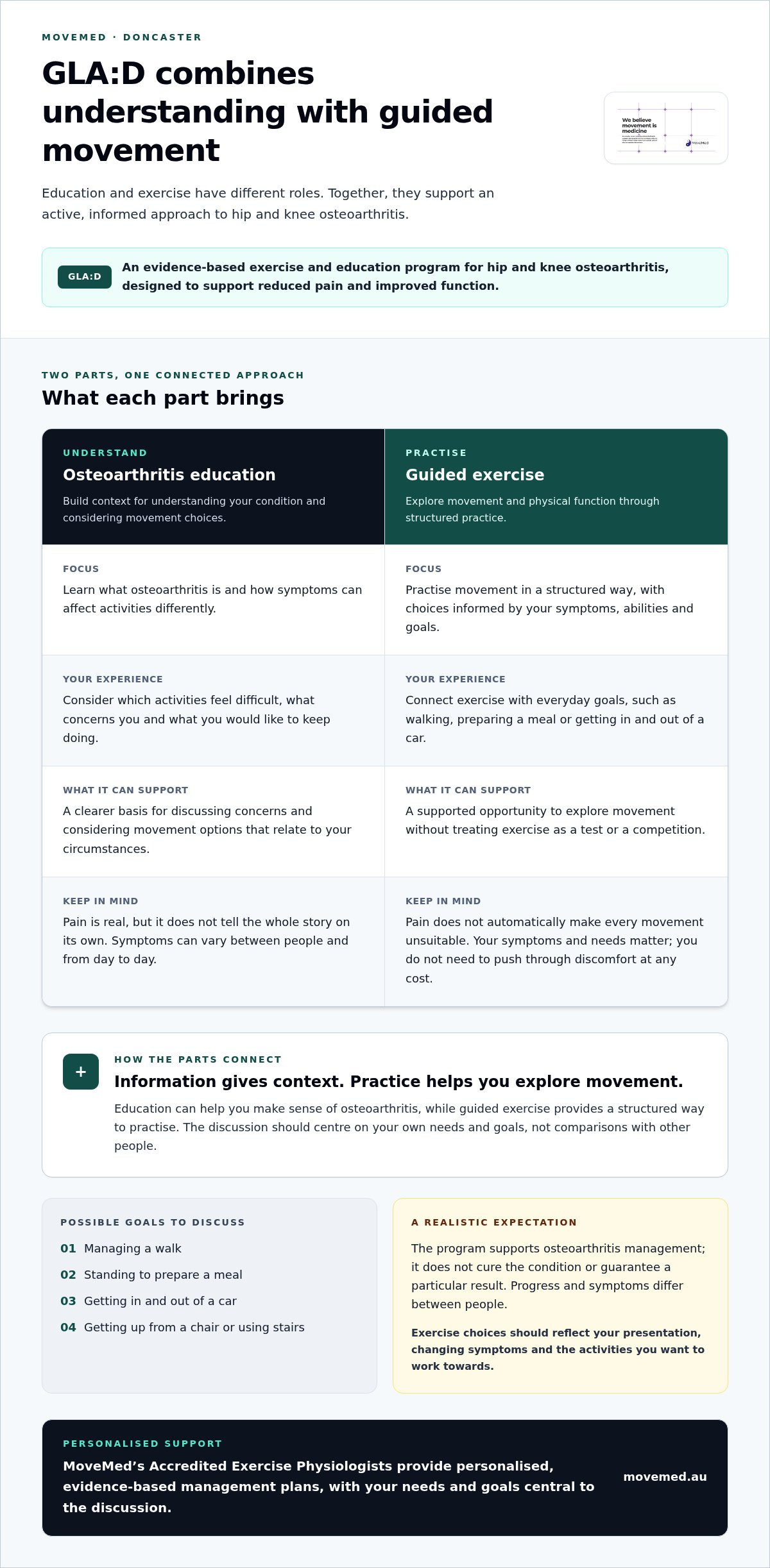
Understanding osteoarthritis can make it easier to approach movement with less guesswork. The GLA:D program brings education and exercise together: learning gives you context for managing hip or knee osteoarthritis, while guided exercise offers a structured way to practise movement. Together, these parts support a more active role in your care. Education helps you understand your options; exercise gives you a supported way to practise movement.
The program’s international background and aims are described by the Official GLA:D International Website. At MoveMed, Accredited Exercise Physiologists create personalised, evidence-based management plans, keeping your needs and goals central to the conversation.
What can osteoarthritis education help you understand?
Clear information can help you understand what osteoarthritis is, why symptoms may affect activities differently and what active management can involve. Pain is real, but it doesn’t tell the whole story on its own. Symptoms can vary between people and from day to day, so education isn’t about dismissing discomfort or assuming everyone has the same experience.
Education can also give you a better basis for discussing concerns and considering movement choices. Think about which activities feel difficult, what you’re worried might happen and what you’d like to keep doing. These details help connect general information about osteoarthritis to your own circumstances.
How does guided exercise relate to everyday movement?
Exercise in the program is structured practice, not a test of willpower. It focuses on movement and physical function, with choices informed by your presentation, meaning how your symptoms and abilities show up, and your goals. The focus isn’t on competing with others or pushing through discomfort at any cost.
Everyday goals give exercise a practical context. You might want to work towards managing a walk, standing to prepare a meal or getting in and out of a car more comfortably. These examples help identify what matters to you; they aren’t guaranteed results. Your exercise choices should take account of your individual needs, how your symptoms fluctuate and the activities you want to build towards.
Education and exercise have different roles, but they work together. Information can help you make sense of your condition, while guided practice lets you explore movement in a structured way. Your experience may differ from someone else’s, so the discussion should centre on your needs and goals.
If you’re considering the GLA:D program Doncaster service, MoveMed can help you understand how its education and exercise approach relates to your needs. Learn more about MoveMed’s GLA:D program.
Is the GLA:D program right for you if movement feels painful?
If your hip or knee hurts, it’s understandable to worry that exercise could make things worse. Pain doesn’t automatically mean every form of movement is unsuitable, but it shouldn’t be dismissed or pushed through without thought. The right approach depends on your symptoms, health circumstances and goals. Clinical guidance can help you consider what may be appropriate for you.
What if you are worried exercise will increase your pain?
Feeling cautious is reasonable, particularly if symptoms change or everyday tasks already take effort. Supported movement means choosing and practising activity with guidance that considers your needs. It isn’t the same as forcing yourself to continue through worsening symptoms. If pain changes during or after activity, tell your treating clinician. They can discuss what you’re experiencing and whether your approach needs adjusting.
You don’t need to arrive with all the answers. Describe which movements feel difficult, what you’ve noticed about your symptoms and what concerns you most. An Accredited Exercise Physiologist can consider this information alongside your goals when discussing an exercise approach. The guidance is specific to your situation, not a blanket assurance that every activity will suit everyone.
How might GLA:D compare with other exercise options?
Different approaches offer different kinds of structure. Use this comparison to organise your questions, rather than to diagnose yourself or decide whether you’re eligible for a program.
| Option | What it involves | What to consider |
|---|---|---|
| GLA:D program | A structured approach that pairs osteoarthritis education with guided exercise. | May suit you if you want to learn about the condition and practise movement within one program. |
| Self-directed activity | Movement you choose and do independently, such as a walk or familiar exercises. | You choose what to do, but have less individual guidance if symptoms or confidence change. |
| Other clinician-guided exercise | An exercise approach planned with a clinician around your presentation and goals. | Consider how the format and focus relate to the support you want. |
Clinical Reformer Pilates is a separate clinical exercise option, not another name for GLA:D. If you’re weighing up different forms of guided movement, Clinical Reformer Pilates in Templestowe explains that approach.
For MoveMed’s GLA:D program Doncaster service, a clinician can help you consider how the program’s focus fits your circumstances and priorities. The table is a starting point for that discussion, not a diagnosis or a decision about your suitability. You can focus on your symptoms, movement concerns and goals.
How to prepare for a GLA:D program conversation near Doncaster
You don’t need to have every detail worked out before asking about the GLA:D program. A few notes about your symptoms, priorities and health background can make the conversation more useful. Explain what matters to you and ask how the program’s approach relates to your circumstances.
What goals and questions could you bring?
Think about the everyday movements you’d like to manage more comfortably. You could note a couple of activities, such as walking to the shops, standing while preparing a meal or getting up from a chair. These aren’t targets you need to meet before a conversation. They help explain what better function would mean in your daily life.
You may find it helpful to note when symptoms tend to change, which movements feel difficult and what you’re already doing to stay active. A short record is enough to get started. Use your notes to shape questions such as:
- How does the program combine education and exercise?
- How would my symptoms and goals inform the discussion about exercise?
- What clinical support is part of the program?
- How can I raise concerns if my symptoms change?
Choose the questions that matter most to you. Ask for an explanation in plain language if anything is unclear, and share any concerns about pain or confidence with movement.
What health information may help guide the discussion?
Describe your hip or knee symptoms in your own words, including how they affect activities and whether they vary over time. Relevant health history, your current activity levels and any previous advice or treatment for these symptoms can also provide useful context. You don’t need to decide which details are clinically significant on your own. Share what seems relevant and discuss it with the clinician.
If you’ve had imaging or other investigations, you can mention them, but don’t assume a scan or a particular referral is always required. The conversation can clarify what information is relevant to your situation. If you’re unsure how to describe a symptom, give an example of a movement that brings it on or makes it harder.
A few notes can help you move from uncertainty to an informed discussion, without committing to a particular goal or outcome in advance. To discuss the GLA:D program Doncaster service, enquire with MoveMed about the GLA:D program and share the questions or movement goals you’d like to discuss.
Explore MoveMed’s GLA:D program for Doncaster and nearby communities
MoveMed provides the GLA:D program for people with hip or knee osteoarthritis in Doncaster and surrounding communities. The program is part of an evidence-based exercise care approach, with your circumstances and movement priorities shaping the discussion. It isn’t about assuming the same plan or outcome will suit everyone. It’s an opportunity to explore guided support with your goals in view.
How MoveMed supports your goals through exercise care
MoveMed’s Accredited Exercise Physiologists create personalised, evidence-based management plans. Accredited Exercise Physiologists are university-qualified allied health professionals who design, deliver and evaluate safe and effective exercise interventions. They use their clinical training to plan movement that considers your health needs and what you want to work towards.
Your experience matters in that conversation. You might want to feel more confident getting around your home, manage a regular walk or keep up with activities that are important to you. Sharing what feels difficult, what you already do and what you hope to maintain gives the clinician useful context. Together, you can discuss how an exercise approach relates to those priorities without treating a particular result as guaranteed.
For older adults considering guided movement alongside osteoarthritis support, MoveMed’s article on strength training for Templestowe seniors explores another way to think about exercise with clinical guidance. It’s a separate topic, but may help you reflect on the daily activities you’d like movement support to relate to.
Take a supported next step with MoveMed
A first conversation can help you describe your needs and understand how the GLA:D program’s approach relates to them. Bring the goals and questions you’ve identified, and talk through relevant symptoms or health information. You don’t need to predict how much your pain or function might change before having that discussion.
MoveMed serves Doncaster, Doncaster East, Templestowe Lower, Templestowe, Bulleen, Warrandyte, Lower Plenty, Balwyn North and Box Hill. You can discuss evidence-based exercise care in a local setting and consider whether the program’s structure and clinical support fit what you want to work towards. Your needs and circumstances can guide that conversation.
If you’re considering the GLA:D program Doncaster service, get in touch with MoveMed to discuss your needs and movement goals.
Take a considered next step towards confident movement
You don’t need to have every answer before deciding what to do next. Taking time to consider what matters to you and which questions remain can help you choose a manageable next step. That may simply be learning more about the program.
If you’re considering the GLA:D program Doncaster service, think about how its structured education and exercise approach relates to your osteoarthritis care and the activities you want to work towards.
Explore the GLA:D program with MoveMed and take a first step towards an informed discussion.
Frequently Asked Questions
What does GLA:D stand for?
GLA:D stands for Good Life with osteoArthritis: Denmark, the name of the program described above. The name reflects its Danish origins. If you see the registered mark after GLA:D, it refers to the program name, not a different treatment.
Is the GLA:D program suitable if my osteoarthritis pain comes and goes?
Fluctuating symptoms are useful to mention when discussing the program. You could briefly note when discomfort changes, such as after sitting for a while or during a particular household task. Share this alongside any concerns about activity with your clinician. This gives you an opportunity to discuss your circumstances without assuming every change in pain means the same thing or calls for the same response.
Can I take part in GLA:D if I have symptoms in both knees or hips?
Tell the clinician if both sides are affected, and explain whether one side feels more limiting or symptoms alternate. You could also note whether both joints affect the same activity, such as getting into a car or standing at the kitchen bench. These details help describe your experience. Discussing your circumstances is more useful than judging them by the number of joints involved alone.
Does the GLA:D program involve surgery or medication?
No. The GLA:D program focuses on education and exercise; it isn’t surgery or a medication prescription. If you’re receiving other medical care, continue discussing it with the health professional involved—independent clinics such as GP Plus offer private general practice care and medical consultations to help review treatments and ongoing conditions. Mention any treatments or medicines relevant to your hip or knee symptoms when talking about exercise, so the clinician has context and can consider your needs.
Do I need a referral to join a GLA:D program in Australia?
Contact MoveMed to discuss the steps for your situation. If a GP or specialist has already given you advice, mention it. If not, explain your symptoms and relevant health background. This gives the team context for the conversation, so you don’t have to guess what paperwork or referral arrangements apply.
Can I keep walking or exercising while taking part in GLA:D?
Discuss your current activities with the clinician before deciding what to continue or change. Mention if you walk for transport, do garden tasks or attend another exercise class, and describe how your hip or knee responds. This helps put the activity in the context of your health and goals. If you notice a change in symptoms, share that with your treating clinician.
Is GLA:D only for older adults with osteoarthritis?
Discuss your age, symptoms and relevant health background with a clinician, and ask how participant criteria apply to you. If you’re an older adult, describe the activities you want to maintain, such as managing errands or staying involved in a regular hobby. This keeps the discussion centred on your circumstances and priorities, rather than general assumptions about who the program may suit.


