

For POTS, the right starting point may be a reclined or seated workout, not pushing through symptoms while standing. Postural Orthostatic Tachycardia Syndrome affects the autonomic nervous system; in adults, it’s typically characterised by a heart-rate rise of at least 30 beats per minute within 10 minutes of standing, without a significant drop in blood pressure. A plan for managing POTS with supervised exercise in Lower Plenty can begin with gentle aerobic movement and lower-body strength, then progress as your tolerance allows.
If dizziness, fatigue, a racing heart or exercise intolerance makes activity feel unpredictable, it’s understandable to feel cautious. Exercise may initially increase symptoms, so a manageable pace, attention to how you feel and a tailored plan matter more than simply doing more. This article explains POTS, which reclined or seated exercises may suit an early stage, how gradual progression and pacing work, and why hydration and electrolytes may form part of preparation. You’ll also learn how an accredited exercise physiologist can tailor movement to your starting point and goals.
Key Takeaways
- Learn why POTS can make exercise feel difficult and which lower-impact starting options may help you move with more confidence.
- See how pacing and small, gradual adjustments can help shape activity around your current tolerance.
- Understand how hydration and electrolytes may fit into preparing for exercise, and why personal health needs matter.
- Explore how an individual movement plan can adapt as your symptoms, capacity and goals change.
1. What exercise is recommended for POTS Syndrome?
Postural Orthostatic Tachycardia Syndrome (POTS) affects the autonomic nervous system, which helps regulate heart rate and blood pressure. In adults, it is typically characterised by a heart-rate increase of at least 30 beats per minute within 10 minutes of standing, without a significant blood pressure drop. Symptoms can include dizziness, fatigue, nausea, sweating and exercise intolerance.
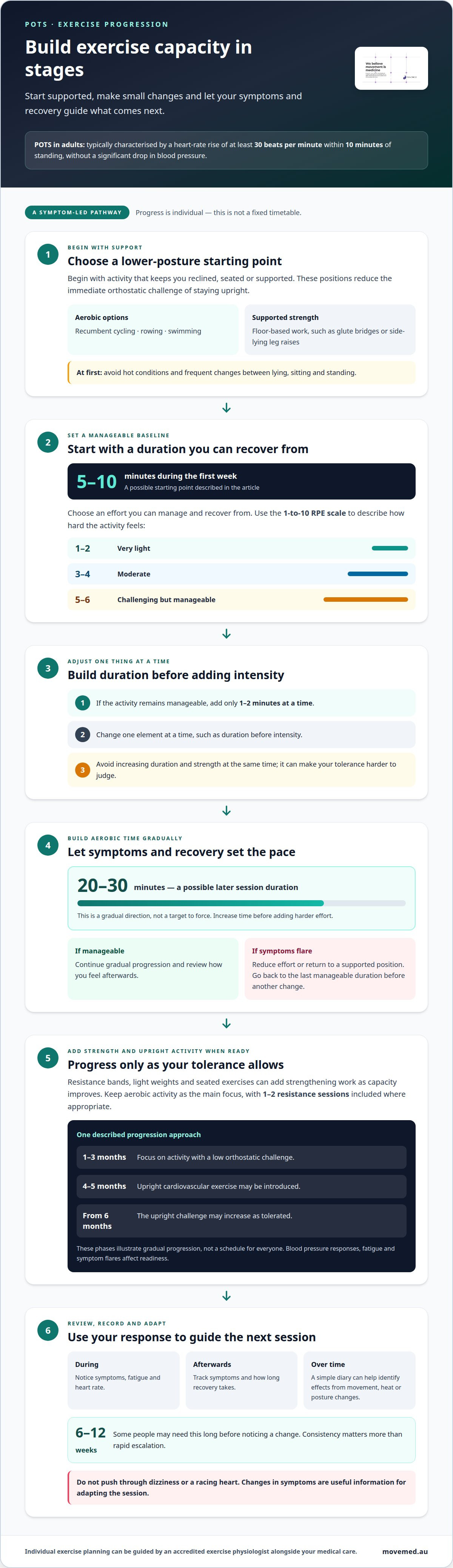
Exercise may help improve cardiovascular fitness, circulation and physical capacity over time, but symptoms can initially worsen. Starting with recumbent cycling, rowing or floor-based strength work can reduce postural stress compared with standing exercise. For example, glute bridges or side-lying leg raises work the lower body while you remain supported. Early sessions should avoid hot conditions and frequent changes between lying, sitting and standing.
Supervised exercise can help manage POTS symptoms by matching activity to your current tolerance, then adjusting its duration or intensity in response. A gradual plan may support fitness and help extend the time before symptoms appear during activity. This does not mean pushing through dizziness or a racing heart. Changes in symptoms are useful information for adapting a session.
Track fatigue, heart rate and symptoms during exercise and afterwards. Use the 1-to-10 RPE scale (rating of perceived exertion) to describe effort: 1-2 feels very light, 3-4 moderate, and 5-6 challenging but manageable. If a session triggers a symptom flare, reduce the effort or return to a supported position rather than progressing. A simple diary can show whether particular movements, heat or posture changes affect your recovery.
For people in Lower Plenty and nearby Templestowe Lower, Templestowe, Doncaster, Doncaster East, Bulleen, Warrandyte, Balwyn North and Box Hill, MoveMed offers exercise physiology support in Templestowe. An accredited exercise physiologist can provide guidance alongside your medical care. Ask your treating health professional about local peer support options that may complement your clinical plan, rather than treating group exercise as a substitute for individual assessment.
2. Gradual, individualised exercise progression
With postural orthostatic tachycardia syndrome (POTS), progress depends on your starting capacity and symptom response. Begin at an effort you can recover from, then change one element at a time, such as duration before intensity. A starting point may be 5-10 minutes during the first week. If that activity remains manageable, add only 1-2 minutes at a time rather than making a large jump.
Aerobic activity can build gradually through recumbent cycling, rowing or swimming. These positions reduce the immediate orthostatic challenge of staying upright. The aim is to increase the time your heart and muscles can work before adding harder effort. Over time, sessions may build towards 20-30 minutes, but your symptoms and recovery determine the pace of change.
Upright exercise can come later, once you tolerate earlier stages. One described approach focuses on low-orthostatic-challenge activity for 1-3 months, introduces upright cardiovascular exercise after 4-5 months, then increases that challenge from 6 months onwards. These phases illustrate gradual progression, not a timetable everyone with POTS should follow. Blood pressure responses, fatigue and symptom flares all affect readiness.
As capacity improves, resistance bands, light weights and seated exercises can add muscle-strengthening work. Keep aerobic activity as the main focus, with 1-2 resistance sessions included where appropriate. If standing causes symptoms, seated or supported movements can maintain the training focus while limiting postural strain. Progressing both duration and strength at once can make it harder to identify what your body tolerates.
Review symptoms during and after each session, including how long recovery takes. If an increase leads to a flare, return to the last manageable duration before trying another change. Some people may need 6-12 weeks before noticing a change, so consistency matters more than rapid escalation. Individualised exercise planning can help shape progression around your responses.
3. Hydration and electrolytes before exercise
With postural orthostatic tachycardia syndrome (POTS), hydration can support blood volume and affect how your heart rate responds to activity. Dehydration may add to fatigue or dizziness, so plan fluids around exercise rather than waiting until you feel thirsty. Water or an electrolyte-rich drink before and after a session can help replace fluid. Drinking two glasses of water, with or without electrolytes, may temporarily raise blood pressure and improve exercise tolerance for some people.
For daily hydration, the Australian POTS Foundation advises aiming for 2-3 litres of water per day. It also advises increasing salt intake to 10 grams per day under medical supervision. That amount is equivalent to 4000 mg of sodium. Salt can affect blood pressure and fluid balance, so don’t increase your intake without medical guidance. Your health needs and existing treatment matter when considering an electrolyte or salt approach.
Compression garments may also form part of exercise preparation. The recommended pressure range described for exercise is 20-30 mmHg, to support venous return (blood flow back towards the heart). Prescribed medication timing can matter too: aligning activity with the period when medication works most effectively may help exercise tolerance. An exercise physiologist can factor these details into a session plan alongside symptoms and recovery.
Keep preparation practical. Have water or an electrolyte-rich beverage before exercise, then drink again afterwards. Fluids and electrolytes taken 20-30 minutes before activity may support preparation. Small, frequent meals may help reduce post-meal blood pressure changes that can aggravate POTS symptoms. Note whether heat, a meal, or a change in fluid intake affects dizziness, heart rate or fatigue during exercise. These observations can guide discussions about hydration and nutrition with your healthcare team.
4. Personalised movement and exercise plans
A useful plan accounts for more than a POTS diagnosis. Accredited exercise physiologists are university-trained allied health professionals who design, deliver and evaluate safe, effective exercise interventions. They can consider your symptoms, current activity, goals and response to different positions. If standing brings on dizziness, a programme might begin with seated cycling or lying-down strength movements, matched to what you can manage and recover from.
Personalisation also means choosing exercises that build useful capacity without adding unnecessary postural challenge. Floor-based options such as glute bridges, clams and side-lying leg raises work muscle strength while you remain supported. Resistance bands or light weights may be introduced as tolerance develops. Clinical Reformer Pilates uses a reformer machine for therapist-led sessions, with movement focused on rehabilitation and adapted to your needs.
Your wider health picture matters. Some people with POTS also have ME/CFS, a chronic condition that can affect how activity is tolerated. Graded Exercise Therapy is not recommended for people with ME/CFS. If someone with both conditions chooses to exercise, an exercise specialist should oversee activity as part of an ME/CFS specialist team. Medications and symptom patterns also belong in planning conversations.
A structured model can inform the discussion without dictating your personal timetable. The Levine protocol is a 5-month approach combining cardiovascular exercise and strength training. A clinician can use its broad elements while tailoring movement choice, effort and progression to your circumstances. The key is a plan that can be adjusted when symptoms, recovery or daily demands change, rather than a fixed schedule that expects the same response every session.
When symptoms or daily demands shift, personalised exercise planning can help adapt movement choices and progression to your circumstances.
MoveMed: Exercise Physiology Consultations
MoveMed’s Exercise Physiology Consultations can help you make sense of exercise when POTS symptoms affect your confidence, tolerance or daily routine. After a one-on-one assessment, an accredited exercise physiologist can consider your current capacity, movement goals and symptom responses, then prescribe a personalised, evidence-based exercise plan. This may be useful if you’re unsure how to begin, need to adapt activity around symptoms or want guidance progressing at a manageable pace.
Your plan can focus on practical steps, such as choosing suitable starting exercises and adjusting them as your responses change. If you’re managing POTS with supervised exercise in Lower Plenty, a consultation offers a chance to discuss your goals and the support that may suit you. Contact MoveMed to discuss Exercise Physiology Consultations.
Take the next step towards movement that fits
You don’t need to arrive with a complete exercise routine or all the answers. Start by identifying one movement goal that matters in everyday life, such as getting through a household task or returning to an activity you value. A clear goal gives you and your exercise professional something practical to work towards together.
For managing POTS with supervised exercise in Lower Plenty, your next step can be a conversation about what you want movement to make possible. Share the activities you’re working towards and the barriers that have made them difficult. This helps guide a plan around your priorities, rather than an expectation to follow someone else’s routine.
Talk with MoveMed about POTS exercise and take a considered first step towards activity that supports your goals.
Frequently Asked Questions
What is POTS?
POTS means Postural Orthostatic Tachycardia Syndrome. Alongside clinical assessment, the COMPASS 31 questionnaire can help assess autonomic symptoms; it draws on the Autonomic Symptom Profile and Composite Autonomic Symptom Score. Diagnostic criteria include symptoms present for at least three months. A symptom record can help you describe how the condition affects everyday activities during an appointment.
What exercise is recommended for POTS Syndrome?
Exercise plans commonly combine aerobic activity with strength work, with the balance tailored to your needs. One described approach includes cardio on 3-4 days per week and strength exercises on 2 days. The emphasis is on a routine that can be adjusted to your symptoms and capacity, rather than treating a weekly schedule as a target you must meet from the outset.
Where to even begin?
Begin with a conversation about your main activity goal and what currently gets in the way. For example, you might want to manage a household task that leaves you needing to rest. Bring details about relevant health conditions and prescribed medications so your treating team can consider the wider picture. Agreeing on one meaningful goal gives your exercise planning a clear direction.
What exercise programs are recommended for POTS, including the Levine or CHOP protocols?
Levine and CHOP are named approaches that may come up when discussing structured POTS exercise. A protocol is a framework, not a guarantee that every exercise or progression suits your circumstances. Focus the discussion on which parts fit your health history, symptoms and goals, and how the programme will be adapted if your response changes. Avoid assuming one named plan is right for everyone.
How should someone with POTS start and progress an exercise program safely?
Make changes in a way that helps you identify what your body tolerates. Keep a brief record of the activity, time of day and how you feel afterwards. Comparing similar sessions can help reveal patterns. If a routine becomes harder to manage, discuss the change with your treating team before adding an exercise or increasing the challenge.
What are the risks and warning signs when exercising with POTS?
Be alert to symptoms that are new, unusually severe or different from your usual pattern. Stop the activity and seek clinical advice about a marked change, rather than treating it as a sign to push harder. If symptoms regularly interfere with ordinary tasks after exercise, tell your treating health professional. That information can help guide decisions about your activity plan.


