

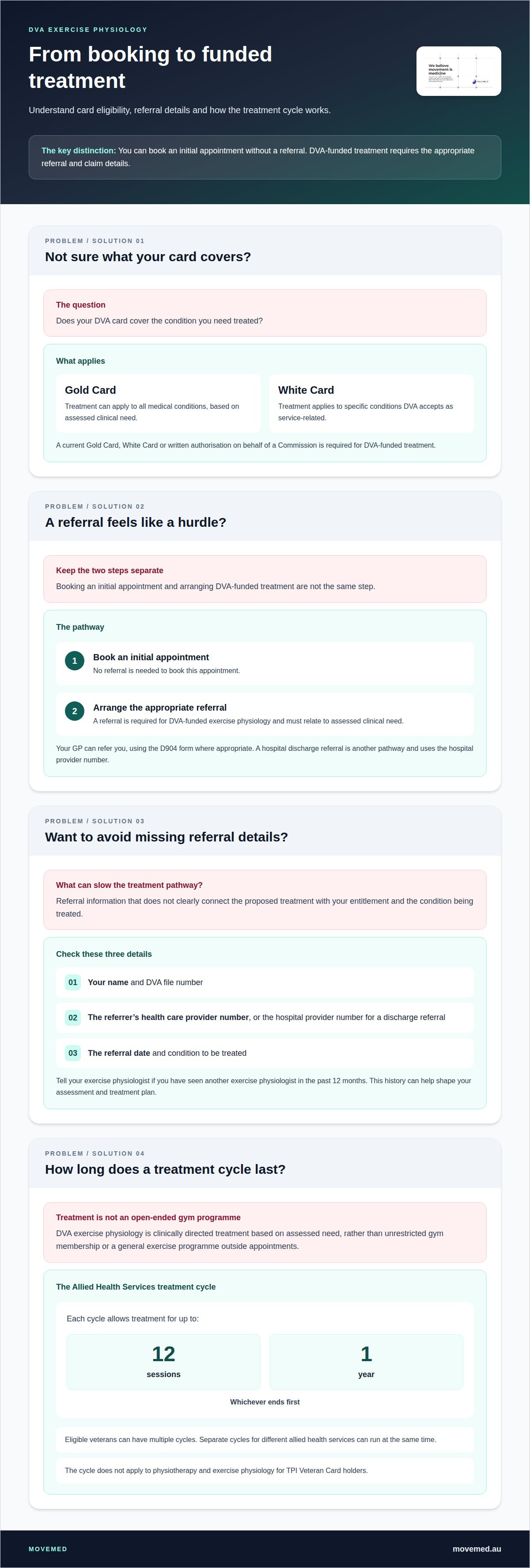
Do you hold a Veteran Gold or White Card and want to know whether you can access exercise support? Both card types may provide access to DVA exercise physiology when treatment is based on assessed clinical need. Gold Card treatment applies to all medical conditions, while White Card treatment applies to specific conditions DVA accepts as service-related. No referral needed to book an initial appointment, but DVA-funded treatment requires the appropriate referral.
It’s understandable if arranging a referral feels like another hurdle, especially when you’re managing pain, an injury or a long-term condition. An assessment helps shape a plan around your clinical needs, current abilities and personal goals, rather than a generic exercise routine.
This guide explains how DVA-funded treatment works, what to expect during an assessment and how personalised exercise can support your progress and self-management. You’ll also learn how an Accredited Exercise Physiologist can help you build confidence and make exercise a practical part of everyday life.
Key Takeaways
- Gold Card holders can access treatment for all medical conditions; White Card treatment applies to specific conditions accepted by DVA as service-related.
- A referral is required for DVA exercise physiology. The treatment cycle covers up to 12 sessions or 1 year, whichever ends first.
- An initial assessment helps shape exercise around your clinical needs, current abilities and goals, supporting safer progress and self-management.
- Look for an Accredited Exercise Physiologist who can tailor the program to your needs and help you build exercise into everyday life.
How a provider supports your referral and appointment booking
No referral needed to book an initial appointment. However, DVA-funded exercise physiology requires the appropriate referral and claim details. You must also hold a current Gold Card, White Card or written authorisation on behalf of a Commission. Treatment must address assessed clinical need. Gold Card treatment applies to all medical conditions, while White Card treatment applies to specific conditions DVA accepts as service-related.
Your GP can refer you to an exercise physiologist, using the D904 form where appropriate. A hospital discharge referral is another pathway and uses the hospital provider number. Booking and referral are separate steps: you can arrange an initial appointment first, but the referral is needed for DVA-funded treatment. A provider can review the referral information as part of organising that treatment pathway.
A DVA exercise physiology referral needs these details:
- Your name and DVA file number.
- The referrer’s health care provider number, or the hospital provider number for a discharge referral.
- The referral date and the condition to be treated.
These details connect the proposed treatment to your entitlement and clinical needs. Tell the exercise physiologist if you’ve seen another exercise physiologist in the past 12 months. That history can help shape the assessment and treatment plan.
Exercise physiology referrals moved to the Allied Health Services treatment cycle from 1 October 2019. Each cycle allows up to 12 sessions or 1 year, whichever ends first. Eligible veterans can have multiple cycles, with separate cycles for different allied health services running at the same time. The cycle doesn’t apply to physiotherapy and exercise physiology for TPI Veteran Card holders. A provider can use your referral to plan the initial assessment and guide the treatment pathway.
Long-term exercise self-management
Exercise physiology can help you adapt activity to chronic conditions, pain and changes in mobility. The aim is to develop a clinical plan that reflects your abilities and goals, then adjust it as your needs change. For example, an exercise physiologist may consider how pain affects walking, standing or daily tasks before selecting suitable movements.
For chronic pain, a tailored, evidence-based exercise plan can help you practise movement at a manageable level. Symptoms, function and confidence can help track progress. With diabetes, exercise can form part of broader condition management, alongside advice and care from your health professionals. The focus is safe participation and practical habits, not a promise to remove symptoms or replace medical care.
How does Exercise for Life compare with other DVA-funded exercise programs? DVA exercise physiology is based on assessed clinical need and isn’t intended as ongoing treatment. The Veterans Heart Health Program offers a 12-month health and fitness journey, which may include activity sessions or exercise resources tailored to participants.
Who is eligible for DVA-funded Exercise for Life? You need a current Gold Card, White Card or written authorisation on behalf of a Commission, and treatment must relate to assessed clinical need. Gold Card holders can access treatment for all medical conditions; White Card holders can access treatment for specific conditions DVA accepts as service-related.
Does DVA Exercise for Life cost veterans anything? DVA funding may cover eligible exercise physiology and other health services, subject to the applicable treatment pathway. It doesn’t pay for gym memberships or general exercise programs outside treatment sessions. Gym or pool access fees aren’t payable when those facilities form part of the treatment plan.
Self-management is built through clear guidance, suitable activities and regular attention to how your body responds. A plan can support overall quality of life by helping you maintain strength and mobility for everyday routines. If you’re considering clinically guided exercise support, focus on a program designed around your treatment needs and goals.
Which providers offer DVA Exercise for Life near Templestowe?
For the DVA exercise for life program in Templestowe, choose an Accredited Exercise Physiologist who provides clinically directed treatment. The condition on your referral helps guide the assessment and exercise plan. This differs from general fitness support: treatment is based on assessed need and goals, not simply access to equipment or a standard workout.
Veterans in Templestowe Lower, Templestowe, Doncaster, Doncaster East, Bulleen, Warrandyte, Lower Plenty, Balwyn North and Box Hill can look for local treatment. A convenient location is one practical consideration, but the service should also suit your condition and provide clinically directed exercise physiology.
An Accredited Exercise Physiologist assesses your health history, symptoms, mobility and functional goals before developing a program. For example, someone recovering from an injury may need exercises that build strength while respecting current movement limits. A veteran managing a chronic condition may need a different starting point and progression. The assessment links your clinical needs with appropriate exercise.
DVA exercise physiology is delivered through treatment sessions. It isn’t an unrestricted gym membership or a general exercise program outside appointments. The exercise physiologist provides clinically directed care and supports progress towards agreed goals. This distinction matters if you need treatment rather than independent gym access or a general fitness routine.
For the DVA exercise for life program in Templestowe, your referral helps the exercise physiologist understand the condition being treated and prepare for your assessment. The referral pathway may start with your GP or another suitable referrer. Its details connect the proposed treatment with your needs, helping the assessment focus on relevant goals and suitable exercise options.
What services and exercises are included in the program?
DVA-funded exercise physiology includes clinical assessment and exercise treatment matched to your assessed needs. At your first session, the exercise physiologist discusses your goals and takes measurements to help develop a personalised program. These findings guide the type and level of activity, rather than a standard routine designed for everyone.
Your plan may include supervised physical activity sessions or exercise resources selected for your needs and fitness level. The Veterans Heart Health Program, for example, can include these tailored supports as part of its health and fitness journey. This is distinct from individual DVA exercise physiology treatment, so its features don’t necessarily apply to every referral.
For an individual treatment plan, the exercise physiologist considers your condition, movement capacity and goals. A veteran rebuilding confidence after an injury may need a different starting point from someone managing a chronic condition. The program can be adjusted as your assessment and progress indicate. DVA-funded treatment is delivered during appointments, not as a gym membership or general exercise program outside sessions.
- Assessment: discuss your goals, relevant health needs and current abilities.
- Program design: use assessment findings to select suitable exercise and resources.
- Review: consider your response and goals when guiding ongoing treatment.
These steps keep exercise connected to clinical need and help make the plan practical, whether your priority is everyday movement, confidence or building capacity. The exercises depend on your assessment, rather than a fixed list for every veteran.
If you’re ready to discuss an exercise plan shaped around your assessment and goals, arrange an exercise physiology consultation.
MoveMed: Exercise Physiology Consultations
MoveMed provides Exercise Physiology Consultations for people seeking clinically guided support with DVA-funded therapy. If you have the appropriate referral and want exercise matched to your condition, goals and current abilities, an Accredited Exercise Physiologist can assess your needs and develop a personalised, evidence-based management plan.
This approach can help you work towards improved function and confidence with movement, while keeping treatment connected to your clinical needs. MoveMed also offers Hydrotherapy, the GLA:D® Program and Aged Care Funded Therapy for people whose needs suit those services.
If you’re ready to discuss your exercise physiology needs, contact MoveMed.
Take your next step towards confident movement
Choosing a DVA exercise for life program in Templestowe can help you focus on what you want movement to make possible, whether that’s managing daily tasks, staying active or building confidence after injury. Your goals can guide the conversation and shape an approach that feels relevant to your life.
MoveMed offers Exercise Physiology Consultations, Hydrotherapy and Aged Care Funded Therapy. These services support different needs, so the right starting point depends on your circumstances and treatment goals. You can discuss how exercise physiology may fit your DVA referral and the outcomes you’re working towards.
There’s no need to have every detail worked out before taking that step. A conversation can help you clarify what matters most and consider a suitable path forward. Contact MoveMed about DVA exercise support and take the next step towards movement that supports your goals.
Frequently Asked Questions
Do you accept Veteran Gold Cards or Veteran White Cards?
Yes, MoveMed accepts DVA-funded clients with Veteran Gold and White Cards. Gold Card treatment applies to all medical conditions, while White Card treatment relates to specific conditions DVA accepts as service-related. No referral needed to book an initial appointment, but DVA-funded treatment requires the appropriate referral and claim details. Your card type and treated condition determine the applicable pathway.
What is the DVA Exercise for Life program?
The DVA exercise for life program refers to exercise physiology treatment funded through DVA, where an exercise physiologist assesses your needs and develops an individual exercise plan. The focus is clinically appropriate movement that supports your health goals, rather than general gym access. Exercises may be selected around your mobility, injury or chronic condition. Treatment is provided during appointments, not as an ongoing gym membership.
Is DVA Exercise for Life available in Templestowe, Victoria?
MoveMed provides DVA-funded therapy in Templestowe Lower, serving veterans from Templestowe, Doncaster, Doncaster East, Bulleen, Warrandyte, Lower Plenty, Balwyn North and Box Hill. Exercise physiology is delivered by an Accredited Exercise Physiologist, with treatment guided by your needs and goals. No referral needed to book an initial appointment. DVA-funded treatment requires the appropriate referral and claim details for your treatment pathway.
How can a provider help veterans obtain a referral or approval for the program?
A provider can explain which referral details are needed and help organise the appointment process once your GP or other referrer has prepared the referral. MoveMed can review the information supplied for DVA-funded treatment and use the relevant claim details. No referral needed to book an initial appointment, but DVA-funded treatment requires the appropriate referral. The provider doesn’t replace the referrer’s role.
How often and for how long can participants attend?
DVA exercise physiology treatment can include up to 12 sessions or 1 year, whichever comes first, under a treatment cycle. Your exercise physiologist uses your clinical needs and progress to guide the treatment plan and session frequency. The cycle isn’t a fixed weekly timetable, and treatment is intended to address clinical goals rather than provide indefinite ongoing exercise sessions.
What are the nearest program locations and contact details in Templestowe?
The local clinic is MoveMed, inside Aquarena, Level 1, 139/153 Williamsons Rd, Templestowe Lower VIC 3107. It is accessible to veterans travelling from Templestowe, Doncaster, Doncaster East, Bulleen, Warrandyte, Lower Plenty, Balwyn North and Box Hill. You can book online or by phone. The clinic’s address is the location detail available here; no phone number is included.


