
Safe strength training for severe osteoporosis in Bulleen can be appropriate when exercises are matched to your health, ability and fracture risk, and introduced with professional guidance. Movements that involve bending forward or twisting through the waist, such as sit-ups and toe touches, may need to be avoided or adapted.
It’s understandable to feel cautious about lifting weights when your bones are fragile. Avoiding all movement isn’t the only option: exercise can support strength and balance, but exercise choice and gradual progression matter.
This article covers movements that may need adapting, how to progress strength training carefully, and why assessment and technique guidance matter with severe osteoporosis. An Accredited Exercise Physiologist can help tailor an exercise program to your starting point and goals, so you can build confidence as you move.
Key Takeaways
- Learn which everyday movements may need adapting and how to reduce strain on your spine during exercise.
- Understand how resistance training can be progressed to build strength while taking your fracture risk and current ability into account.
- See why assessment, individualised programming and technique guidance matter before increasing exercise intensity.
- Find out how an Accredited Exercise Physiologist can help you work towards safer, more confident movement.
1. What exercises should you avoid or modify?
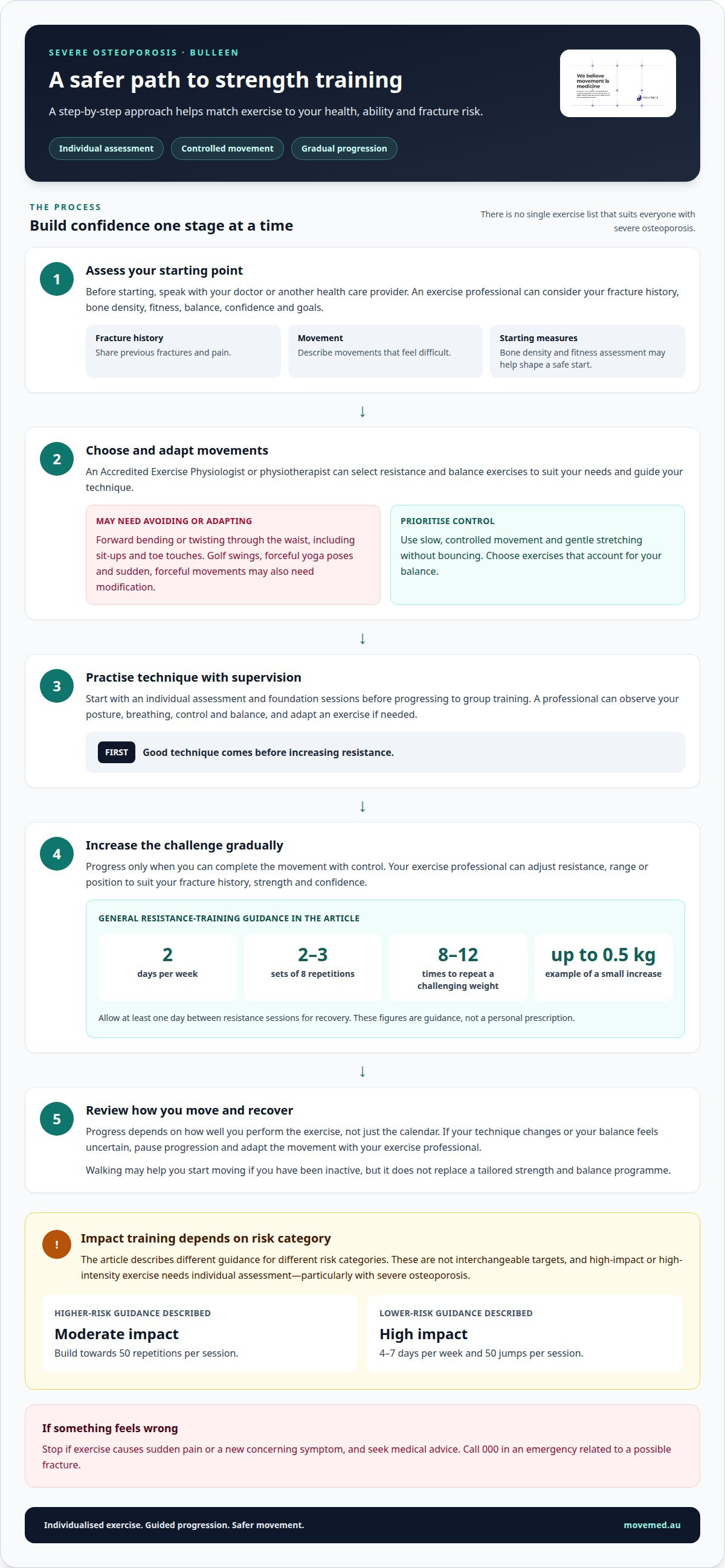
Before beginning osteoporosis exercise, speak with your doctor or another health care provider. Severe osteoporosis can increase fracture risk, so a primary care provider or exercise professional should consider your fracture history, bone density, fitness, balance and confidence. A bone density measurement and fitness assessment may help shape a safe starting point. Tell them about previous fractures, pain and movements that feel difficult.
Some movements can put extra strain on the spine. Avoid or adapt bending forward and twisting through the waist, including sit-ups and toe touches. Golf swings, forceful yoga poses and sudden, forceful movements may also need modification. Focus on slow, controlled movement, gentle stretching without bouncing, and exercises that account for your balance.
What strength training exercises are safe with severe osteoporosis? There is no single exercise list that suits everyone. An exercise physiologist or physiotherapist can select resistance and balance exercises to suit your fracture risk, strength and movement ability, then guide your technique. With severe osteoporosis, seek an individual assessment before starting high-impact or high-intensity exercise.
Progress slowly. Starting at a low level and increasing exercise too quickly can raise injury risk, including fractures. Impact training decisions depend on fracture history, current bone density, balance and confidence. Guidance for high-risk people describes moderate-impact activity, building towards 50 repetitions per session; high-impact recommendations for low-risk people describe 4–7 days per week and 50 jumps per session. These are different risk categories, not interchangeable targets.
Are there local exercise classes for older adults with osteoporosis in Bulleen, Doncaster or nearby suburbs? A general older-adult class isn’t automatically suitable for severe osteoporosis; supervised, individually developed exercise is the safer starting point. Stop if exercise causes sudden pain or a new concerning symptom, and seek medical advice. Call 000 in an emergency related to a possible fracture.
2. Osteoporosis Exercise: Is Strength Training Safe?
Resistance training can support bone health when the load, exercise and technique suit your ability. Strength exercises also challenge the muscles used for posture and everyday tasks. Because severe osteoporosis increases the importance of managing fracture risk, exercise needs to be individually prescribed. For people in Bulleen, safe strength training for severe osteoporosis starts with a plan tailored to their needs, not a general lifting routine.
Progressive resistance training is built by increasing challenge carefully. A common guide is training on 2 days per week, with 2–3 sets of 8 repetitions. Choose a challenging weight you can repeat 8–12 times, then make small increases, such as up to 0.5 kg. These figures are guidance, not a personal prescription.
Allow at least one day between resistance sessions for recovery. Start with a manageable load and practise controlled lifting. Progress only when you can maintain good technique. An exercise professional can adjust the resistance, range or position to suit your fracture history, strength and confidence.
What are the risks of lifting weights with severe osteoporosis, and how can fracture risk be reduced? Excessive loads or poor technique may increase injury risk. Individual assessment, supervision and gradual progression can help manage these risks. Safe strength training for severe osteoporosis in Bulleen should take account of how you move, not just the weight you lift.
The LIFTMOR trial included 101 postmenopausal women in Australia with low bone density and tested supervised high-intensity training at about 85% of maximum. This does not mean high-intensity lifting suits everyone with severe osteoporosis. The decision depends on your health, fracture history, movement and capacity.
Onero™ is a named program, but its name alone doesn’t show whether its exercises suit your bone density or fracture risk. An individual exercise program can account for your needs, including technique, progression and recovery.
3. Strength training safety and supervision for osteoporosis
For osteoporosis, safe strength training starts with an individual assessment, not a standard class routine. A physiotherapist or exercise physiologist can consider your health, ability, goals, fracture history and balance before choosing exercises. This helps match the program to your starting point, rather than assuming the same load suits everyone.
A supervised start gives you time to learn how each movement should look and feel. The exercise professional can observe your posture, breathing, control and balance as you practise. For example, they might adapt a standing exercise to a supported position if you find it difficult to stay steady. Good technique comes before increasing resistance.
Progress depends on how well you perform an exercise, not just the calendar. If you can complete a movement with control, your exercise professional can decide whether to change its resistance, range or position. If your technique changes or your balance feels uncertain, they can pause progression and adapt the exercise.
Walking may be a way to start moving if you have been inactive, but it does not replace a tailored strength and balance program. Strengthening muscles and practising balance address different aspects of movement and everyday function. Your exercise professional can discuss how these activities may fit alongside resistance training, based on your ability and bone health.
A clinic setting can provide space for supervised practice and adjustments as your program develops. Before progressing to group training, the recommended approach for osteoporosis strength training is a detailed 1-on-1 assessment and foundation sessions. This allows an exercise professional to establish safe movement patterns and identify the support you need.
Use your sessions to raise practical concerns, such as difficulty standing up from a chair or maintaining an upright posture. These examples can help the exercise professional choose relevant exercises and observe how you manage them. Individualised guidance supports a measured progression from learning a movement to building strength, while keeping your balance, technique and goals in view.
4. Working with a physical therapist or experienced trainer
With osteoporosis, the right professional helps turn general exercise advice into a plan you can perform. In Australia, a physiotherapist or exercise physiologist can tailor exercise to your health, ability and goals, and guide safe technique. Share your fracture history, including any vertebral fractures, plus difficulties with walking, standing or balance. These details affect exercise choice and intensity.
How can an exercise physiologist adapt strength training for osteoporosis, vertebral fractures or balance problems? They can assess your posture, movement and balance, then adjust an exercise’s position, range or resistance. For example, a supported position may help you practise a movement steadily before progressing. If you have vertebral fractures, your program can avoid movements that place unsuitable strain on your spine.
During a session, the exercise professional can observe how you lift, breathe and control each repetition. If your balance wavers or your posture changes, they can adapt the exercise rather than push through. They can also build progression around your response, changing one element at a time, such as resistance or movement range.
A personal trainer may support general fitness, but clinical exercise for a chronic condition needs to account for your individual health needs. Severe osteoporosis and previous fractures call for guidance that considers fracture risk, rather than a standard lifting routine. An Accredited Exercise Physiologist can tailor an exercise program to your needs.
In a supervised clinic session, ask the professional to explain the purpose of each movement and how it will progress. For instance, you should understand whether an exercise targets leg strength, upright posture or balance. If you’re ready to develop a plan around your condition, arrange an Exercise Physiology Consultation to discuss your goals and movement needs.
MoveMed
MoveMed can help you plan exercise around severe osteoporosis through Exercise Physiology Consultations. An Accredited Exercise Physiologist prescribes an individualised program after a one-on-one assessment, taking your health, movement ability and goals into account. This can be a useful next step if you’re unsure how to begin, have a fracture history or need support progressing resistance training.
Hydrotherapy, delivered in a warm-water pool, offers low-impact exercise that can be adapted to your needs. MoveMed also provides Aged Care Funded Therapy and NDIS Funded Therapy for eligible clients. These services support guided movement and exercise, rather than replacing medical care.
To discuss your goals and exercise needs, book an appointment with MoveMed online or call the clinic.
Take your next step with confidence
Planning safe strength training for severe osteoporosis in Bulleen can start with a practical question: what would you like daily movement to make easier? Getting up from a chair, carrying groceries or feeling steadier on your feet can turn a broad health goal into something personal and useful.
Before speaking with an exercise professional, consider which activities matter most and what makes them difficult. You could note movements you avoid, situations where you feel less steady, or concerns about returning to exercise. These details can help shape a discussion around a realistic starting point and a manageable path forward.
Progress doesn’t need to be rushed. A considered plan can help you build confidence as you work towards the activities that matter in your everyday life. If you’re ready to talk through your goals, contact MoveMed about safe exercise. Your next step can be a calm, practical conversation about moving forward.
Frequently Asked Questions
What is osteoporosis?
Osteoporosis makes bones less dense and more fragile, which increases the likelihood of fractures. It may not cause obvious symptoms until a bone breaks, so understanding your bone health matters. If you’ve been diagnosed, ask your doctor how your bone density and fracture history relate to everyday activities, including exercise and lifting.
How Long Does It Take to See Results?
Changes take time, and the outcome depends on the goal you’re working towards. Healthy Bones Australia advises regular exercise for at least 6–12 months to assist bone density. You may also track practical changes, such as how steady you feel during daily tasks, with guidance from your exercise professional. Bone density and strength don’t necessarily change at the same pace.
Is it safe to bend and lift with your back?
Some movements may need adapting, particularly repeated or loaded bending forward and twisting through the waist. That does not mean every back movement is automatically unsafe. Your doctor or exercise professional can help identify suitable ways to pick up an object, such as changing your position or using support, based on your fracture history and movement ability.
Osteoporosis Exercise: Is Strength Training Safe?
Strength training can be part of an osteoporosis exercise program when it is prescribed to suit your health, ability and fracture risk. A plan might use resistance bands, body weight or weights, with the exercise and load selected for you. If you have severe osteoporosis, do not copy someone else’s lifting routine. Ask an Accredited Exercise Physiologist to assess your movement and guide your starting point.
What Exercises Should Be Approached with Caution?
Take care with activities involving forceful spinal bending or twisting, sudden movements, high impact or a high chance of falling. For example, a fast change of direction during a game can challenge balance as well as place load on the spine. Your fracture history, posture and confidence all matter when deciding whether to adapt an activity, add support or choose another approach.
What exercises should you avoid or modify?
Exercises that combine forward bending and twisting, or place you at risk of falling, may need to be avoided or modified. The right adjustment depends on the movement and your circumstances: a professional might change your position, reduce the range or select another exercise. In Bulleen and nearby suburbs, discuss specific activities with your treating health professional before adding them to your routine.


