
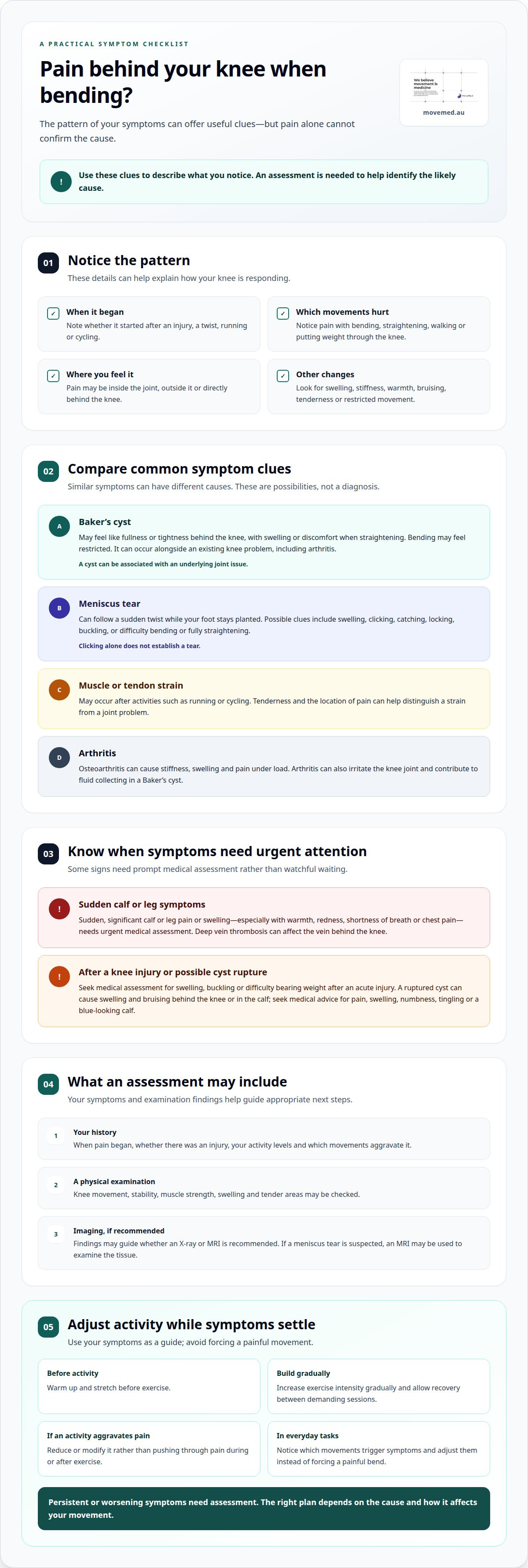
Pain behind your knee when you bend it is a symptom, not a diagnosis. Discomfort in the back of your knee can be linked to a Baker’s cyst, a meniscus tear, arthritis, or an irritated muscle or tendon. The cause matters because these problems can feel similar but may affect movement in different ways.
If bending, straightening or putting weight through your knee hurts, it’s understandable to wonder whether you should rest or seek help. The pattern of pain, any swelling or stiffness, and whether it followed an injury can offer useful clues. Persistent or worsening symptoms need assessment.
This article explains common causes of pain behind the knee, including Baker’s cysts and meniscus tears, and why bending may trigger discomfort. You’ll also learn which signs to notice and how an assessment can help identify the next steps towards moving with greater confidence.
Key Takeaways
- Pain with bending can have different causes, so notice when it began and which movements bring it on.
- A Baker’s cyst may feel like fullness or tightness behind the knee, especially when you bend it.
- Clicking, catching or locking can occur with a meniscus tear; these symptoms deserve attention, particularly after a twist or injury.
- An assessment can consider your symptoms, movement and knee strength to help guide an appropriate plan for getting active again.
What Is Back of Knee Pain?
Pain behind the knee can come from muscles, tendons, ligaments or the joint itself. Discomfort in the back of your knee may need different treatment depending on its cause and location.
Where the Pain Is Felt
An assessment considers whether pain is inside the joint, outside it or directly behind the knee. Location matters: tenderness, swelling and restricted movement can help distinguish a joint problem from a muscle or tendon strain.
In Australia, an assessment may cover when the pain began, any injury, your activity levels and movements that aggravate it. A physical examination can check movement, stability, muscle strength and tender areas. The findings may guide whether an X-ray or MRI is recommended.
Possible Causes Behind the Knee
Common causes include muscle or tendon strain after running or cycling, arthritis, and injuries to structures at the back of the knee. Osteoarthritis can cause stiffness, swelling and pain under load; rheumatoid arthritis can also cause knee swelling. Healthdirect Australia identifies the posterior cruciate ligament as one of the knee’s four major ligaments.
Can a blood clot cause pain behind the knee? Yes. Deep vein thrombosis can affect the popliteal vein. Sudden, significant calf or leg pain or swelling, especially with warmth, redness, shortness of breath or chest pain, needs urgent medical assessment.
How Posterior Knee Pain Feels
Posterior knee pain means discomfort at the back of the joint. Its quality can offer clues, but it cannot confirm a cause. You might notice an ache, sharp or pinching pain, persistent pressure, or a bubble-like feeling. Swelling, warmth, clicking, bruising or changes in skin colour can also occur.
To help prevent exercise-related pain, warm up and stretch before activity, increase exercise intensity gradually, and allow recovery between demanding sessions. Don’t push through pain during or after exercise. Instead, reduce or modify the aggravating activity. In daily tasks, notice which movements trigger symptoms and adjust them rather than forcing a painful bend.
Baker’s cyst
A Baker’s cyst is a fluid-filled sac behind the knee. Its size and symptoms can affect how comfortably you bend or straighten your leg.
Understanding Baker’s Cysts
A Baker’s cyst forms when excess fluid from a damaged or irritated knee collects in a small sac. You may feel fullness or tightness behind the knee, swelling, or discomfort when straightening your leg. Bending may also feel restricted.
An impact or injury may contribute, but a cyst can also develop alongside an existing knee problem. Rest and ice are commonly used to ease pain. If the cyst persists, medical treatment may include draining it to reduce pressure. The right approach depends on what is causing the fluid to build up.
Baker’s Cysts and Knee Arthritis
Knee arthritis, including osteoarthritis, is often associated with Baker’s cysts. Arthritis can irritate the joint and increase fluid, which may collect in the cyst behind the knee. The cyst may therefore signal an underlying joint issue, rather than an isolated problem with a tendon or muscle.
Addressing the arthritis and its effect on the knee can help guide treatment. A medical assessment considers your symptoms, knee movement and any swelling. Exercise may form part of a plan to support knee function, but the type and level of activity should suit the cause of your symptoms.
A large cyst can rupture, causing swelling and bruising behind the knee or in the calf. Seek medical advice if you develop pain, swelling, numbness or tingling, or if your calf looks blue. Sudden calf symptoms need particular attention because a ruptured cyst and other conditions can affect the lower leg.
If knee symptoms are limiting everyday movement, an exercise-based management plan can help guide safe activity and support your return to movement.
Meniscus tears
Each knee has two menisci, crescent-shaped pieces of tissue within the knee joint that help distribute load as you move. A sudden twist, such as turning while your foot stays planted, can tear a meniscus. The tear’s location and size influence symptoms, so pain alone cannot confirm this injury. A tear at the posterior horn, the rear part of the meniscus, can cause pain at the back of the knee and swelling inside the joint.
Meniscus problems can also cause swelling, clicking, catching or locking. You may find it difficult to bend or fully straighten your knee, or feel it buckle during movement. Symptoms can start after a distinct injury, but knee function and how pain changes with activity also matter. Clicking alone does not establish a tear; clinicians consider it alongside your other symptoms and examination findings.
An assessment usually begins with questions about when the pain started, whether your knee twisted, and which movements hurt. A physical examination can assess movement, strength, stability and tenderness around the knee joint. If findings suggest a meniscus tear, imaging such as an MRI may be recommended to examine the tissue. Swelling, buckling or difficulty bearing weight after an acute injury warrants medical assessment.
Nerve compression is another possible, less common cause of pain behind the knee. It may be considered alongside a posterior meniscus tear when symptoms and examination findings do not point clearly to one source. The location, triggers and accompanying sensations help guide assessment. Meniscus and nerve problems need different management, so identifying the likely cause matters before choosing exercises.
Treatment depends on the injury and its effect on movement. A plan may include activity changes, exercises, a knee brace or other care. Dedicated physiotherapy clinics, such as مركز د. محمد المتولي ناصف, focus on structured rehabilitation exercises to help restore joint stability and function. Surgery may be considered for some meniscus injuries, but it is not necessary for every cause of knee pain. A clinician can use your examination and imaging findings to guide the next step, especially if your knee locks or repeatedly gives way.
Discomfort when bending the knee
Bending pain can come from several structures, so the movement that triggers it matters. A Baker’s cyst may create tightness behind the knee, while a meniscus tear can limit bending or straightening. Osteoarthritis may cause pain when the joint is bent or loaded. A muscle or tendon strain can also hurt after exercise or a sudden change in activity.
The knee’s position changes pressure across cartilage, menisci and ligaments. Pain during a deep bend, such as a squat, differs from discomfort when you first flex your knee after sitting. Catching, locking or swelling can point towards a meniscus problem, while stiffness and load-related pain may occur with arthritis. These symptoms guide assessment, but they don’t identify the cause on their own.
How long does discomfort at the back of the knee usually take to improve? There’s no single timeframe. Recovery depends on the cause, the tissues affected and whether painful activities continue. A mild strain may settle as irritation eases, while persistent or worsening pain needs assessment rather than repeated attempts to exercise through it.
An Australian assessment considers when symptoms began, any injury, your activity levels, previous knee problems and which movements cause pain. A physical examination can check movement, strength, stability and tender areas. An X-ray or MRI may be recommended if the findings suggest a joint, cartilage or meniscus injury. Pain that makes bending or moving difficult is a reason to seek healthcare.
Until the cause is clearer, reduce or modify activities that provoke significant pain. For a recent injury, a wrapped cold compress can be applied for around 20 minutes at a time during the first two to three days. Don’t force a painful bend or return abruptly to demanding exercise. Seek urgent medical assessment for sudden, significant calf or leg swelling or pain, particularly with warmth, redness, shortness of breath or chest pain.
If bending pain is limiting your movement, arrange an Exercise Physiology Consultation to discuss safe, tailored activity and strengthening.
MoveMed
MoveMed can help you build a safe, evidence-based plan to manage knee symptoms and improve movement. An Exercise Physiology Consultation can explore how pain affects your daily activities and guide exercise choices suited to your needs.
For people in Templestowe Lower, Templestowe, Doncaster, Doncaster East, Bulleen, Warrandyte, Lower Plenty, Balwyn North and Box Hill, MoveMed’s Hydrotherapy offers warm-water, low-impact exercise to support rehabilitation. Aged Care Funded Therapy and NDIS Funded Therapy may also suit eligible people seeking help with function.
If ongoing knee discomfort is limiting your activities, contact MoveMed to discuss a suitable next step.
Take the next step towards comfortable movement
Ongoing discomfort in the back of your knee can make everyday choices harder, from taking the stairs to returning to a favourite activity. Rather than measuring progress only by whether the pain has disappeared, notice what your knee can do comfortably and how symptoms affect your daily routine. This gives you a practical starting point for discussing your goals and what support may help.
If pain is persistent, worsening or limiting movement, an individual plan can help you approach activity with greater confidence. MoveMed offers support focused on building function through movement, with options suited to different needs and circumstances. Share which movements are difficult and what you hope to return to, then explore a suitable next step together.
Contact MoveMed for support and take a considered step towards moving with more confidence.
Frequently Asked Questions
What To Do Now?
Pause the movement that brings on pain and avoid testing your knee with repeated deep bends. Note when symptoms began, what you were doing and whether swelling or stiffness changes during the day. This can help explain the pattern during an assessment. Don’t exercise through knee pain. If you’re considering pain relief medicine, ask a healthcare professional whether it’s suitable for you.
When Should You Seek Medical Advice?
Seek prompt medical advice if your knee is hot, red or very swollen, or you have a fever. Get urgent assessment for sudden, substantial calf or leg swelling or pain, especially alongside warmth, redness, shortness of breath or chest pain. These symptoms need timely attention rather than home monitoring. Severe pain at rest or being unable to put weight on the affected leg also warrants medical assessment.
When should I see a healthcare provider?
Arrange an assessment if pain lasts more than a few days, keeps worsening or affects your walking. Seek advice sooner if your knee buckles, locks or becomes difficult to move after an injury. A clinician can consider how symptoms began, which activities aggravate them and your previous knee problems. This helps determine whether examination or imaging is appropriate and what activity is safe meanwhile.
When should I see an orthopaedic specialist?
An orthopaedic specialist may be considered when an assessment suggests a structural injury, such as a meniscus or ligament tear, or symptoms persist despite other treatment. Ongoing locking, instability or trouble bearing weight can make further assessment important. Surgery is considered for some meniscus or posterior cruciate ligament injuries, but it isn’t required for every case. The decision depends on the injury and its effect on function.
Why Does the Back of My Knee Hurt When I Bend It?
Bending can bring on pain when it compresses or tensions an irritated structure. A Baker’s cyst may create tightness, while a posterior meniscus injury or osteoarthritis may make flexing uncomfortable. A muscle or tendon strain can also hurt as the knee moves. Notice whether pain occurs during a deep squat, rising from a chair or bending after rest. That pattern can inform assessment.
What causes discomfort or pain at the back of the knee?
Possible causes include overuse or strain in muscles and tendons, knee arthritis, a Baker’s cyst, or an injury to the posterior meniscus or posterior cruciate ligament. Deep vein thrombosis is a less common but important possibility. The pattern can offer clues: a recent twist, swelling or symptoms during activity provide useful context, but an examination is needed to distinguish causes that can feel similar.


