
Moving in water can feel more manageable when rheumatoid arthritis makes land-based exercise painful. Warm water exercise for rheumatoid arthritis in Doncaster may include guided movements such as walking, arm circles and leg lifts in a warm pool. The water supports your body and provides resistance, so you can practise movement and strength with less load on sore joints.
If stiffness or pain makes it harder to stay active, it’s understandable to wonder whether exercising will aggravate your symptoms. Water can make movement feel more comfortable, but the right activities depend on your symptoms, mobility and goals. This guide explains what warm-water exercise involves, who may benefit and how buoyancy, warmth and water resistance can support easier movement.
You’ll also learn what to consider before starting and how personalised hydrotherapy can fit into an exercise plan for rheumatoid arthritis.
Key Takeaways
- Water exercise can include simple movements such as walking, arm circles and leg lifts, with water providing resistance as you move.
- If land-based exercise is uncomfortable, consider whether exercising in water may better suit your symptoms and mobility.
- Warmth and buoyancy can make movement feel easier by easing stiffness and reducing the load on painful joints.
- A tailored exercise plan can help match water-based activity to your movement goals and rheumatoid arthritis symptoms.
What is water exercise?
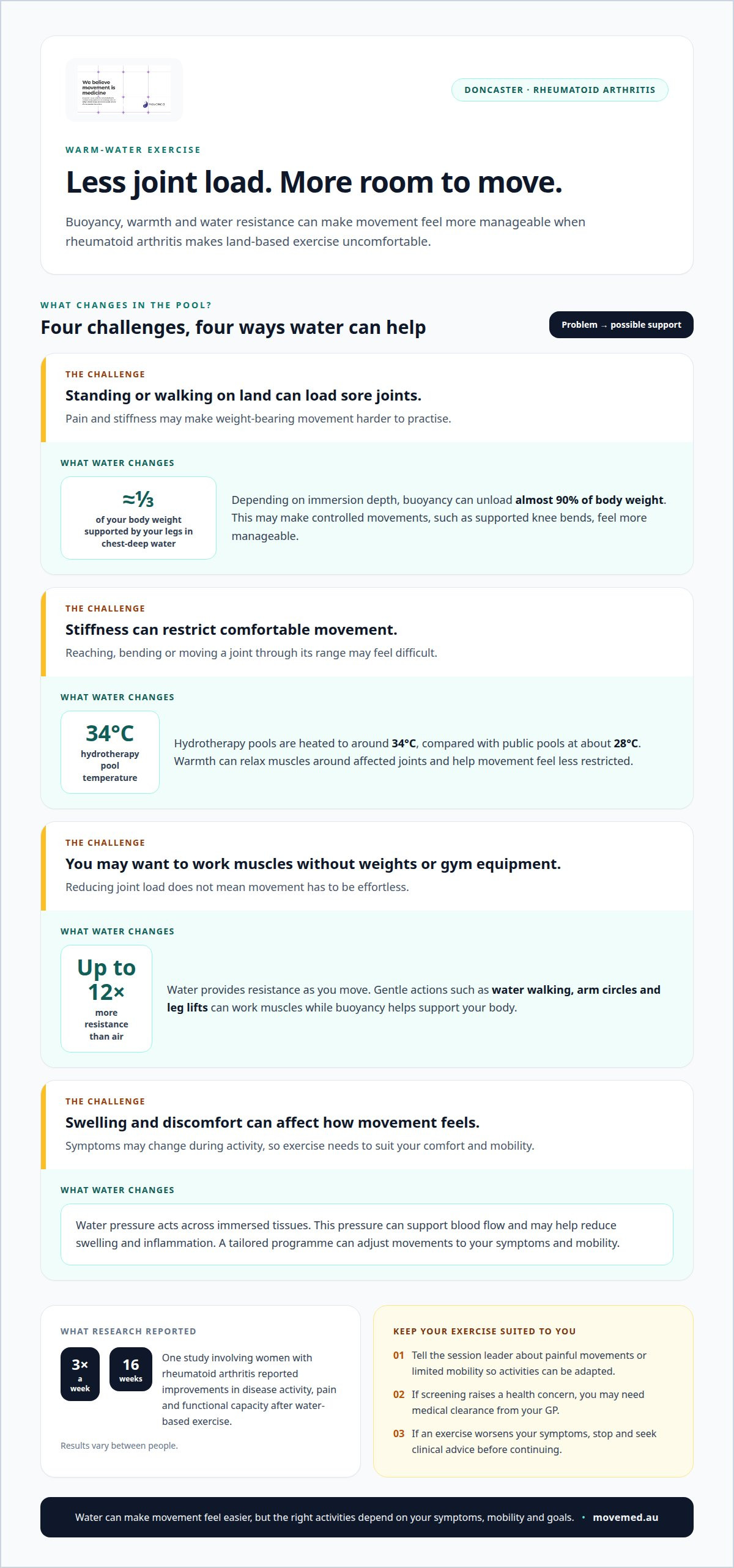
Water exercise uses movements performed in a pool, such as water walking, leg lifts and arm circles. For people seeking warm water exercise for rheumatoid arthritis in Doncaster, these activities offer ways to practise movement while the water supports the body. Water also provides up to 12 times more resistance than air, so gentle movements can work muscles without weights or gym equipment.
Pool temperature matters when joint stiffness makes movement uncomfortable. Hydrotherapy pools are heated to around 34 degrees Celsius, while public swimming pools are typically about 28 degrees Celsius. Arthritis water exercise classes use pool water ranging from 92 to 98 degrees F. Warmth can feel soothing, while buoyancy can take weight off painful joints as you move.
Classes may include water walking, aquatic aerobics and controlled leg lifts. Some run in small groups, often with people who have similar conditions. Moving alongside others can help you feel at ease and establish a routine. You don’t need to swim for most water exercise classes, but you should feel confident walking independently in the water without holding the pool edge.
When comparing aquatic exercise options, look at who leads the sessions, whether activities can be adapted to your mobility and how you’ll enter the pool. A qualified instructor can demonstrate movements, adjust the pace and explain how changing your speed or range affects water resistance. Pool access may include a ramp, hoist or gently sloping steps rather than a ladder. For individual guidance, MoveMed provides Hydrotherapy in a warm-water pool, with water-based exercise tailored to support recovery and physical wellbeing.
Who may benefit from water exercise
If rheumatoid arthritis makes walking or standing exercise painful, aquatic activity may offer a more manageable way to move. Warm water may soothe stiff joints, while buoyancy supports your body and reduces joint loading. This support can help you practise mobility and strength with less reliance on painful weight-bearing movements.
Research trials have found hydrotherapy can improve pain, joint mobility and overall function for people with rheumatoid arthritis. One study involving women with the condition reported improvements in disease activity, pain and functional capacity after water-based exercise three times a week for sixteen weeks. Results vary, but the findings show why a structured aquatic program may be worth discussing as part of your activity plan.
Water exercise may be useful if arthritis affects several joints, including your feet, knees, hips or back, or if pain and stiffness make land-based exercise difficult. Water walking, arm movements and leg lifts let you practise controlled motion and gradually work on fitness. You don’t need to be a confident swimmer for most classes, but you should feel comfortable walking independently in the pool.
Before starting hydrotherapy, consider how your symptoms and general health affect pool exercise. If a health-screening answer raises a concern, you may need medical clearance from your GP. Tell the session leader about painful movements or limited mobility so activities can be adapted. If an exercise worsens your symptoms, stop and seek clinical advice before continuing.
When should you avoid warm-water exercise or seek medical advice? If you feel unwell, your symptoms worsen during activity, or screening raises a health concern, pause and seek advice before returning. Funding depends on the service and your eligibility: Medicare rebates relate to eligible exercise physiology sessions, while private health insurance and NDIS funding depend on your cover or plan. MoveMed accepts all compensable schemes, and eligible plans and schemes may be bulk-billed. Review the relevant funding terms for your circumstances.
How warm-water exercise supports painful and inflamed joints
Water can change how your body feels and moves during exercise. Buoyancy, warmth and pressure each contribute to a gentler setting for painful joints.
Buoyancy and Reduced Joint Loading
Buoyancy is the upward support water provides, reducing the weight your joints carry. In chest-deep water, your legs support about a third of your body weight, which can make standing movements feel more manageable.
For a person with arthritis, less loading may make it easier to practise controlled movement without the same pressure experienced on land. Buoyancy can unload almost 90 percent of body weight, depending on how deeply you are immersed. For example, supported knee bends or arm movements allow you to explore your range of motion while the water helps carry your body.
This support does not remove all effort. Your muscles still work to control each movement, and water resistance provides a gentle challenge. This balance can help you exercise while limiting stress on painful joints.
Pain Relief and Joint Mobility
Warm-water exercise combines warmth with movement to ease stiffness and practise joint mobility. Warm water can relax muscles around affected joints, helping movement feel less restricted.
That can matter when morning stiffness or discomfort makes everyday actions, such as reaching or bending, harder. Gentle exercises in water let you move through a comfortable range and build confidence in those patterns. The aim is steady, controlled movement, not forcing a joint beyond what feels comfortable.
Water pressure also acts across the body. Hydrostatic pressure, the pressure water places on immersed tissues, can support blood flow and help reduce swelling and inflammation. Alongside water resistance, this may help you work on strength and flexibility with less joint stress. A tailored hydrotherapy program considers your symptoms and mobility, then selects movements suited to your ability. Changes in pain or swelling during a session can guide adjustments to the exercise.
How warm water supports and eases movement
Water changes how each movement feels, from taking a step to reaching overhead. This can help you practise everyday actions in a setting where your body is supported.
Water resistance works in every direction, not just against downward movement. Pushing your hands forward through water challenges your arms; bringing them back works different muscles. You can adjust the effort by changing your pace or movement size. A slower, smaller reach may suit a painful day, while a wider movement can add challenge when comfortable. This control helps make exercise purposeful without relying on heavy equipment.
Water also lets you practise movements that can feel difficult on land. Walking forwards, stepping sideways and turning gently ask your legs and trunk to coordinate, much like moving around the kitchen or changing direction while walking. If a joint is inflamed and painful, a supported setting may make it easier to explore movement gradually. Focus on smooth control rather than forcing a larger range.
A routine can bring these movements together: begin with gentle walking, add controlled arm or leg movements, then finish at an easier pace. Your exercise program should reflect your mobility, symptoms and goals, rather than copy another participant’s sequence. Comfort and movement quality can guide how much effort feels appropriate in each session, helping you adapt activity to how you feel that day.
If you want guidance connecting movement goals with a structured plan, consider an Exercise Physiology Consultation.
MoveMed: Exercise Physiology Consultations
MoveMed can help you turn warm-water movement into an exercise plan suited to your rheumatoid arthritis symptoms and goals. An accredited exercise physiologist prescribes Exercise Physiology programs after a one-on-one assessment, considering your mobility, strength and the activities you find difficult to guide an evidence-based approach to exercise.
MoveMed also offers Hydrotherapy: exercise in a warm-water pool that provides low-impact movement. This may suit you if land-based activity feels difficult or you want guidance adapting exercises to your capacity. A personalised plan can help you work towards practical goals, such as moving more comfortably through everyday tasks.
MoveMed provides aged care and NDIS funded therapy, as well as support through other compensable schemes. Discuss your exercise goals with MoveMed to find out how its services can fit your needs.
Take a considered next step
Living with rheumatoid arthritis can make activity levels feel unpredictable. Rather than waiting for every symptom to settle, consider what movement feels realistic for you now. A conversation about warm water exercise for rheumatoid arthritis in Doncaster can help connect day-to-day challenges with goals such as moving more confidently or keeping up with meaningful activities.
Start by discussing which movements feel comfortable, what you hope to achieve and how exercise could fit into your routine. From there, you can make decisions with clearer direction and support that reflects your needs.
If you’re ready to explore your options, contact MoveMed to discuss water exercise. A thoughtful next step can help you move towards activity that feels more manageable and purposeful.
Frequently Asked Questions
How can it help me?
Water exercise can provide a structured way to practise movement towards a personal goal, such as managing household tasks or maintaining independence. Think about which activity you’d most like to make easier, then bring that goal into your exercise planning. This keeps sessions relevant to daily life, rather than focusing only on general fitness or a list of exercises.
Are there different pools that I can exercise in?
Yes. The key difference is usually the purpose of the session, not the pool itself. A class may follow a shared program, while an individually planned session can focus on your movement goals. Ask how the session is structured and who guides it. That helps you choose the level of personal guidance that suits you.
How do I get started?
Begin by noting what you hope to gain from water exercise and which movements feel challenging. Share your rheumatoid arthritis symptoms, relevant health concerns and exercise experience during an initial discussion. This gives the person planning your activity useful context. If health screening raises a concern, you may need medical clearance from your GP before starting.
What if I can’t swim?
Not being able to swim doesn’t automatically rule out water exercise, because sessions can focus on movement rather than swimming lengths. Consider how comfortable you feel moving in water and explain any concerns to the session leader. They can clarify what the session involves and whether the activities suit your confidence and ability to move independently.
What water temperature is recommended for exercising with rheumatoid arthritis?
Choose a session designed for arthritis in a warm-water setting rather than assuming every pool will feel the same. Pool conditions vary by facility and activity, and the temperature that feels comfortable depends on your needs and how you respond during exercise. If warmth feels uncomfortable during a session, pause and let the session leader know.
What warm-water exercises are safe and effective for rheumatoid arthritis?
There isn’t one exercise sequence that suits everyone with rheumatoid arthritis. A suitable program considers which joints are affected, your current mobility and the movements you want to practise. The session leader can adapt activities to your needs rather than asking you to match another participant. This keeps exercise purposeful and relevant to your functional goals.


