

Regular, suitable movement can help an older person maintain the strength, balance and flexibility needed for everyday activities at home. A routine that feels manageable and enjoyable is easier to maintain. Social contact and mentally engaging activities can also support wellbeing and cognitive health.
It’s understandable to want your parent to remain independent while feeling confident they can move safely. Exercise can be part of that picture, alongside shared activities that bring connection, enjoyment and purpose. For families looking for exercise to help an elderly parent stay at home longer in Doncaster, a useful starting point is to consider your parent’s mobility, confidence and interests.
You’ll learn about free strength and balance sessions, simple activities to try at home, and gentle options such as chair-based movement. We’ll also explain how tailored exercise plans can support an older person’s goals, and when professional guidance may help you find a safe, suitable way forward.
Key Takeaways
- Explore free guided strength and balance sessions, and choose a starting level that suits your parent’s current mobility.
- Build movement into everyday routines and aim for strength work twice a week and balance or mobility exercises three times a week.
- Try gentle options such as chair yoga, stretching or tai chi, matching activities to your parent’s interests and confidence.
- When health needs, pain or changing balance make exercise harder to plan, a tailored exercise plan can help align movement with your parent’s goals.
1. Free guided strength and balance exercises for older adults
Supporting an older person to age at home often means preserving the strength and mobility needed for daily tasks. Guided exercises can focus on standing from a chair, controlled weight shifts and supported heel raises. These movements relate to practical activities such as getting up, reaching and walking around the house.
Free guided exercise resources give families a way to explore movement without starting with paid classes. If your parent is unsure which level suits them, begin at Level 1 and progress towards Level 3 over time. Choose low-impact activity and increase the challenge gradually, based on comfort and ability.
To compare group classes, home visits and online programs, consider your parent’s mobility, confidence, need for individual guidance and enjoyment of social contact. Group classes offer shared activity, home visits bring support into familiar surroundings, and online programs can be followed at home. For Doncaster, options to explore include guided online resources and local group activities; check that the format suits your parent’s needs.
Programs that practise strength, balance and mobility can support independence with everyday activities. At home, try gentle seated movements or standing exercises beside a stable chair, keeping the area clear and using the chair for support. A healthcare professional should guide the choice of exercises if your parent has a medical condition, recent injury or illness, new pain, or changing strength or balance.
Safe exercise depends on matching the movement and its difficulty to your parent’s current ability. A chair can provide support, while light weights or a resistance band can add strengthening work when suitable. Stop if an activity causes concern, and seek professional advice before trying new exercises after a long break.
Exercise support may be available through different funding pathways, including eligible government schemes and health funds. MoveMed accepts all compensable schemes, and bulk-billing is available for eligible plans and schemes. Ask what is included in the service and how the relevant funding pathway applies when booking.
My Aged Care is an entry point for discussing support at home, and the Australian Government Department of Health and Aged Care lists the Commonwealth Home Support Programme for people over 65 years. Whether exercise support is funded depends on the person’s assessed needs and the supports available through their arrangements.
2. How can I keep my elderly parent active at home?
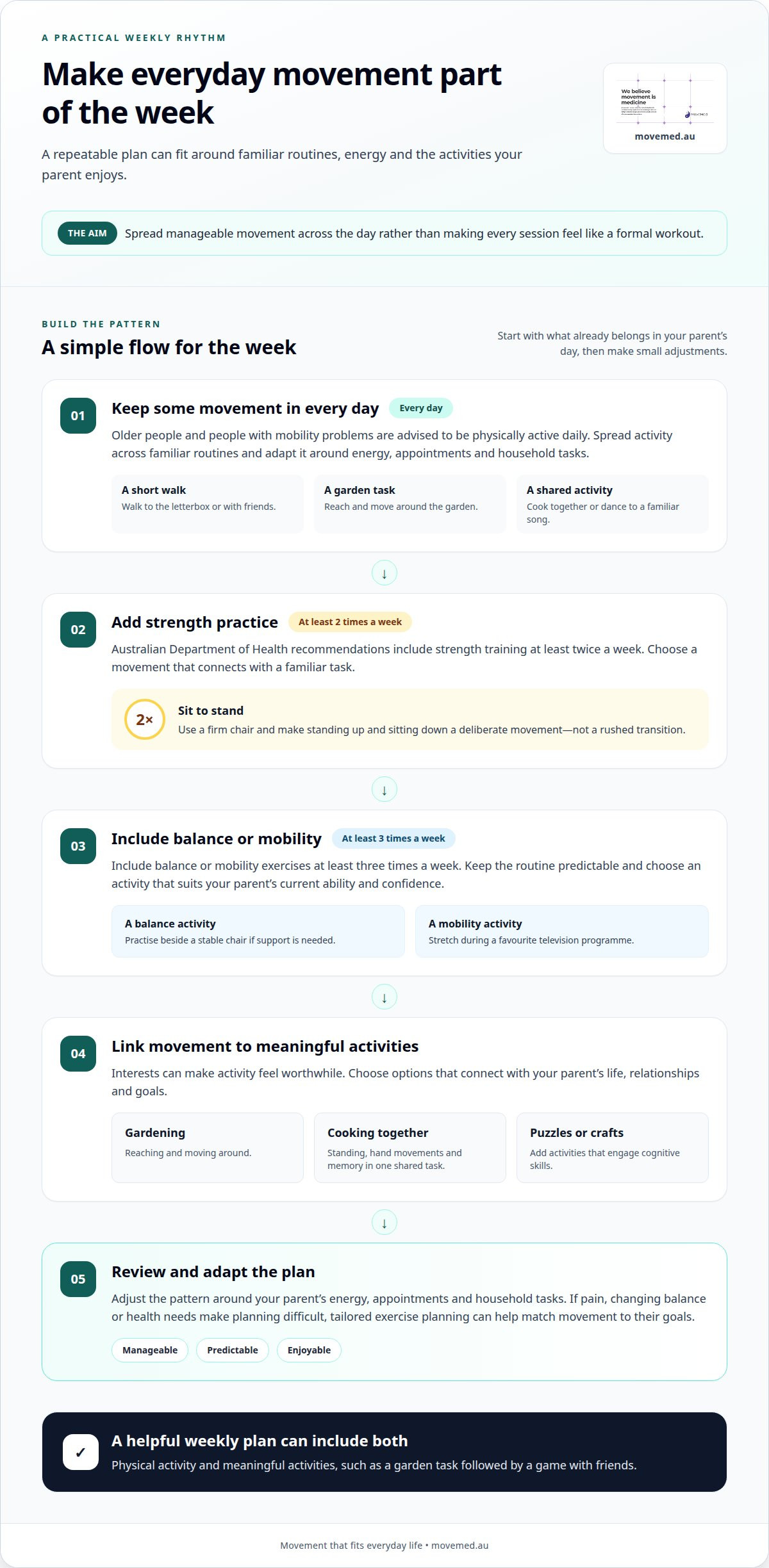
A repeatable weekly pattern helps turn movement into part of everyday life. Australian Department of Health recommendations include strength training at least twice a week and balance or mobility exercises at least three times a week. Older people and people with mobility problems are also advised to be physically active every day. Spread movement across familiar routines rather than making every session feel like a formal workout.
Sit-to-stand practice links strength with tasks your parent already does. A firm chair can make standing up and sitting down a deliberate movement rather than a rushed transition. The activity reflects the effort involved in getting up from a chair, which supports everyday tasks such as preparing a meal or dressing.
A simple routine gives each activity a place. Your parent might stretch during a favourite television programme, walk to the letterbox, then practise a balance activity later. Keep the sequence predictable and adapt it around energy, appointments and household tasks. Regular, manageable movement can build confidence without making exercise the only focus of the day.
Interests can make activity feel worthwhile. Gardening involves reaching and moving around; cooking together brings standing, hand movements and memory into one shared task. Dancing to a familiar song or walking with friends adds social connection. Encourage your parent to choose enjoyable activities, so movement connects with their life and relationships.
Active ageing means continuing to take part in meaningful daily activities, not meeting a single fitness ideal. Puzzles, crafts and reading aloud can engage cognitive skills, while a shared walk adds physical and social activity. A weekly plan can include both: for example, a garden task followed by a game with friends. If pain, changing balance or health needs make planning difficult, tailored exercise planning can help match movement to your parent’s goals.
3. Chair yoga, Tai Chi and walking football
Gentle movement can suit older adults who find long walks or standing classes difficult. Chair yoga combines seated stretches with controlled breathing and posture changes. Your parent might raise each arm comfortably, gently turn their upper body, then relax their shoulders. A stable chair offers support during the movements.
Tai Chi uses slow, flowing actions that practise balance, coordination and body awareness. A beginner class may involve shifting weight from one foot to the other, then stepping slowly in different directions. These skills can support mobility in familiar spaces, such as moving between rooms or along a clear path near the stairs.
Walking offers a simple way to practise moving outdoors. A familiar, level route, such as a short walk along the footpath, can be a starting point, with pauses as needed. If your parent enjoys football, walking football adapts the game around walking rather than running. The group setting can make movement more enjoyable and encourage social connection.
For limited mobility, chair-based exercise offers an alternative to standing activities. Your parent can practise seated knee extensions, ankle movements and gentle arm reaches using a sturdy chair on a stable surface. Keep movements controlled and within a comfortable range. A family member can stay nearby, offer encouragement and keep the surrounding space clear.
Stretching, yoga and Tai Chi can help older adults maintain flexibility and mobility, and may reduce the risk of falls and injuries. Choose classes according to your parent’s confidence, interests and current skills. If a group setting feels overwhelming, try a short home session together first. Music or a familiar routine can make that first step feel more approachable.
Match each activity to the person, not just the exercise name. A short walk may suit someone who enjoys fresh air, while chair yoga may feel more manageable after a tiring day. Notice which movements your parent enjoys and which feel difficult. That feedback can guide the next class, home activity or gradual progression.
4. Physiotherapy and tailored exercise plans
A standard exercise sheet may not suit every senior. A tailored plan considers previous injuries, health history, goals and motivations. For one person, the priority might be walking to the letterbox; for another, it could be standing from a chair more comfortably. These practical goals give exercise a clear purpose.
An exercise physiologist can shape activities around an individual’s circumstances. A plan may account for pain, changes in balance, available space and the movements involved in daily routines. For example, someone who feels unsteady moving between rooms may benefit from exercises matched to their mobility and confidence.
Useful plans explain what each movement is for and how to adapt it. They can set out supported options, such as practising a controlled weight shift beside a stable surface, and describe how to adjust an activity to suit ability. That clarity helps families encourage regular movement without assuming every exercise suits every person.
Comfort matters, but it is not the only consideration. The plan should connect exercise with the older person’s priorities, such as preparing a meal or getting outdoors. When pain, a recent injury or illness, or changing strength and balance affects activity, speak with a health professional before introducing new exercises. Their advice can guide a suitable starting point.
Exercise Physiology Consultations offer a clinical option for an older person who needs structured exercise support. Accredited Exercise Physiologists prescribe programs after a one-on-one assessment, then design, deliver and evaluate exercise interventions. This can help you move from general activity ideas towards a plan with a clear purpose and practical steps.
For families in Doncaster, the takeaway is simple: match the plan to the person, not the other way around. Share the activities your parent wants to keep doing, along with any concerns about pain, balance or staying active at home. Arrange an Exercise Physiology Consultation to discuss a tailored approach to movement and independence.
MoveMed: Exercise Physiology Consultations
MoveMed can help turn general activity ideas into a personalised exercise plan for your parent. Exercise Physiology Consultations take their health, current abilities and goals into account, such as building confidence with everyday movement or maintaining independence at home.
MoveMed also offers Hydrotherapy, Aged Care Funded Therapy and NDIS Funded Therapy. These options may suit people whose needs or funding arrangements shape how they access exercise support. The right starting point depends on what your parent wants to keep doing and the movement challenges they face.
If pain, changing balance or health needs make it difficult to plan activity, a tailored consultation can help bring their goals and exercise together. Contact MoveMed to discuss an exercise approach for your parent.
Make the next step one your parent chooses
Your parent’s priorities can guide what happens next. Talk together about an everyday activity they’d like to keep doing, such as preparing breakfast independently or visiting a friend. That shared goal can make planning feel personal and keep their preferences at the centre.
As needs or confidence change, revisit the goal and adjust the approach. For families considering exercise to help an elderly parent stay at home longer in Doncaster, progress can begin with a conversation about what matters most to your parent and what support could help.
MoveMed can work with you to discuss a tailored approach through an Exercise Physiology Consultation. Contact MoveMed about tailored exercise and take the next step together.
Frequently Asked Questions
Does staying active help memory and mood?
Movement can be part of a routine that supports wellbeing, while familiar music can prompt memories and conversation. Try playing songs your parent enjoyed when younger, then invite them to share a story connected with one. This creates a meaningful moment together without turning the conversation into a test of memory.
How can I keep my elderly parent active at home?
Give your parent a practical role in a shared household task. For example, they could sort the day’s mail at the table, decide which items need attention and pass them to you. This keeps them involved in familiar home life and lets you spend time together without making exercise feel like a separate appointment.
How do I motivate a parent who does not want to be active?
Ask what makes movement unappealing before suggesting a solution. If your parent is worried about falling, listen to what feels unsafe and discuss their concerns with a health professional. If they dislike formal exercise, invite them to choose a meaningful goal, such as taking part in a family outing. Their choice can make the next step feel more relevant.
What Does Active Ageing Really Mean?
Active ageing includes having a say in decisions about daily life and support, not simply doing more exercise. Your parent might choose when to take part in an activity, which family members join, or how a familiar task is done. Respecting those choices keeps their preferences and valued roles central as their needs change.
What activities suit an older parent with limited mobility?
Adapting a familiar task can help your parent stay involved without requiring much movement. For example, they could help plan a shopping list, choose ingredients for a meal or organise family photographs while comfortably seated. Make items easy to reach, and let your parent guide how long they wish to continue.
Where can older adults in Doncaster access strength and balance exercise classes?
Older adults in Doncaster can explore local group classes and free guided resources for strength and balance activity. Families looking for exercise to help an elderly parent stay at home longer in Doncaster can also consider whether a class or guided resource suits their parent’s goals, mobility and preference for exercising with others or at home.


