
A gym membership isn’t the only way to stay active as you get older. Alternatives to the gym for seniors in Templestowe include walking, gentle movement, gardening and supported exercise, depending on what feels manageable and enjoyable.
If busy spaces, unfamiliar equipment, aches or stiffness make the gym less appealing, you’re not alone. Choose activities that suit your goals, confidence and everyday needs, rather than feeling pressured to keep up.
This guide looks at practical ways to stay active, adapt movement to your comfort and choose an approach that fits your routine. It also explains how an exercise professional can help you work towards strength, balance and confidence at a suitable pace.
Key Takeaways
- Look for senior exercise classes that can adapt movements to your confidence, comfort and fitness goals.
- Consider ways to exercise at home or outdoors, and choose a setting that feels practical for you.
- Build strength and balance with suitable activities, including Tai Chi, to support steadier movement.
- If you’d benefit from personalised guidance, MoveMed’s Exercise Physiology Consultations and Hydrotherapy can support a more tailored approach.
Adaptable classes led by qualified older-adult fitness instructors
Senior exercise classes can offer structure, social connection and movement adapted to different abilities. When comparing local options, consider transport, venue access and whether beginners can follow modified exercises.
Local class options
In the Manningham area, group activities can range from organised exercise to recreational sport. At Manningham DISC, badminton players rotate every 15 minutes when courts are full, creating a practical way to share court time. Weekly live exercise classes on Zoom are another option if travelling to a venue is difficult. Memberships that include Momentum classes may suit you if their class format and timetable match your routine.
Compare what each session involves. A gentle class may focus on flexibility and mobility, while a faster-paced session may include cardio. Choose a pace that lets you move with control and take breaks when needed.
Access and beginner-friendly choices
Transport and venue access can determine whether a class is manageable to attend. Look for a convenient venue with level access and seating. For an online class, make sure you have a stable internet connection and enough clear floor space to follow along safely at home.
Look for sessions that explain how to adapt exercises, with options such as seated movements or balance support. Modifications can help you return to exercise or build confidence after a break without trying to match someone else’s pace.
Classes led by instructors qualified to work with older adults can adapt movements to different abilities. For example, a standing balance exercise might have a supported version using a chair. Falls prevention and balance classes often include controlled weight shifts, stepping practice and leg strengthening. These activities develop skills used in everyday tasks, such as turning, reaching and moving around the home.
A suitable class should feel purposeful, not rushed. Notice whether instructions are clear and exercises can be adjusted as your strength, balance or confidence changes. That flexibility can make regular participation easier to maintain.
Exercise sessions at home, a gym, a park or by telehealth
You can exercise at home, outdoors, in a gym or through telehealth. Alternatives to the gym for seniors in Templestowe include home-based movement and park exercise. Choose a setting that suits your routine, access and comfort, as a good fit can make regular activity easier to maintain.
Walking groups and outdoor fitness programs may suit older adults in Templestowe. A group offers company, while walking alone lets you set your own pace. Choose a familiar route and manageable surface. Start at a comfortable distance and adjust it as your routine develops.
An exercise physiologist can discuss your health, movement and goals before planning a program. You can explain which movements feel difficult and which everyday tasks you want to manage more easily. The plan can then focus on relevant activities and progress at a suitable pace.
Mobile exercise physiology brings sessions into your home. This can help you practise in the spaces where you move each day. Telehealth offers video-based guidance from home, while a gym may provide equipment and structured groups. A senior-focused gym or supervised session can be useful if you prefer instruction while exercising with machines.
Walking, jogging, jumping and weight work are examples of weight-bearing or resistive exercise. The recommendation in this guide is 30 minutes of exercise per day. Choose an activity and setting that fit your comfort and current capacity.
As you begin, wear comfortable footwear and keep your exercise space clear. At home, place a stable support within reach for standing movements. Outdoors, select a route with a surface you can manage. For more alternatives to the gym for seniors in Templestowe, explore individual exercise guidance shaped around your goals.
Strength, balance and falls prevention
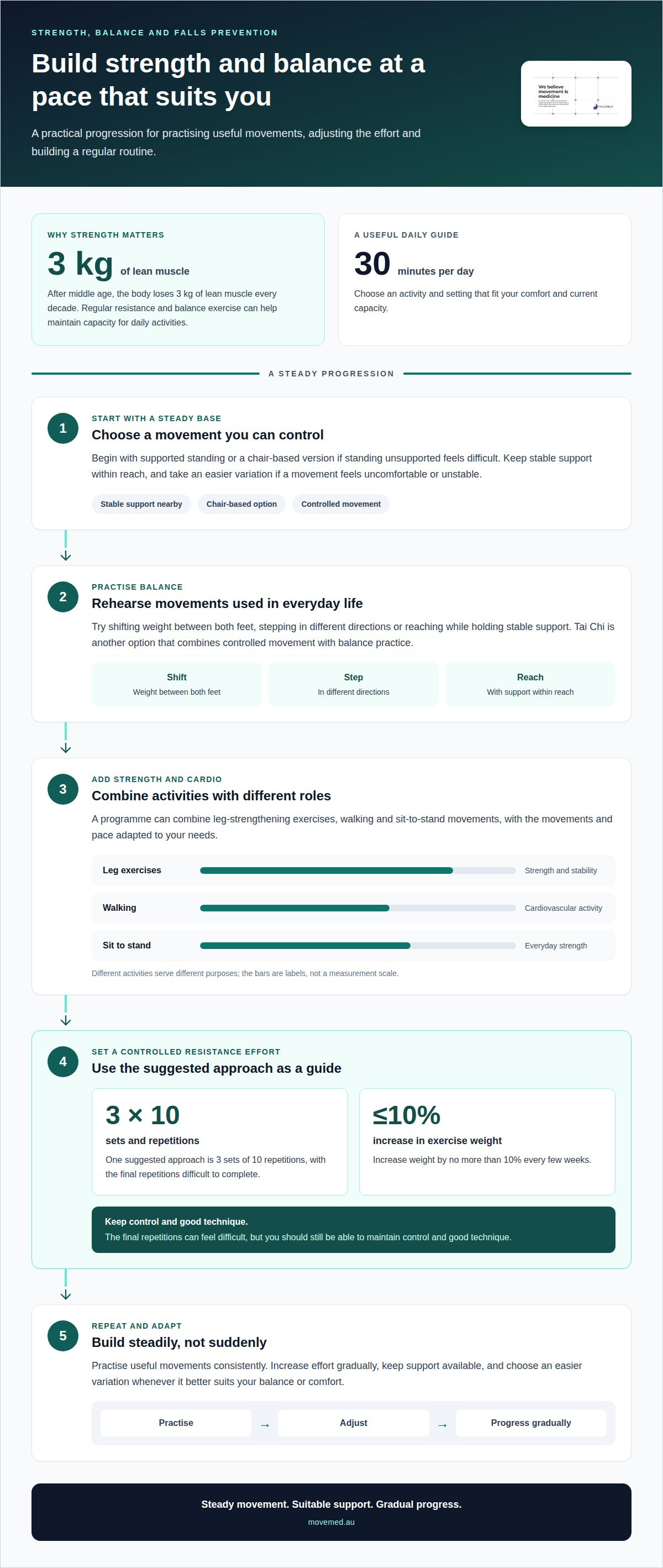
Strength and balance support everyday movements, from rising from a chair to turning safely. After middle age, the body loses 3kg of lean muscle every decade. Regular resistance and balance exercise can help you maintain the capacity needed for daily activities. A suitable program can include controlled leg exercises, steady walking and supported standing practice.
Balance programs can practise everyday movements, such as shifting weight between both feet, stepping in different directions or standing while holding stable support. Tai Chi is another option that combines controlled movement with balance practice. Choose movements that suit your ability, particularly if standing unsupported feels difficult.
Strength, balance and cardio each contribute different elements to fitness. Leg-strengthening exercises can support stability and reflexes. Walking provides cardiovascular activity, while sit-to-stand movements practise strength for everyday tasks. A program can combine these activities, with movements and pace adapted to your needs.
For resistance work, one suggested approach is 3 sets of 10 repetitions, with the final repetitions difficult to complete. That effort should still allow you to maintain control and good technique. Increase exercise weight by no more than 10% every few weeks. Small, planned changes let you build gradually rather than making a sudden jump in effort.
Balance training can take place in settings such as a community centre or an aged care program. A session might begin with supported standing, then progress to stepping or reaching tasks as appropriate. Keep stable support within reach, or use a chair-based version if that better suits your balance. The aim is to practise useful movements consistently, not rush into harder exercises.
Look for programs that include leg strength and balance practice, rather than focusing only on cardio. If a movement feels uncomfortable or unstable, try an easier variation and build from there.
What low-impact exercise alternatives to the gym are suitable for seniors?
Walking, gardening, stretching and gentle exercise can help you stay active without gym equipment. In Templestowe, choose an option that fits your mobility, interests and daily routine. For example, light gardening can involve watering pots, while a short walk can provide a simple change of scenery. Seated stretching is another way to move comfortably at home.
A walk can be divided into 15 minutes in the morning and 15 minutes in the evening. This approach may suit you if a longer outing feels tiring or difficult to fit into the day. Choose a familiar route with a surface that feels manageable, and set a pace that lets you keep moving comfortably.
Gardening can add movement to an everyday task. Water plants, tend a raised garden bed or prune at a comfortable height. Change positions as you work and break tasks into smaller parts if needed. When stretching, move gently rather than forcing a joint into an uncomfortable position. Moving joints through their available range can help maintain mobility.
Gentle exercise might include seated knee extensions, shoulder rolls or supported heel raises beside a stable chair. Begin with controlled movements and use the chair for support during standing exercises. A short, familiar routine may be easier to maintain than a complicated set of activities. You can also walk indoors along a clear hallway when outdoor conditions or access make a walk less practical.
To make activity part of your routine, link it with something already in your day. Stretch after breakfast, tend plants in the afternoon or walk before dinner. Choose activities you enjoy and adjust the time, pace or movement to suit your comfort. Familiar tasks and low-impact movement can help you build a workable routine in and around Templestowe.
MoveMed
MoveMed can help turn general exercise ideas into a plan shaped around your health, movement and goals. If pain, a chronic condition or reduced confidence makes it difficult to choose suitable activities, book an Exercise Physiology Consultation for individual guidance. An Accredited Exercise Physiologists can help identify what affects your movement and develop a practical approach to support your capacity and independence.
MoveMed offers Hydrotherapy, delivered in a warm-water pool with low-impact exercise, as well as Aged Care Funded Therapy and NDIS Assistance. The right approach depends on your needs and the activities you want to manage, such as walking more comfortably or building strength for daily tasks. MoveMed’s Accredited Exercise Physiologists design and deliver exercise interventions with your circumstances in mind. To discuss your goals and book a suitable next step, use the “Book an Appointment” button or call MoveMed.
Choose a routine that can grow with you
Alternatives to the gym for seniors in Templestowe give you more choice in how movement fits your life. Notice which activities engage you and what makes it harder to keep going. Your routine doesn’t need to look impressive on paper. It needs to feel practical enough to return to and support the activities and independence that matter to you.
Give yourself room to adjust as your preferences, energy or circumstances change. A different pace or amount of structure may suit you better over time. Progress can mean feeling more confident about continuing, not simply doing more. Let your goals guide your choices and build consistency gradually. Each manageable decision can help movement become a more natural part of your day.
Frequently Asked Questions
What senior exercise classes are available in Templestowe and nearby suburbs?
Class choices vary across Templestowe, Doncaster, Bulleen and nearby suburbs. Compare timetables, class levels and enrolment arrangements. Some programs run as ongoing sessions, while others have set course dates. Check whether a class suits your experience and goals and fits your schedule. These details can help you choose an option that works with your week.
What aquatic exercise or hydrotherapy options are available near Templestowe for older adults?
MoveMed offers Hydrotherapy for older adults seeking structured, water-based rehabilitation in Templestowe. Delivered in a warm-water pool, it provides low-impact exercise guided by rehabilitation needs, rather than independent pool exercise. Consider it if you want aquatic exercise linked to a rehabilitation goal. MoveMed also offers Exercise Physiology Consultations for people seeking guidance on suitable movement.
How can seniors find and join local walking, tai chi, yoga or strength classes in Templestowe?
Start by identifying the activities and locations that suit you, then compare class timetables and enrolment arrangements. From Templestowe, you may also consider options in Doncaster, Doncaster East, Bulleen or Warrandyte. Look for details about session levels, attendance expectations and start dates to plan around transport, other commitments and the type of class you want.
Are there home-based exercise or online programs for seniors in Australia?
Yes. MoveMed offers Telehealth, with clinical movement care delivered by video. Unlike a general online class, Telehealth provides clinical care rather than a one-size-fits-all fitness video. It can suit you if getting to an in-person appointment is difficult or you prefer support from home. You can discuss your movement needs with a clinician remotely.
What exercise programs do Manningham Council and local community centres offer seniors?
Local options mentioned include weekly live exercise classes on Zoom, Momentum classes through eligible memberships and badminton at Manningham DISC. Community-centre programs may also offer balance and falls-prevention practice, including supported standing, stepping and leg strengthening.


