

A safe approach to managing PTSD symptoms with exercise for veterans in Lower Plenty is to use physical activity as a complement to PTSD care, not as a replacement or an established first-line treatment. Before starting a new routine, consult a healthcare professional to consider your health needs and help make the program suitable and safe. Early evidence suggests exercise may reduce PTSD symptom severity, but further high-quality trials are needed to confirm its effects.
It’s understandable to hope movement could help you feel steadier, sleep better or regain confidence, while wanting to know what’s realistic. Exercise can support wellbeing, but it isn’t a quick fix and works best alongside appropriate care.
This article explains how aerobic activities such as running, cycling and swimming may fit into PTSD care, why a manageable routine and social support can help you stay engaged, and what to discuss with a healthcare professional before you begin. Use these points to consider a next step that respects your needs and goals.
Key Takeaways
- Exercise may complement PTSD care, but it should not replace established treatment.
- Consider aerobic activities such as cycling, swimming or running, choosing options that feel manageable for you.
- A consistent routine and support from others can help you stay motivated and connected.
- Before starting, speak with a healthcare professional about your health needs and a safe, personalised approach.
Exercise as a complementary approach to PTSD care
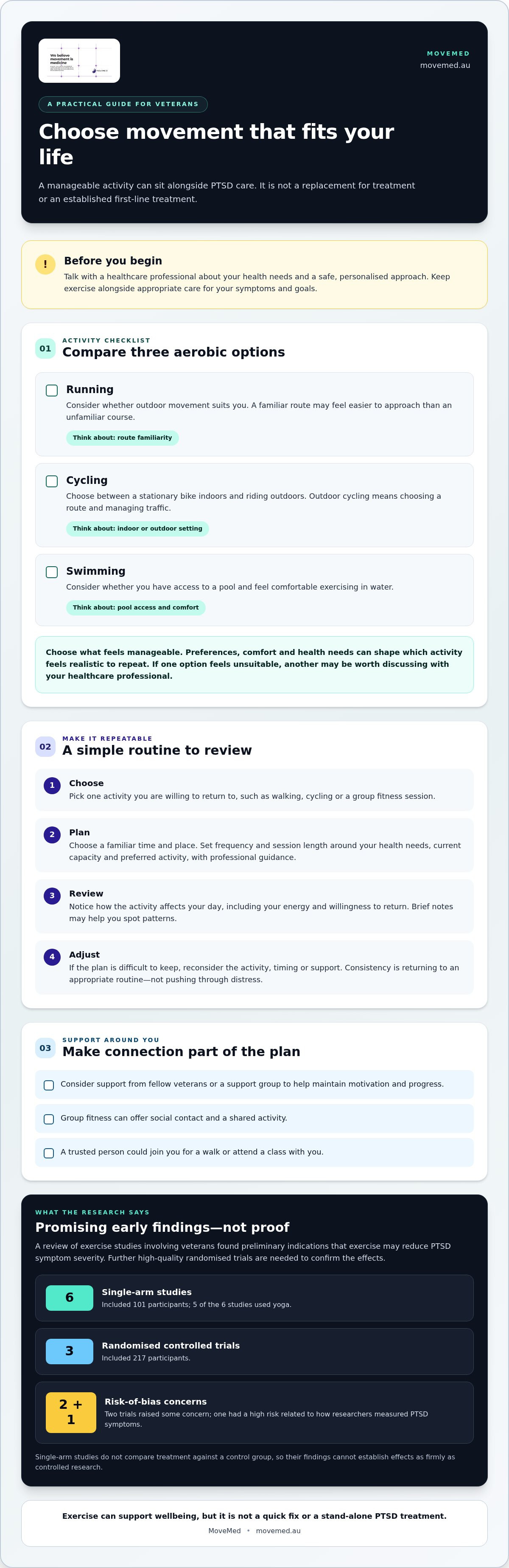
Exercise can support PTSD care, but it isn’t a replacement for treatment. Exercise is also not established as a first-line PTSD treatment for veterans. A review author did not recommend clinicians prescribe it specifically for that purpose. Instead, movement can be considered alongside care that already addresses your symptoms and goals.
A review of exercise studies involving veterans appeared in Federal Practitioner in April 2022. It included six single-arm studies with 101 participants, and five of those studies used yoga. Single-arm studies examine outcomes without comparing treatment against a control group, so their findings cannot establish exercise’s effects as firmly as controlled research.
The review also included three randomised controlled trials with 217 participants. Two trials raised some concern about risk of bias, and one had a high risk because of how researchers measured PTSD symptoms. The overall findings offered preliminary indications that exercise may reduce symptom severity, but further high-quality randomised trials are needed to confirm the benefit. This is promising, but it is not proof that exercise will reduce symptoms for every veteran.
Movement may also support practical wellbeing goals. A walk, cycle or yoga session, for example, can add planned activity to your day. Physical activity may promote endorphin release, help regulate sleep patterns and support memory and concentration, which PTSD can affect. Strength training may build muscle and support self-esteem and a sense of empowerment. Given that chronic stress often affects other bodily systems such as digestion, seeking guidance from specialised practitioners or online services like ibsclinics.co.uk can also form part of a broader, personalised approach to daily wellness.
What do exercise programs or classes cost for veterans in Australia? There is no single fee: costs depend on the program format, session length and support included. Ask about the cost of the specific program you are considering.
To make exercise a useful addition, choose one manageable activity and consider what you want it to support, such as sleep, strength or a daily routine. Yoga combines movement with relaxation practices, while strength training focuses on building muscle. Neither is a stand-alone PTSD treatment. A healthcare professional can help you consider how activity fits alongside your existing care.
Aerobic exercise
Running, cycling and swimming are aerobic options to consider when planning activity. Each offers a different setting and movement pattern. Running may suit someone who prefers travelling outdoors on foot; cycling can be done outdoors or on a stationary bike; swimming offers movement in water. For veterans managing PTSD symptoms with exercise in Lower Plenty, the right fit depends on preferences, comfort and health needs.
Compare the practical demands of each activity. A familiar running route may feel easier to approach than an unfamiliar course. A stationary bike lets you ride indoors, while outdoor cycling involves choosing a route and managing traffic. Swimming requires access to a pool and comfort in that environment. These details can affect whether an activity feels realistic to repeat.
- Running: consider a familiar route and whether outdoor movement suits you.
- Cycling: choose between riding outdoors or using a stationary bike.
- Swimming: consider pool access and your comfort in water.
Make your first choice specific. For example, choose indoor cycling if you prefer exercising at home, or swimming if you feel comfortable in water. Then notice how the activity affects your day, including your energy and willingness to return. Brief notes can help you spot patterns without turning exercise into a test of willpower.
No single aerobic activity suits every veteran. Your preferred option may change with your health, circumstances or surroundings. If running feels unsuitable, cycling or swimming may be alternatives to discuss with a healthcare professional. Managing PTSD symptoms with exercise for veterans in Lower Plenty starts with choosing movement that fits your life, rather than forcing a format that feels hard to sustain.
Compare each option with your daily routine and the settings where you feel comfortable. Keep PTSD care in view as you plan activity: exercise is one part of a broader approach, not a reason to stop other care. A considered choice gives you a practical starting point for discussing aerobic activity with a healthcare professional.
Consistency and support networks
A repeatable routine can make exercise easier to maintain alongside PTSD care. Choose an activity you’re willing to return to, such as walking, cycling or a group fitness session. A familiar time and place can also reduce the effort of deciding what to do each day.
How often and for how long should veterans with PTSD exercise? There’s no single schedule for everyone. Set frequency and session length around your health needs, current capacity and preferred activity, then adjust the plan with professional guidance.
Start with a clear, manageable plan rather than an ambitious target. For example, choose a regular time to walk and note how it fits around sleep, appointments and other responsibilities. If the plan feels difficult to keep, review the activity, timing or support involved. Consistency means returning to an appropriate routine, not pushing through distress or treating missed sessions as failure.
Support from fellow veterans or a support group can help maintain motivation and progress. Group fitness sessions can also offer social contact and a shared activity. You might invite someone you trust to join a walk or arrange to attend a class together. These small plans create a practical commitment without making exercise the only focus of the connection.
- Choose: select one activity that feels manageable and suits your preferences.
- Plan: decide when and where it fits into your regular routine.
- Review: notice what helps you return, and adjust barriers such as timing or company.
Near Lower Plenty, an outdoor walk with a trusted person is one option to consider. A gym-based group session may suit you if scheduled activity and social contact help you stay engaged. Specific veteran groups or venues aren’t named here, so focus on the type of setting that feels accessible and comfortable for you.
Keep the purpose practical: a consistent routine and support network can help you maintain activity and build connection. If a particular setting feels overwhelming, consider a quieter walk or exercising alongside one trusted person instead. Your preferences, health needs and comfort can guide your next adjustment.
Consulting a healthcare provider before exercising
Before starting a routine, speak with a healthcare professional about your health, current PTSD care and exercise goals. A useful consultation considers your physical health, any concerns affecting movement and activities you find manageable. This helps shape a plan around your needs rather than relying on a generic program.
What Australian rules or funding support veterans seeking exercise or mental health services? DVA-funded allied health care uses a treatment cycle, which provides up to 12 sessions or 12 months before a new referral is required. Exercise physiology and mental health treatment may follow different funding arrangements, so discuss the relevant pathway and eligibility for your care.
Can exercise worsen PTSD symptoms, and how can this be managed? Exercise may feel distressing during a session, so tell your healthcare professional if you feel overwhelmed. They can help adjust the activity, setting or pace and plan how you’ll respond if distress arises.
Use your appointment to turn general advice into practical decisions. Discuss whether running, cycling or swimming suits your current health and comfort. Explain what you want activity to support, such as strength or a steadier routine. Mention any movements or settings that feel difficult, so the program can account for them.
- Share: describe your health concerns, current care and exercise experience.
- Choose: discuss an activity and setting that feel manageable, such as a familiar walking route.
- Plan: agree how to adapt the activity if discomfort or distress arises.
A personalised program should address your health concerns and support safe, effective activity. It can clarify what to do next, rather than leaving you to work out changes alone. Bring questions about how exercise fits with existing PTSD care, and discuss any changes in symptoms as your routine develops.
If you’re ready to discuss a safe, individual approach, talk through an exercise plan with an exercise professional.
MoveMed: Exercise Physiology Consultations
MoveMed offers Exercise Physiology Consultations for people seeking a structured, personalised approach to physical activity. Accredited exercise physiologists prescribe programs after a one-on-one assessment, considering your health needs, goals and preferences to plan safe exercise. This can help if you want guidance choosing activities or adapting movement to suit your capacity.
Exercise physiology can complement PTSD care, but it does not replace mental health treatment. Discuss your plans with your healthcare professional, especially if symptoms or health concerns affect how you exercise. MoveMed accepts all compensable schemes and provides DVA Funded Therapy, which may be relevant for eligible veterans seeking allied health support.
If you’re considering a guided approach, book an Exercise Physiology Consultation with MoveMed online or by calling the clinic.
Choose a next step that feels manageable
Taking a considered next step in managing PTSD symptoms with exercise for veterans in Lower Plenty can begin with a personal question: what would make movement workable for you? Your answer might involve choosing a suitable setting, understanding how exercise fits your care or discussing concerns before making changes. You can approach that conversation at your own pace.
Bring your goals, preferred activities and concerns to a discussion about support. MoveMed offers Exercise Physiology Consultations, Hydrotherapy and Aged Care Funded Therapy. These services address different needs, so a conversation can help you consider which support relates to your circumstances and goals.
If you’d like to discuss your next step, contact MoveMed to talk about support. A thoughtful conversation can help you move forward with greater clarity and confidence.
Frequently Asked Questions
How can exercise help manage PTSD symptoms in veterans?
Exercise may offer a structured way to engage with daily life while you work towards personal wellbeing goals. PTSD symptoms can change over time and vary with circumstances, so your experience of movement may change too. Rather than expecting a particular symptom timeline, consider whether activity supports something meaningful to you, such as taking part in everyday tasks.
What types of exercise are recommended for veterans with PTSD?
No single exercise type is best for every veteran. Consider what you want activity to support: aerobic movement can focus on fitness, while resistance work can focus on strength. Your health, preferences and comfort can shape your choice. A suitable program is one you can adapt as your needs and priorities change.
What risks or precautions should veterans with PTSD consider before starting exercise?
Pay attention to how exertion feels, not just the activity itself. A faster heartbeat or heavier breathing may feel uncomfortable, particularly if those sensations increase distress. Discuss your response with a healthcare professional and agree on an approach that feels manageable. Clear expectations about pausing, resting or changing an activity can make a session easier to navigate.
What evidence supports exercise as a treatment for PTSD in veterans?
Interpret study findings by considering what researchers measured. A change in general wellbeing, for example, does not automatically prove that PTSD symptoms improved. The review discussed in this article reported early indications of possible benefit while recognising limits in the available evidence. Exercise can be considered as part of care, but the findings don’t establish it as a stand-alone PTSD treatment.
Where can veterans access PTSD-informed exercise programs near Lower Plenty, Victoria?
MoveMed is based in Templestowe and serves nearby communities, including Lower Plenty. Its Exercise Physiology Consultations provide a setting to discuss movement goals in relation to your health needs. When arranging support, explain what you hope to work towards and what would help you feel comfortable taking part. This gives the conversation a clear focus from the outset.
How can veterans combine exercise with counselling or other PTSD treatments?
Keep your treatment appointments in place and agree with your care team on how exercise fits around them. For example, discuss whether you prefer activity on counselling days or separate days, and what you want movement to contribute to your care plan. Sharing that intention can help your counsellor understand your goals without making exercise a substitute for the support you already receive.


