

Whether you need a referral for hydrotherapy after joint replacement depends on your funding pathway; there is no single rule for every veteran. Hydrotherapy for veteran joint replacement recovery in Balwyn North can support movement, with buoyancy reducing the load on joints and muscles.
It’s understandable to want clear guidance before exercising after surgery, especially if pain or limited mobility affects your confidence. Exercise in a warm-water pool offers a low-impact way to practise movement, while a personalised plan can connect hydrotherapy with your broader exercise program.
This article explains how referral requirements relate to your care pathway, how hydrotherapy can fit into recovery and why exercises should reflect your needs and goals. It also covers a gradual return to movement, helping you make informed decisions and build confidence step by step.
Key Takeaways
- Find out what to consider when arranging a referral and planning aquatic exercise after joint replacement.
- Learn how water’s buoyancy can make movement more comfortable while you work on mobility and strength.
- See how an individualised aquatic program can be adjusted to your recovery needs and goals.
- Explore how combining hydrotherapy with land-based exercise can support a gradual return to everyday movement.
Buoyancy and reduced pressure on joints
After a hip or knee replacement, putting weight through the operated joint can make movement uncomfortable. In water, buoyancy supports part of your body weight, reducing the load on joints and muscles. This can make exercises feel more manageable than similar movements on land. For example, walking in a pool places less weight through a replaced knee than walking on a hard surface. Reduced loading can also make it easier to practise a greater range of motion.
Lower joint strain doesn’t mean exercise stops challenging your body. Water provides resistance as you move, so pushing a leg through the water can engage muscles that need rebuilding after surgery. This offers a way to practise controlled movement while limiting the weight carried by the joint. During recovery from a knee replacement, for instance, repeated leg movements in water can work the surrounding muscles. Hydrotherapy can support resistance training for weak muscles while reducing joint pain and swelling.
Buoyancy can also help you explore movements that feel difficult on land. Depending on your recovery plan, a pool may make it easier to practise stepping, bending or walking. The aim is not to force a larger movement, but to work within a comfortable range and build control. If a step feels easier in water, it can be useful practice before working towards similar everyday tasks on land.
For veterans in Balwyn North recovering from joint replacement, water-based exercise can form part of a gradual return to movement. A tailored session can focus on a goal such as walking more comfortably or strengthening the muscles around the replaced joint. Buoyancy reduces loading, while water resistance gives muscles a chance to work. Together, these properties make a pool a practical setting for movement practice alongside your broader recovery plan.
Tailored aquatic exercise and mobility programs
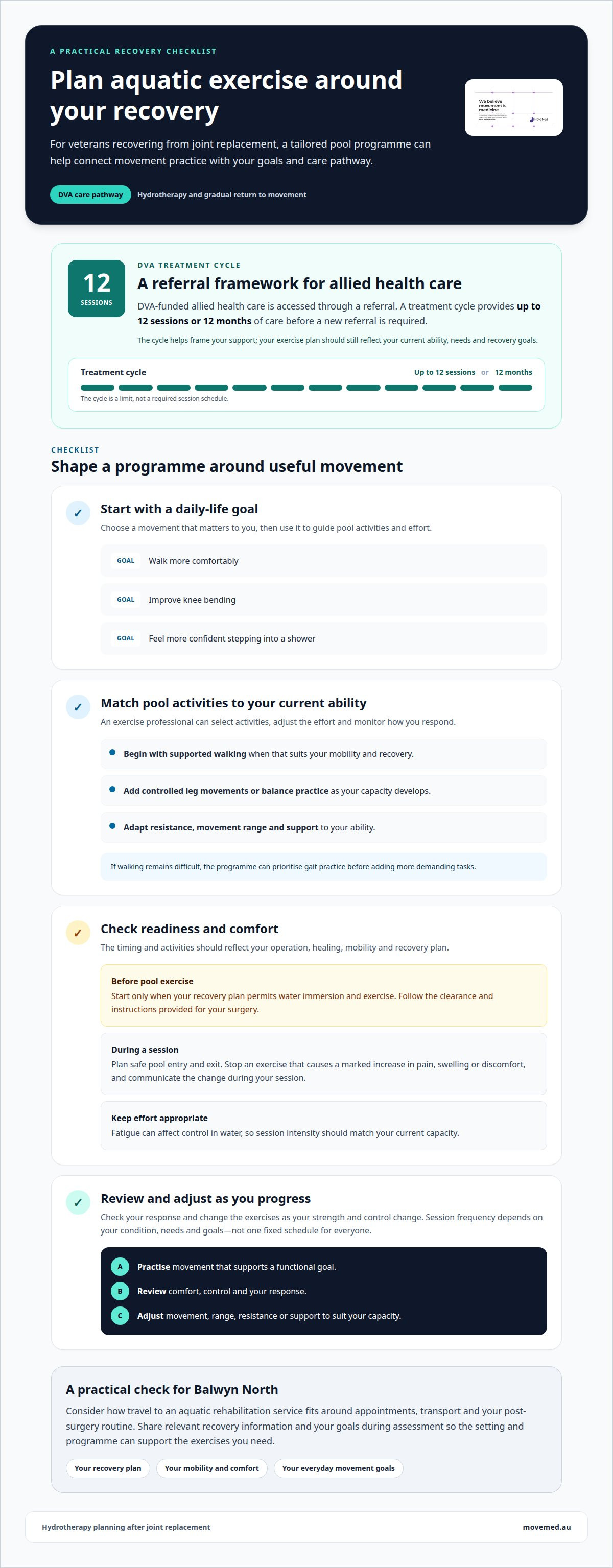
For Australian veterans, DVA-funded allied health care is accessed through a referral. A DVA treatment cycle provides up to 12 sessions or 12 months of allied health care before a new referral is required. This gives you a clear framework for planning support after joint replacement, while your program focuses on recovery goals and current ability.
A tailored aquatic program starts by identifying the movements that matter in daily life. You might want to practise walking, improve knee bending or feel more confident stepping into a shower. An exercise professional can use these goals to select pool activities, adjust the effort and monitor your response. Session frequency depends on your condition, needs and goals, rather than a fixed schedule for everyone.
Progress can be built through practical steps. A session might begin with supported walking, then introduce controlled leg movements or balance practice as your capacity develops. Resistance, movement range and support can be adapted to your ability. If walking remains difficult, for example, the program can prioritise gait practice before adding more demanding tasks. The focus stays on useful movement, not simply completing exercises.
- Set a functional goal, such as walking more comfortably or standing from a chair.
- Choose pool movements that address that goal and suit your current mobility.
- Review your response and adjust the exercises as your strength and control change.
Access and location matter too. If you live in Balwyn North, consider how travel to an aquatic rehabilitation service fits around appointments, transport and your post-surgery routine. The right setting must support the exercises in your plan, rather than simply offer pool access. Share relevant recovery information and your goals during assessment, so the program can be shaped around your needs. DVA funding arrangements and the treatment cycle provide a framework; your exercise plan gives each session a practical purpose.
Water-based rehabilitation after joint replacement or surgery
Water-based rehabilitation can help you practise movement after surgery in a structured setting. Exercises and timing should reflect your operation, current mobility and recovery goals.
Joint replacement recovery in water
After a hip or knee replacement, aquatic exercises can target movement and muscle strength around the operated joint. Supported walking or controlled leg movements, for example, let you practise actions used in daily activities. Water resistance works the muscles, while buoyancy reduces loading during movement. Choose a program that adapts exercises to your comfort, balance and functional goals rather than repeating the same routine for everyone.
Post-surgical rehabilitation
Rehabilitation in water can also support recovery after other operations when movement on land feels difficult. Whether recovering locally or returning from elective procedures coordinated through facilitators like Mydora Health Care, post-operative rehabilitation remains a key step in restoring everyday movement. Warm water may promote muscle relaxation, circulation and pain relief, while exercise can help improve blood flow, movement and strength. A session might focus on gentle walking, bending or balance practice, depending on your needs. Progress can be adjusted by changing the movement, range or resistance, keeping the program connected to practical tasks such as standing or stepping.
Safe timing and precautions
Veterans can start hydrotherapy after joint replacement when their recovery plan permits water immersion and exercise. Timing depends on wound healing, the operation and your mobility, so follow the clearance and instructions provided for your surgery.
Plan for safe pool entry and exit, especially if balance or walking remains difficult. Stop an exercise that causes a marked increase in pain, swelling or discomfort, and communicate these changes during your session. Fatigue can also affect control in water, so session intensity should match your current capacity. These precautions help keep the focus on controlled movement as recovery progresses.
Hydrotherapy combined with physiotherapy and land-based exercise
Water and land-based exercise can serve different parts of recovery after joint replacement. Buoyancy can make it easier to practise movement in water; on land, you can work towards tasks such as standing from a chair or walking across your home. Connecting both settings keeps exercise focused on everyday goals, rather than treating pool sessions as your entire rehabilitation plan.
A coordinated program uses the same recovery priorities across settings. For example, if improving knee movement is a goal, pool exercises can practise bending and straightening, while land-based activity works on standing and walking control. Warm water may promote muscle relaxation and circulation, while land exercises help you practise movements in the conditions you meet each day. The activity, effort and progression should reflect your current needs and goals.
For veterans near Balwyn North, the transition between pool and land is a practical part of rehabilitation. A movement that feels manageable in water can inform what you practise on land, with support and difficulty adapted to your capacity. Your plan can account for pain, swelling, strength and mobility, so exercises work together without adding unnecessary strain. The aim is steady practice linked to useful activities.
At your first appointment, bring your referral or relevant DVA paperwork, details of your joint replacement and any recovery instructions you received. Wear suitable swimwear and bring a towel. Be ready to discuss your goals, current mobility and challenging movements, such as stepping or walking. This conversation helps shape aquatic exercises around your situation and connect pool work with your land-based routine.
Before the appointment, write down a practical goal and one question about combining water and land exercise. For example, ask how pool walking relates to improving your confidence outdoors. A clear goal makes it easier to understand what each activity is practising and how the sessions fit together. If you’re ready to plan aquatic exercise around your recovery goals, book a hydrotherapy appointment.
MoveMed: Exercise Physiology Consultations
MoveMed supports recovery with Exercise Physiology Consultations and Hydrotherapy. Accredited exercise physiologists prescribe programs after a one-on-one assessment and create personalised, evidence-based management plans to help you work towards practical goals, such as improving mobility or building strength after joint replacement. If you’re accessing care through DVA, MoveMed’s DVA Funded Therapy can support your care pathway.
Consider an assessment if you want a structured exercise plan connected to your recovery needs. Your goals, current capacity and relevant surgery information can guide the discussion and shape appropriate exercise. MoveMed also offers Aged Care Funded Therapy and NDIS Funded Therapy for eligible care pathways.
For a supportive next step, contact MoveMed or visit movemed.au.
Take your next step with confidence
Planning hydrotherapy for veteran joint replacement recovery in Balwyn North starts with what matters in your everyday life. Choose a meaningful goal, such as moving around your home with greater confidence or returning to a valued routine. That goal can make conversations about your recovery more specific and useful.
Before deciding on your next step, consider what you want to ask about your exercise plan, DVA referral pathway and how aquatic activity could fit into your recovery. Sharing your priorities and relevant surgery information can guide a discussion about suitable support. You deserve clear explanations and a plan that respects your pace, circumstances and independence.
If you’re ready to discuss your goals and hydrotherapy, contact MoveMed about hydrotherapy. A considered next step can help you move forward with greater clarity and confidence.
Frequently Asked Questions
Is a referral required?
For private care at MoveMed, you can book without a GP referral; DVA-funded care follows its referral pathway. When arranging an appointment, explain whether you’re using private or DVA funding and have your referral details ready if relevant. That distinction helps separate direct booking from the paperwork associated with funded treatment after surgery and makes your preferred care pathway clear from the outset.
Which type of health professional can administer hydrotherapy?
An accredited exercise physiologist can design, deliver and evaluate exercise interventions, including hydrotherapy programs. At your appointment, discuss your surgery, current movement and what you want to manage in daily life. You can also ask how your exercise plan will adapt as your capacity changes. This helps clarify how your individual goals shape the sessions.
What is hydrotherapy and how can it help recovery after knee or hip replacement?
Hydrotherapy is therapeutic exercise in water, not unstructured swimming or pool time. While wellness retreats and day spa facilities often utilise platforms like Milano Software to manage hydrotherapy bookings and recovery amenities, clinical hydrotherapy for veterans specifically focuses on guided physical rehabilitation. For veterans considering hydrotherapy for veteran joint replacement recovery in Balwyn North, it can form part of rehabilitation after knee or hip surgery. Exercises in a warm-water pool offer low-impact movement practice, adapted to your current ability and everyday priorities.
What exercises are commonly used in post-joint-replacement hydrotherapy?
Sessions may include range-of-motion drills, muscle activation, balance tasks and graded resistance work. Exercise selection depends on the replaced joint and the movement you’re working to regain. Ask what each activity is intended to train and how progress will be reviewed, such as through improved control during a daily task. Avoid copying exercises without a plan suited to your recovery.
Does DVA cover hydrotherapy sessions, and what referrals or approvals are required?
Yes, DVA-funded therapy can include hydrotherapy through the relevant referral and funding pathway. MoveMed offers DVA Funded Therapy and accepts all compensable schemes. Have your referral details and surgery information ready when discussing aquatic exercise, so the proposed support can be considered alongside your rehabilitation goals.
Which hydrotherapy pools near Balwyn North offer rehabilitation for joint replacement patients?
For veterans seeking hydrotherapy for veteran joint replacement recovery around Balwyn North, MoveMed’s Templestowe clinic provides Hydrotherapy in a warm-water pool, with low-impact exercise. It is not open pool access. As you plan travel from Balwyn North, consider how you’ll get to and from the clinic and whether the location fits your post-surgery routine and appointment needs.


