

A TPI veteran’s exercise physiology sessions aren’t governed by the usual Allied Health Services treatment-cycle limit. If you’re seeking a DVA-funded exercise program for TPI veterans in Templestowe Lower, your clinical needs and referral help determine the services and session frequency.
It can be hard to know how many sessions may be covered or whether you’ll have an out-of-pocket cost. These are reasonable questions when planning rehabilitation around pain, mobility or a chronic condition.
This guide explains how DVA exercise physiology can support personalised rehabilitation, how billing and potential costs work, and what may affect your sessions. It also outlines the rules for TPI cardholders and factors to consider when choosing exercise physiology in Templestowe Lower and nearby suburbs, including Templestowe, Doncaster, Doncaster East, Bulleen, Warrandyte, Lower Plenty, Balwyn North and Box Hill.
Key Takeaways
- TPI cardholders are treated differently from the usual Allied Health Services treatment cycle for exercise physiology, so understand how your card and referral affect your sessions.
- Your exercise plan should connect clinical needs with practical goals, such as improving strength, mobility or confidence with daily activities.
- DVA pays for approved exercise physiology under its Schedule of Fees; how billing applies depends on your eligibility and treatment arrangements.
- MoveMed’s Exercise Physiology Consultations can help you work towards a tailored rehabilitation plan in Templestowe Lower and surrounding suburbs.
What Is DVA Exercise Physiology?
DVA-funded exercise physiology uses clinically prescribed exercise to support rehabilitation and health goals. Your Veteran Card, referral and treatment needs help determine eligibility and the services covered.
Eligibility for DVA-funded exercise physiology
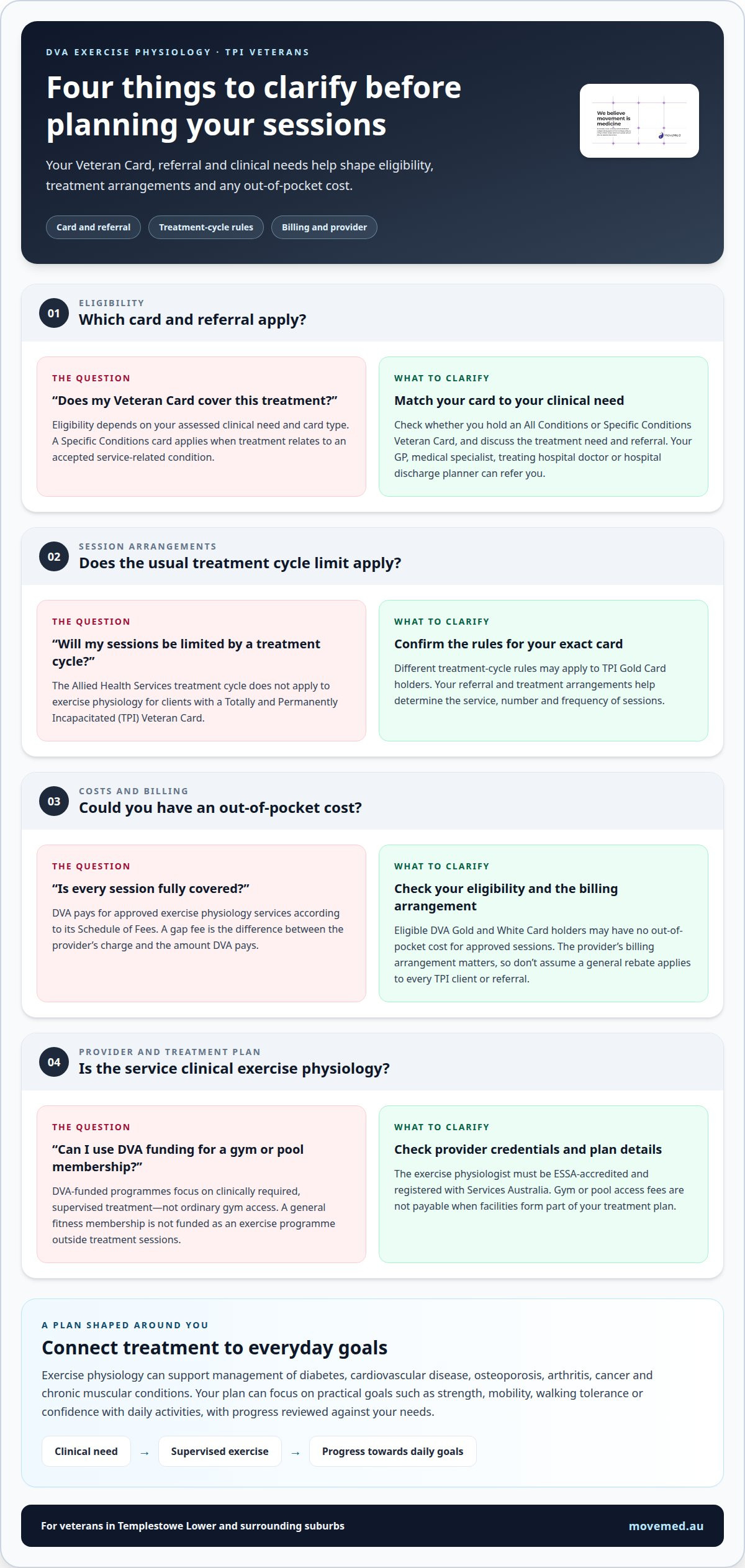
Access depends on your assessed clinical need and Veteran Card. A Veteran Card, All Conditions may support eligibility, while a Veteran Card, Specific Conditions applies when treatment relates to an accepted service-related condition. For TPI cardholders, exercise physiology referrals are outside the usual Allied Health Services treatment cycle. Consider your card type, accepted condition and clinical need when clarifying your entitlement.
Fitness, mobility and cardiovascular health
An exercise physiologist assesses how physical activity relates to your function, then sets practical goals for strength, mobility, fitness or cardiovascular health. For example, a plan might build walking tolerance while accounting for joint pain or reduced balance. DVA-funded programs focus on clinically required, supervised treatment, not ordinary gym access. Self-directed activity or a gym membership may be alternatives, but DVA doesn’t fund a general fitness program.
Conditions supported and treated
Exercise physiology can support management of diabetes, cardiovascular disease, osteoporosis, arthritis, cancer and chronic muscular conditions. The exercise plan should address a clinical need with evidence-based activities linked to your goals. For example, someone managing arthritis may work on strength and movement, while a person with cardiovascular disease may focus on safely building activity capacity.
Using DVA funding
Ask your GP, medical specialist, treating hospital doctor or hospital discharge planner for a referral. The exercise physiologist must be ESSA-accredited and registered with Services Australia. If you live in Templestowe Lower or nearby, look for this provider type. A local gym or physiotherapist isn’t automatically eligible to deliver DVA-funded exercise physiology. Your plan can specify the service type, number and frequency of sessions. Treatment and review should reflect your clinical needs, evidence-based goals and progress. Gym or pool access fees aren’t payable when facilities form part of your treatment plan.
Exercise programs for chronic conditions and rehabilitation
For veterans living with ongoing health challenges, rehabilitation is most useful when exercise connects clinical needs with everyday activities. A programme can focus on your capacity, movement and goals that matter to you.
Exercise support for chronic conditions
Chronic conditions can affect energy, strength, balance and confidence with daily tasks. A clinical exercise plan considers how your condition affects physical health and mobility, then sets goals that suit your current abilities. The focus is practical, such as building walking tolerance or making standing tasks easier.
Exercise physiology can support management of chronic conditions, including diabetes, cardiovascular disease, osteoporosis, arthritis, cancer and chronic muscular conditions. Your exercise physiologist links activities to your needs rather than relying on a general fitness routine. Discuss which daily activities feel difficult and use them to shape relevant rehabilitation goals.
Progress can be reviewed against your goals, such as completing a household task more easily or moving with greater confidence. This gives you and your exercise physiologist a clear basis for adjusting the plan.
Managing chronic service-related pain
Persistent pain can make movement difficult, especially if you’re unsure which activities are appropriate. A structured programme considers your pain, movement and function together. For example, it may begin with controlled movements suited to your current capacity, then build towards activities in your routine.
Clinical exercise doesn’t promise quick pain relief. Its role is to support physical function and recovery through planned, supervised movement. Tell your exercise physiologist which movements aggravate symptoms, what helps, and how pain affects sleep or daily tasks. These details can guide exercise choices and pace.
For TPI veterans, connect rehabilitation goals to your clinical need and, where relevant, an accepted service-related condition. Bring your referral and describe the activities you want to regain. This gives your exercise physiologist useful context for building a focused plan and reviewing how it supports your health and wellbeing.
DVA rebates, gap fees and billing
DVA pays for approved exercise physiology services according to its Schedule of Fees. Eligible DVA Gold and White Card holders may have no out-of-pocket cost for approved sessions. TPI card status matters, so distinguish the card and treatment that apply to you from general DVA arrangements.
A gap fee is the difference between a provider’s charge and the amount DVA pays under its schedule. The schedule determines DVA’s payment, while the provider’s billing arrangement affects whether you pay anything yourself. Don’t assume a general rebate figure applies to every TPI client or referral.
The Allied Health Services treatment cycle doesn’t apply to physiotherapy or exercise physiology for clients with a Totally and Permanently Incapacitated Veteran Card. Different treatment-cycle rules may apply to TPI Gold Card holders. This distinction can affect how referrals and sessions are managed, so identify your card type when planning ongoing allied health care.
Gym or pool access fees aren’t payable when those facilities form part of your exercise physiology treatment plan. This differs from a general fitness membership, which DVA doesn’t fund as an exercise program outside treatment sessions. For example, supervised pool activity included in a clinical plan is different from paying for open pool access.
Use these steps to understand the billing for your DVA-funded care:
- Identify whether your Veteran Card is a TPI card, Gold Card or White Card.
- Review the referral and treatment plan, including the approved service and session frequency.
- Ask how the DVA Schedule of Fees applies to the approved treatment and whether a gap is payable.
If chronic pain or anxiety makes costs difficult to plan, clarify the billing arrangement before sessions begin. Keep your referral and invoices together, then compare each charge with the service provided. This gives you a clear record of rehabilitation expenses and helps you discuss any billing questions with the relevant DVA contact. Similarly, many veterans and their families find that maintaining clear financial oversight of healthcare goes hand-in-hand with broader personal planning; for those also looking ahead to end-of-life arrangements and transparent cost breakdowns, guides from Solace Family Funerals offer practical insight into planning with clarity and peace of mind.
Personalised exercise programs
Personalisation means more than choosing movements. Your preferences, confidence and daily routine can affect whether exercise feels practical and sustainable. A DVA-funded exercise program for TPI veterans in Templestowe Lower can take these factors into account, for example by using familiar activities or a manageable routine around other commitments.
Be specific about what makes exercise easier or harder to maintain. You might prefer purposeful activities, need reminders to keep a routine, or feel more confident exercising with guidance. Sharing this helps shape a programme you can take part in consistently, rather than one that looks suitable only on paper.
Wellbeing can also be part of the conversation. Evaluations of DVA’s Active Choices program found that 76% of participating veterans reported improved mood and psychological wellbeing. That finding relates to Active Choices, not a guaranteed result from exercise physiology, but it highlights why veterans may value goals connected with mood and participation as well as physical activity.
Before discussing your programme, note:
- Which activities you enjoy or would like to return to.
- What makes it easier to take part in exercise regularly.
- Any concerns that affect your confidence or motivation.
- How you would like to recognise progress in daily life.
These details help make the conversation about your priorities, not just a list of exercises. A DVA-funded exercise program for TPI veterans in Templestowe Lower can be more relevant when your preferences and wellbeing are part of the discussion from the outset. If you’d like to explore your exercise goals, talk through your exercise goals.
MoveMed: Exercise Physiology Consultations
MoveMed’s Exercise Physiology Consultations can help turn your rehabilitation goals into a personalised, evidence-based exercise plan. If you’re in Templestowe Lower or nearby and have a DVA referral, an accredited exercise physiologist can consider your health needs, current abilities and the activities you want to manage more confidently.
Bring your referral and explain how your condition affects daily movement, strength or independence. You and your exercise physiologist can discuss appropriate exercise and how it may support your recovery. MoveMed also provides DVA Funded Therapy for eligible clients, with Hydrotherapy available where it suits your treatment needs.
To discuss your goals and referral, book an appointment online or call MoveMed.
Take the next step towards movement that matters
Choosing a DVA-funded exercise program for TPI veterans in Templestowe Lower can help you work towards the activities that matter to you. Before your appointment, note what you want to manage more comfortably, what currently gets in the way, and any questions about your referral or treatment goals.
That preparation can make your first conversation more focused. Discuss how your health affects daily movement and what progress would look like in your routine. From there, your plan can focus on clinically relevant goals rather than a generic exercise target.
If you’d like support to talk through your options and decide on a suitable next step, contact MoveMed to discuss your options. A clear conversation can help you move forward with greater confidence and a plan connected to your priorities.
Frequently Asked Questions
Is there a limit to how many sessions I can have?
There isn’t a standard treatment-cycle limit for exercise physiology for TPI cardholders. The referral can outline the type, number and frequency of services needed. Use your sessions to work towards clear rehabilitation goals, such as managing a specific daily activity, and note what changes between appointments. This gives you useful information to discuss when reviewing your treatment plan.
What Is a DVA Fitness Program?
A DVA fitness program is structured exercise linked to a veteran’s clinical treatment needs, not a general fitness membership. For instance, exercise may form part of care for arthritis, diabetes or cardiovascular disease. Activities and supervision depend on the clinical goals. A general gym routine differs from an exercise physiology treatment plan developed to address a health condition.
Who is eligible for DVA-funded exercise programs, including TPI veterans?
Eligibility depends on assessed clinical need and the relevant Veteran Card. A Specific Conditions card relates treatment to an accepted service-related condition, while an All Conditions card has a different coverage basis. TPI status affects how exercise physiology is treated under DVA arrangements. When discussing eligibility, be ready to explain the condition being treated and how it affects your daily function.
Does a TPI veteran need a GP referral or DVA approval for a funded exercise program?
A referral is needed, but it doesn’t have to come only from a GP. A medical specialist, treating hospital doctor or hospital discharge planner can also refer you. The referral helps identify the clinical need and planned services. Exercise physiology must be delivered by a provider accredited by Exercise & Sports Science Australia and registered with Services Australia.
What are the current DVA payment rates, session limits, and out-of-pocket costs for exercise programs?
DVA’s Schedule of Fees determines its payment for exercise physiology services, so there isn’t one universal dollar figure for every case. The applicable amount and any personal contribution depend on the approved service and billing arrangement. Keep invoices and note the date and type of each appointment to maintain a clear record of care-related spending.
How can a TPI veteran apply for or claim funding for an exercise program through DVA?
Start by arranging a referral that explains the clinical reason for exercise physiology, then bring it and your Veteran Card details to your appointment. Keep copies of your referral, treatment plan and invoices together. If you’re arranging care after a hospital stay, the discharge planner can refer you. These records help you track the care provided and its billing.


