

Imagine trying to complete a simple gym circuit, but every movement feels like a sharp reminder of your workplace injury. When land-based exercises feel impossible, it's easy to feel stuck in a cycle of frustration and stagnant progress. You aren't alone in feeling overwhelmed by high pain levels or the mountain of paperwork required to get your life back. We know that accessing hydrotherapy for workcover injuries can often feel as daunting as the injury itself, especially when you're just trying to find a way to move without agony.
You deserve a rehabilitation path that respects your current limits while actively moving you toward your return-to-work goals. This guide shows you how to navigate the approval process and use specialised aquatic therapy to accelerate your recovery. We'll explain the clinical "bridge" that water provides, the specific steps to secure funding, and how our Exercise Physiologists help you transition your progress back to land-based movement. By the end, you'll have a clear, optimistic roadmap to reclaiming your independence and returning to your vocational duties with confidence.
Key Takeaways
- Understand how the buoyancy of water allows you to maintain fitness and mobility without aggravating your injury or increasing pain levels.
- Discover the "bridge" method used by our Exercise Physiologists to transition your strength from the pool back to your specific workplace duties.
- Follow our simple two-step process to secure approval for hydrotherapy for workcover injuries through your GP and insurer.
- Learn why clinical supervision by an Accredited Exercise Physiologist is essential for meeting WorkCover's evidence-based recovery requirements.
- Explore how personalised aquatic programs help you regain the confidence and physical resilience needed for a sustainable return to work.
What is Hydrotherapy for WorkCover Injuries?
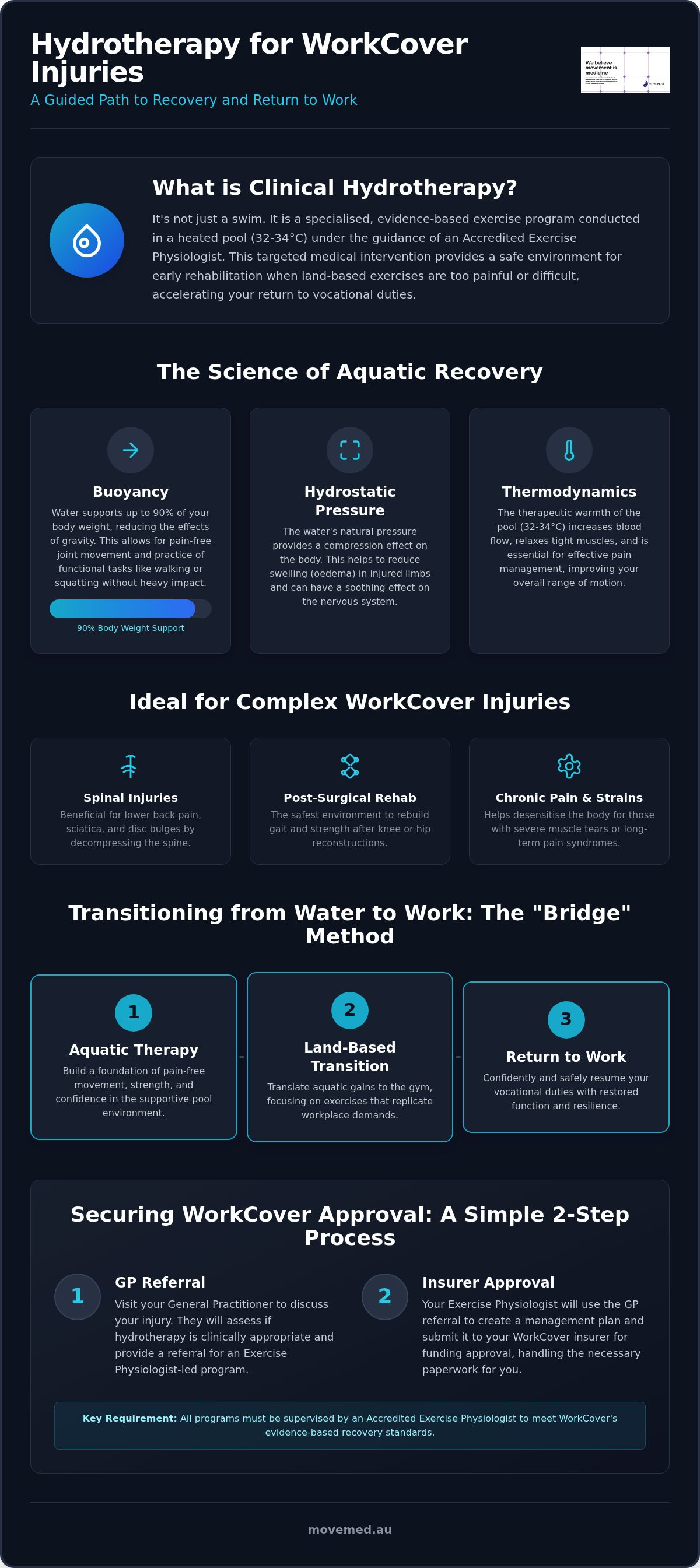
When you're recovering from a workplace accident, the thought of traditional gym rehab can feel daunting; sometimes even impossible. This is where hydrotherapy for workcover injuries becomes a vital part of your recovery toolkit. Unlike a casual swim at the local pool, clinical hydrotherapy is a structured exercise program conducted in a purpose-built heated pool, typically maintained between 32 and 34 degrees Celsius. It isn't "aqua aerobics" or "recreational swimming"; it is a targeted medical intervention led by an Accredited Exercise Physiologist (EP) to help you regain function.
WorkCover Victoria supports Aquatic therapy because it provides a safe, evidence-based environment for early intervention. Your EP doesn't just watch you swim. They design a personalised management plan that aligns with your specific WorkCover claim and vocational goals. They handle the clinical reporting and ensure every movement in the water translates to a functional gain on land, providing the insurance provider with the objective data they need to continue supporting your care.
The Science of Aquatic Recovery
The unique physical properties of water allow you to perform exercises that would be too painful or difficult to attempt on a gym floor. We use three primary principles to accelerate your healing:
- Buoyancy: By reducing the effects of gravity, water supports up to 90% of your body weight. This allows for pain-free joint movement and lets you practice walking or squatting without the heavy impact.
- Hydrostatic Pressure: The natural pressure of the water against your body helps reduce swelling (oedema) in injured limbs and provides a "compression" effect that can soothe the nervous system.
- Thermodynamics: The warmth of the water helps to increase blood flow and relax hypertonic (overly tight) muscles. This heat is essential for pain management and improving your overall range of motion.
Common WorkCover Injuries Treated in the Water
We often recommend hydrotherapy for workcover injuries when land-based movement is restricted by high pain levels or surgical precautions. It is an ideal environment for complex cases, including:
- Spinal Injuries: Lower back pain, sciatica, and spinal disc bulges benefit from the decompression and core stabilisation that water provides.
- Post-Surgical Rehabilitation: After a knee or hip reconstruction, the pool is the safest place to rebuild gait patterns and muscle strength before progressing to the gym.
- Chronic Pain and Soft Tissue Strains: For those with severe muscle tears or long-term pain syndromes, the soothing environment helps desensitise the body, making movement feel safe again.
Clinical Benefits of WorkCover Exercise Physiology in Water
Stepping into a heated pool often provides the first moment of true physical relief an injured worker has felt in weeks. This comfort isn't just superficial; the clinical benefits of hydrotherapy include physiological changes that directly speed up your recovery timeline. By starting movement earlier in the healing cycle, we prevent the muscle wasting and stiffness that often occur during prolonged bed rest. It's about keeping the body in motion even when land-based exercise feels like a distant goal.
We can maintain your cardiovascular fitness while your joints are still too sensitive for a treadmill or stationary bike. This keeps your heart healthy and your energy levels high, which is crucial for preventing the secondary fatigue that often complicates a return to work. Additionally, the water offers a unique form of resistance. Unlike heavy weights that can feel intimidating or risky, water provides natural, variable resistance that builds muscle strength safely and effectively.
Perhaps the most vital benefit of hydrotherapy for workcover injuries is the psychological shift it facilitates. Many workers develop kinesiophobia (the fear of movement) because they've associated certain actions with sharp pain. The supportive environment of the pool breaks this association. It helps you regain the confidence to move freely again, proving to your nervous system that movement is safe.
Pain Management and Mobility
For those with chronic back pain or spinal disc bulges, the water effectively "unweights" the vertebrae. This decompression creates a window of opportunity to increase your range of motion without the sharp, guarding pain common on land. Because water surrounds the body, its resistance provides 360-degree support for unstable joints, allowing for controlled movement in every direction. This helps desensitise the area while you focus on regaining your natural gait and posture.
Building Functional Strength
Recovery isn't just about feeling better; it's about being strong enough to do your job safely. We target core stability and postural control to prepare you for specific tasks like lifting, reaching, and standing. As your strength improves, we move from deep water to shallower areas to gradually increase the load on your body. This structured approach to funded care is similar to our DVA Exercise Physiology programs, where we focus on long-term resilience and functional independence. If you're feeling stuck in your current routine, our team can help you get started with a plan that bridges the gap between injury and work.
Transitioning from Water to Work: The Rehab Journey
Recovery is rarely a straight line. While the pool provides immediate relief, the ultimate goal of hydrotherapy for workcover injuries is to prepare your body for the physical demands of your specific job. We view aquatic therapy as a "clinical bridge." It allows us to build the foundational strength and mobility you need before your body is ready to handle the full force of gravity in a traditional gym or workplace setting. By starting in the water, we can begin vocational training much sooner than if we waited for land-based pain to subside completely.
To ensure your recovery stays on track, our Exercise Physiologists use WorkCover-specific outcome measures to monitor your progress. These objective assessments (functional tests that measure your ability to perform tasks) provide clear evidence to your case manager that the treatment is working. Once you reach specific milestones in the pool, we begin integrating land-based sessions. This might involve moving into our clinic gym or starting Clinical Reformer Pilates to further refine your core stability and postural control.
Vocational Task Simulation
We don't just ask you to walk laps. We replicate your actual work duties using the water's natural resistance. If your role involves lifting, we practice safe lifting mechanics using aquatic weights to simulate the drag and effort required on site. For workers who spend long hours on their feet, such as retail staff or nurses, we focus on improving gait and standing endurance. This targeted approach is a critical component of your Gradual Return to Work (GRTW) plan; it builds the physical resilience needed to prevent re-injury when you finally step back onto the job.
Integrating with Land-Based Therapy
A combination of water and land therapy often yields the most sustainable results. While the pool is excellent for mobility, land-based exercise is essential for bone density and preparing your muscles for "real world" loading. As you progress, we help you transition to a self-managed program at your local pool or gym. Should your WorkCover claim close before you feel fully recovered, we can explore a transition to Medicare Exercise Physiology to ensure your long-term health journey continues without interruption.
How to Get WorkCover Approval for Hydrotherapy
Securing funding for hydrotherapy for workcover injuries doesn't have to be a source of stress. While the administrative side of a claim can feel like a second job, the path to approval is actually a logical, step-by-step process. It begins with a clinical conversation and ends with you in the water, focusing on your strength rather than your paperwork. We've simplified the journey into five clear stages to help you get started without delay.
- Consult your GP: Book an appointment to discuss why land-based exercise is currently too painful or difficult. Your doctor needs to establish that aquatic therapy is a "clinical necessity" for your specific injury.
- Obtain a referral: Request a written referral for "Exercise Physiology Hydrotherapy." This document is the key that unlocks your access to funded sessions.
- Clinical Assessment: Once you have your referral, our Accredited Exercise Physiologists (EPs) conduct an initial assessment. We then submit a "Request for Service" or an Allied Health Recovery Management Plan (AHRMP) directly to your insurer.
- VWA Fee Schedules: We work within the WorkSafe Victoria (VWA) fee schedules. This means we handle the billing at the gazetted rates, often resulting in no out-of-pocket costs for you for the clinical portion of your care.
- Start your sessions: Once the insurer provides written approval, we'll meet you at a local Templestowe or Doncaster facility to begin your program.
Working with Your Exercise Physiologist
Our EPs take the lead on the clinical reporting that your Case Manager requires to keep your claim active. We set SMART goals (Specific, Measurable, Achievable, Relevant, and Time-bound) to prove your progress and justify continued funding. Your Exercise Physiologist serves as the central point of contact for your recovery; they manage all professional communication with your employer and treatment team to ensure your return-to-work plan remains realistic and safe. If you're unsure how to start this conversation with your doctor, our expert team can help guide you through the requirements.
What to Bring to Your First Session
Preparation helps you feel calm and ready to focus on your movement. For your initial session at the pool, please ensure you have the following essentials:
- Swim Gear: Comfortable bathers, a towel, and a pair of clean thongs to wear on the pool deck for safety and hygiene.
- Medical Records: Any relevant scans, such as MRI or X-ray reports, and your WorkCover claim number.
- Personal Essentials: A water bottle to stay hydrated and any prescribed emergency medications, such as an asthma puffer or epi-pen.
Hydrotherapy at MoveMed: Expert Care in Templestowe
Choosing the right partner for your rehabilitation is a significant decision. At MoveMed, we provide more than just a pool program; we offer a dedicated partnership designed to restore your confidence and independence. Our Accredited Exercise Physiologists (EPs) lead every session, ensuring that hydrotherapy for workcover injuries is delivered with clinical precision and genuine empathy. We understand that you aren't just managing a claim; you're working toward getting your life back. It's about moving from a state of limitation to a future of physical agency.
Our local expertise in the Templestowe Lower and Doncaster East area allows us to provide a seamless experience for our clients. By partnering with high-quality aquatic facilities within the Manningham region, we ensure you have access to the best possible environment for your recovery. We focus on the long-term vocational outcome, which means our goal isn't just to provide short-term pain relief in the water, but to build the physical resilience you need to stay back at work once you return. We're part of your community, and we're invested in your success.
The MoveMed Difference
We pride ourselves on being the expert guide who handles the complicated clinical reporting for your WorkCover insurer. This removes the administrative burden from your shoulders, allowing you to focus entirely on your movement. For small business owners who want to ensure their company remains stable while they recover, you can check out SY Mathews for dedicated on-site support. Every program we design is bespoke, tailored to the specific biomechanical requirements of your job. Our EPs act as your clinical advocate, maintaining regular contact with your Employer and Treatment Team to ensure everyone is aligned on your progress and your safe return to duties. Your roadmap will include a clear, logical progression from the pool back to full vocational capacity, often incorporating a transition to land-based Exercise Physiology or Clinical Pilates when the time is right.
Start Your Recovery Journey Today
Your first step toward a water-based recovery begins at our Templestowe clinic. During your initial land-based clinical consultation, we'll perform a thorough assessment of your injury, discuss your workplace goals, and outline exactly how the aquatic sessions will work. We'll handle the "Request for Service" to your insurer and keep your GP informed every step of the way. We don't believe in rushing the process; we believe in doing it right the first time. If you're ready to move beyond the frustration of slow progress and high pain levels, contact MoveMed to organise your WorkCover hydrotherapy assessment today. We're here to help you move better, feel stronger, and return to work with confidence.
Reclaim Your Independence Through Aquatic Therapy
Recovering from a workplace injury shouldn't feel like an uphill battle against pain and paperwork. By utilising hydrotherapy for workcover injuries, you can access a supportive environment that reduces joint pressure and allows for early, pain-free movement. This clinical "bridge" is essential for rebuilding the strength and confidence you need to return to your vocational duties safely. You've seen how the buoyancy of water facilitates healing and how the WorkCover approval process works; from GP referral to insurer consent.
At MoveMed, our Accredited Exercise Physiologists are local Manningham area specialists dedicated to your long-term success. We take pride in expert WorkCover claim navigation, handling the clinical reporting so you can focus entirely on your physical progress. Whether you're in Templestowe or Doncaster, we're here to partner with you on this journey toward a sustainable return to work. Ready to start your recovery? Book your WorkCover Exercise Physiology assessment at MoveMed today. We look forward to helping you move with confidence again.
Frequently Asked Questions
Do I need to be a good swimmer to do hydrotherapy?
No, you don't need any swimming skills to participate in a clinical program. Most exercises are performed while standing in chest-deep water, where you can keep your feet firmly on the pool floor. The facility is equipped with handrails and easy-access steps to ensure you feel secure. Our Exercise Physiologists remain close by to guide your movements and provide physical support whenever you need it.
Is hydrotherapy covered 100% by WorkCover Victoria?
Yes, WorkCover generally covers the full cost of clinical sessions once they are approved as a "reasonable" treatment for your injury. We bill the insurer directly at the gazetted WorkSafe Victoria rates, which typically means no out-of-pocket expenses for the Exercise Physiology service. While most insurers also cover the pool entry fee, it's worth confirming this with your case manager before your first appointment.
What should I wear to a hydrotherapy session if I am uncomfortable in bathers?
Your comfort is our priority, so feel free to wear clean, lightweight athletic clothing in the pool. Many of our clients wear a rash vest, board shorts, or a T-shirt over their swimmers for extra coverage. As long as the fabric is clean and suitable for water use, you can wear what makes you feel most confident. This allows you to focus on your exercises rather than your clothing.
How many sessions of hydrotherapy will WorkCover approve at once?
Insurers typically approve sessions in blocks of 5 to 10 at a time. Your Exercise Physiologist will submit an Allied Health Recovery Management Plan (AHRMP) to justify why hydrotherapy for workcover injuries is necessary for your recovery. We provide regular progress reports to your case manager, documenting your functional improvements to ensure that further blocks of treatment are approved until you are ready to transition to land.
Can I do hydrotherapy if I have an open wound or skin condition?
No, for health and safety reasons, you cannot enter the pool with open wounds, active skin infections, or contagious conditions. This policy protects both you and other pool users from potential cross-contamination. If you have a stable, non-contagious condition like eczema, you can usually participate, but it's important to check with your GP first. We can always provide land-based clinic sessions until your skin has fully healed.
How is hydrotherapy different from just going for a swim at the local pool?
Hydrotherapy is a targeted medical treatment, whereas swimming is a general recreational activity. Every movement in a clinical program is designed by an Exercise Physiologist to address your specific injury and vocational goals. We use the water's resistance and buoyancy to replicate work tasks and build functional strength. Unlike a casual swim, these sessions are documented with objective data to meet WorkCover's strict reporting requirements.
Will I be in the pool by myself or in a group?
We primarily provide one-on-one supervision to ensure your safety and the correct execution of every exercise. While the pool itself is a shared public space, your session is a private clinical interaction with your Exercise Physiologist. This individual focus is essential for hydrotherapy for workcover injuries, as it allows us to adjust the intensity of your program in real-time based on your pain levels and physical progress.
How long does each WorkCover hydrotherapy session usually last?
A standard supervised session typically lasts between 30 and 45 minutes of active pool time. This duration is clinically chosen to ensure you gain the benefits of water resistance without over-fatiguing your muscles or nervous system. When you account for arrival, changing, and showering, you should generally set aside about an hour for the entire visit. Your EP will tailor the exact timing based on your current stage of recovery.


