
What if staying active with chronic pain is less about pushing harder and more about finding a pace you can repeat? If you’re wondering how to start exercising with chronic pain near Warrandyte, begin with gentle movement you can manage without a prolonged flare-up, then build gradually. Even a short walk can help you find a starting point that suits your current capacity.
It’s understandable to feel unsure when soreness or fatigue makes it harder to keep going. Some discomfort during activity doesn’t automatically mean you’ve caused further injury, but stop if you experience sharp or severe pain and seek professional advice. Aim for steady, manageable progress rather than pushing through intense pain.
Learn how to set a realistic activity baseline, pace movement and rest, and respond to changes in pain during exercise. Advice from a doctor or accredited exercise physiologist can also help you get started with a plan tailored to your health, symptoms and goals.
Key Takeaways
- Australian Government guidelines recommend at least 30 minutes of moderate-to-vigorous physical activity on most days for people living with chronic conditions.
- Start from an activity level you can manage consistently, then build up gradually rather than pushing through a flare-up.
- Adjust movement, resistance or rest based on how your pain responds; if it remains elevated for longer than 24 hours, reduce the amount next time.
- Walking, strength work and water-based activity can all be options. A healthcare professional can help tailor a safe starting plan to your needs.
1. Australian physical activity recommendations for chronic conditions
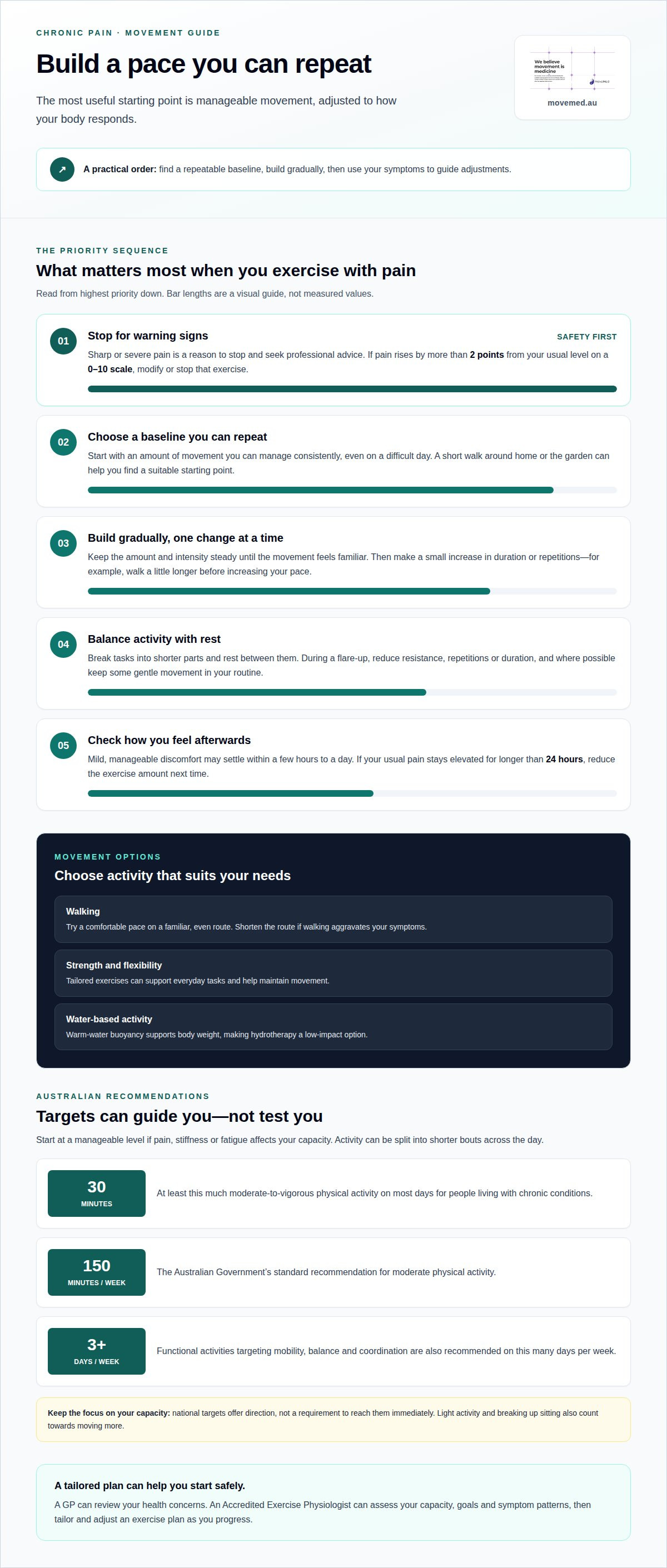
National activity targets offer direction, not a test you must pass immediately. The Australian Government’s 24-hour movement guidelines recommend at least 30 minutes of moderate-to-vigorous physical activity on most days for people living with chronic conditions. Moderate activity raises your breathing and heart rate while still allowing you to talk comfortably. If pain, stiffness or fatigue affects your capacity, start at a manageable level and build gradually.
The Australian Government also recommends functional activities targeting mobility, balance and coordination on 3 days per week or more for people with chronic conditions. The standard recommendation for moderate physical activity is 150 minutes per week, according to the Australian Government. These targets can include shorter bouts across the day rather than one long session. Light activity and breaking up sitting also count towards moving more.
Choose movement that fits your symptoms and daily routine. A short walk can support general activity, while gentle stretching may help maintain movement when you feel stiff. Strength exercises can build capacity for everyday tasks, such as carrying groceries or standing from a chair. Keep the effort manageable, then gradually increase the duration or resistance as your body adapts.
A GP can review your health concerns and help identify whether further guidance is useful before you begin. An Accredited Exercise Physiologist can assess your current capacity, goals and symptom patterns, then tailor an exercise plan and adjust it as you progress. Physiotherapists can also tailor programs to movement needs, pain triggers and functional goals. The right plan considers what you can do now, not just a general target.
Near Warrandyte, support may include a GP, physiotherapist or Accredited Exercise Physiologist; pain clinics can also provide multidisciplinary support. Fees vary by appointment type and provider, while Medicare rebates depend on eligibility and referral arrangements. Ask about the expected cost and any applicable rebate when arranging an appointment.
2. Setting a manageable baseline and increasing activity gradually
Choose an amount of movement you can repeat, even on a difficult day. For example, start with a short walk around your home or garden, then notice how your body responds. A manageable baseline is an amount you can complete without a prolonged worsening of symptoms. Starting smaller than you think you need can help build consistency and confidence.
How should you pace exercise and increase activity with chronic pain? Keep the amount and intensity steady until the movement feels familiar, then make a small increase in duration or repetitions. Change one element at a time, such as walking a little longer before increasing your pace. If you tend to push through, break everyday tasks into shorter parts and rest between them.
Walking is one practical way to build movement into your routine. Begin at a comfortable pace on a familiar, even route, and choose a distance that suits your current capacity. If walking aggravates your symptoms, try a shorter route or gentle movement at home. A tailored program can also include strengthening and flexibility exercises to support everyday tasks without making each session feel like a test.
Mild, manageable discomfort during exercise can settle within a few hours to a day. If your usual pain stays elevated for longer than 24 hours, reduce the exercise amount next time. Stop for sharp or severe pain and seek medical advice. If you’re unsure how to start exercising with chronic pain near Warrandyte, tracking your symptoms after activity can help you see which movements suit you.
For accessible options near Warrandyte, consider whether a local community setting, home-based movement or water-based activity best suits your mobility and comfort. To check NDIS or private health insurance access, ask the provider whether they accept your funding or cover and what payment conditions apply. If you’re working out how to start exercising with chronic pain near Warrandyte, individualised exercise guidance can help you set a manageable starting plan.
3. Is it okay to have pain while exercising?
Some pain during movement doesn’t automatically mean you’ve caused further injury. Mild, manageable discomfort may settle within a few hours to a day. If pain rises by more than 2 points from your usual level on a 0-10 scale, modify or stop that exercise. Sharp or severe pain is a reason to stop and seek professional advice.
Walking, strengthening and water-based exercise can each support movement and function. Strength exercises work the muscles used for daily tasks, while balance activities can support steadier movement. In warm water, buoyancy supports body weight, making hydrotherapy a low-impact option. There isn’t one best program for everyone, so choose movement that suits your needs and feels sustainable.
Pacing means balancing activity with rest, rather than doing too much on a better day and needing a long recovery. During a flare-up, reduce resistance, repetitions or duration, and take breaks between activities. You could split a household task into smaller parts, such as tidying one room, resting, then continuing later. Where possible, keep some gentle movement in your routine.
If you tend to push through symptoms, breaking activity into manageable portions may help. If fear of pain leads you to avoid movement, graded activity starts with a small, achievable task and builds gradually. An exercise physiologist can tailor the steps to your current capacity and the activities that matter to you.
Near Warrandyte, chronic-pain exercise can include individually tailored movement, walking and water-based activity. MoveMed offers Hydrotherapy in a warm-water pool, with low-impact exercise guided by a therapist. Clinical Reformer Pilates uses a reformer machine for therapist-led sessions. These options can be tailored to your movement needs and goals.
To choose a starting point, note which movements affect your pain, balance and everyday function. Adjust your next session based on how you feel afterwards, and seek professional advice if symptoms become sharp, severe or persistently worse.
4. Consulting a healthcare professional before starting
If you haven’t exercised for a while, or a health condition affects your movement, professional advice can help you start with a suitable routine. A GP can discuss your health concerns and whether further assessment would be helpful. An accredited exercise physiologist can turn your goals into a structured, individual exercise plan.
Prepare for the conversation by noting your symptoms, current activity and everyday challenges. Describe how walking, climbing stairs or sitting for long periods affects your pain. Mention any recent injury, arthritis or other condition that shapes your movement. These details help your health professional understand what you want to manage and which activities matter to you.
A GP can discuss your general health and whether particular symptoms need medical review. An accredited exercise physiologist focuses on exercise for health conditions, tailoring a plan to your capacity and goals. You can discuss suitable movement, starting intensity, strengthening and ways to progress, rather than treating a general guideline as a personal prescription.
Ask how to adapt activity if pain or fatigue changes, and what response should prompt a pause or review. If you have arthritis, discuss which joint movements feel comfortable and how to adjust resistance. If a previous injury affects your balance or confidence, explain which everyday tasks feel difficult. Clear guidance can make it easier to follow a program and manage chronic pain with confidence.
Stop exercising and seek professional advice if you experience sharp or severe pain. A clinician can help distinguish your usual symptoms from changes that need assessment, then adjust the plan to suit your situation. For guidance on beginning safely, discuss an exercise plan with an Accredited Exercise Physiologist.
MoveMed
MoveMed can help you turn general exercise advice into a plan suited to your symptoms, capacity and everyday goals. If pain or uncertainty makes it difficult to choose a starting point, Exercise Physiology Consultations provide individualised guidance for building activity safely and progressively.
Depending on your needs, Hydrotherapy offers a water-based way to move, while Aged Care Funded Therapy and NDIS Funded Therapy may support eligible clients accessing care. The right approach depends on your health, movement goals and funding arrangements.
You don’t need to have all the answers before seeking support. Book an appointment with MoveMed online or by phone to discuss your goals and take a suitable next step.
Take your next step towards movement
If you’re considering how to start exercising with chronic pain near Warrandyte, choose a goal that connects movement to something meaningful in your life. It might be managing a household task more comfortably, spending time outdoors or feeling more confident as you move through your day. A personal goal can make your activity plan more relevant than a routine chosen simply to complete.
Progress can also mean learning what helps you stay engaged when symptoms change. A plan that reflects your priorities gives you a reason to return to movement and a way to notice what feels manageable. With professional support, you can build towards a routine that fits your life and decide what to work on next.
Contact MoveMed to discuss your next steps and find a path forward that feels right for you. Every steady step is a chance to build confidence in your movement.
Frequently asked questions
How do I stay motivated when I feel sore or tired?
Make your reason for moving specific and personal, such as keeping up with family or managing a task more comfortably. On low-energy days, choose a smaller version of the activity rather than treating the whole routine as all or nothing. Briefly noting what you did and how you felt afterwards can help you spot patterns and decide what feels sustainable.
How do you start low and go slow?
Choose gentle movement that fits your current ability, such as seated leg lifts or arm circles if standing feels difficult. Keep the effort manageable and repeat the same amount until it feels familiar. Then increase one element, such as repetitions or resistance, rather than changing everything at once. If symptoms remain elevated afterwards, scale back the next session.
How much exercise do the guidelines recommend?
The Australian Government recommends that people living with chronic conditions aim for at least 30 minutes of moderate-to-vigorous physical activity on most days. The standard recommendation for moderate physical activity is 150 minutes per week. Moderate activity raises your breathing while still allowing comfortable conversation. Treat these as general targets, not a requirement to reach them immediately.
How much movement should you be aiming for?
Movement includes more than planned exercise. The Australian Government recommends several hours of light physical activity daily for people with chronic conditions and advises breaking up long periods of sitting. You can add movement through everyday tasks, such as standing to prepare a meal or walking around during a break. Your starting amount should reflect your current capacity and symptoms.
Is it okay to have pain while exercising?
Mild, manageable discomfort can occur during exercise and doesn’t necessarily mean further injury. Notice how it compares with your usual pain and how it settles afterwards. If pain rises by more than 2 points from baseline on a 0-10 scale, modify or stop the exercise. Sharp or severe pain calls for stopping and seeking professional advice.
Should I exercise if it hurts?
It depends on the type and intensity of pain. If discomfort is mild and manageable, you may be able to continue with a gentler version, such as reducing resistance or range of motion. During a flare-up, keep movement small and adapt the activity rather than forcing your usual routine. Stop if pain is sharp or severe and seek advice from a health professional.


