
You've just finished a long day at your desk in Doncaster and, as you stand up, that familiar, nagging ache behind your knee returns. Perhaps it's the sharp twinge you feel every time you try to walk down the stairs at the local shops, or a persistent stiffness that makes you worry your best walking days are behind you.
It's completely normal to feel anxious when a musculoskeletal condition starts to limit your independence. You might even be worried that surgery is your only remaining option. We understand that this pain isn't just a physical sensation; it's a barrier to the life you want to lead. However, an ache behind the knee is often a signal for smarter movement, not a sentence for permanent rest.
This guide will help you discover why you have that nagging ache behind your knee and how evidence-based movement can help you return to pain-free activity. We'll partner with you to explain common causes, identify urgent red flags, and outline a clear, non-surgical path to recovery. You'll learn how targeted exercises can improve your joint stability so you can resume your local walks and sports with confidence.
Key Takeaways
- Identify common triggers for an ache behind knee, including why distinguishing between a dull throb and sharp twinges is the first step toward recovery.
- Learn the critical red flags that require urgent medical attention, such as signs of Deep Vein Thrombosis (DVT), and why temporary relief from warmth can sometimes hide underlying issues.
- Understand why prolonged rest often leads to muscle weakness and increased joint pressure, making optimal loading under the guidance of an Accredited Exercise Physiologist a safer path forward.
- Explore evidence-based recovery options like the GLA:D® program for osteoarthritis or hydrotherapy for joint pain relief to help you move comfortably again.
- Discover how to navigate local funding options in the Manningham area, including NDIS support categories and the DVA treatment cycle, to access the care you need.
Common Causes of an Ache Behind the Knee
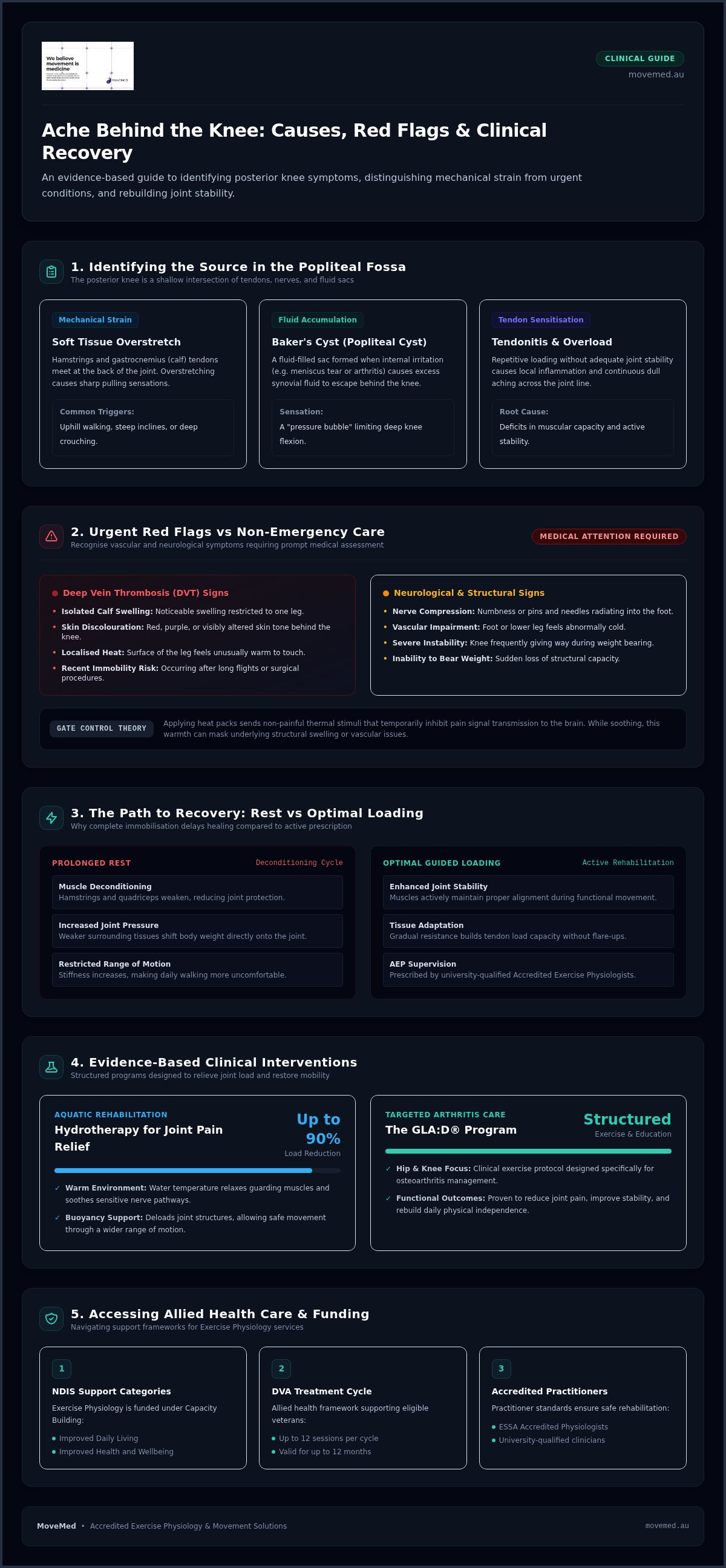
The back of your knee, known clinically as the popliteal fossa, is a complex intersection of tendons, nerves, and blood vessels. When you feel an ache behind knee, the specific sensation often points to the culprit. A sharp, sudden twinge usually suggests a mechanical catch or a fresh strain. In contrast, a dull, heavy ache often indicates fluid build-up or a long-term musculoskeletal condition. Understanding this "posterior" region, which is the shallow pit behind your joint, is the first step in reclaiming your mobility and confidence.
Soft Tissue Injuries: Hamstrings and Calves
Your hamstrings and gastrocnemius (calf) muscles meet right behind the knee joint. It's quite common to overstretch these during a brisk walk through Westerfolds Park, especially on the undulating trails or steeper inclines. You might feel a "pulled" sensation that feels distinct from a deep joint ache. These soft tissue injuries tend to flare up when you're walking uphill or bending the knee deeply, such as when you're crouched in the garden. While it feels restrictive, this is often a matter of capacity. Your muscles simply aren't yet conditioned for the specific load you've placed on them, leading to localised inflammation and discomfort.
The Baker’s Cyst: More Than Just a Lump
Many people describe a sensation like a balloon or a pressure bubble that limits how far they can bend their leg. This is frequently a Baker's cyst, also known as a popliteal cyst. It's essential to understand that the cyst itself isn't the primary problem. It is actually a biological response to joint inflammation. When the knee is stressed by an underlying issue, such as a meniscus tear or arthritis, the joint produces excess synovial fluid (joint lubricant). This fluid pushes into a small sac behind the knee to relieve pressure inside the joint. Simply draining the fluid rarely solves the long-term ache because the underlying irritation remains. You need to address the reason the fluid appeared in the first place.
Chronic aching can also stem from tendonitis, where the tendons of the calf or hamstrings become sensitised through repetitive use. This isn't just "wear and tear" that you have to live with. It's often a sign that your joint stability needs support from the surrounding muscles. By identifying whether your pain is a "bubble" of fluid or a strained tendon, you can move away from guesswork and toward a recovery plan that restores your function. We see many residents from Templestowe Lower and Doncaster who find that once they understand the "why" behind their pain, the path to feeling better becomes much clearer and less intimidating.
When to Seek Urgent Care: Red Flags and Serious Issues
While most instances of an ache behind knee are related to joint loading or soft tissue strains, it's vital to recognise when the problem isn't musculoskeletal. Sometimes, your body uses pain to signal a systemic or vascular emergency. Distinguishing between a mechanical ache and a red flag can be life-saving. If you're unsure, consulting a Doncaster GP or visiting the emergency department is always the safest course of action.
It's common to reach for a heat pack when you're in pain. This works because of the Gate Control Theory, a pain-modulation concept where non-painful stimuli, such as warmth, can inhibit the transmission of pain signals to the brain. While this provides temporary relief, it can also mask deeper issues. If your pain is accompanied by swelling or heat that doesn't feel like a typical muscle pull, don't rely on heat packs to "fix" the problem.
Identifying Deep Vein Thrombosis (DVT)
A blood clot in the deep veins of the leg is a critical concern. You should look for skin that is red or discoloured, significant swelling in only one calf, and skin that feels unusually warm to the touch. These signs often appear after periods of immobility, such as a recent long-haul flight or a surgical procedure. Deep Vein Thrombosis (DVT) is a medical emergency requiring urgent diagnostic imaging to prevent the clot from travelling to the lungs. For a detailed list of warning signs, you can review this CDC guidance on deep vein thrombosis symptoms.
Neurological and Vascular Warning Signs
Beyond blood clots, other serious issues can affect the back of the knee. If you experience numbness or a "pins and needles" sensation that travels down into your foot, it may indicate nerve compression. A "cold" feeling in the lower leg or foot, or a visible change in skin colour, often points to a vascular (blood flow) problem. Additionally, if your knee joint feels like it's "giving way" or you've lost the strength to stand, these are signs that the structural integrity of the joint or its nerve supply is compromised.
If you've ruled out these urgent red flags but your pain persists, it's time to look at long-term solutions. Our Exercise Physiology Consultations can help you bridge the gap between acute discomfort and returning to your daily activities with confidence.
Why Rest Isn’t Always Best for Knee Recovery
It’s a natural instinct to stop moving when you feel a persistent ache behind knee. You might think you're protecting the joint by staying on the couch, but prolonged rest can actually delay your recovery. When you stop moving, your muscles begin to weaken, a process known as atrophy. This loss of strength reduces your joint stability, which means your knee joint has to absorb more force with every step you take. Think of your muscles as the shock absorbers for your bones; if the shocks are worn out, the frame takes the hit.
Accredited Exercise Physiologists (AEPs) specialise in a concept called "optimal loading." This involves finding the exact amount of movement that stimulates healing without causing further irritation. Instead of complete rest, we use exercise as a form of clinical medicine to rebuild your physical capacity. This partnership helps you move from simply managing a musculoskeletal condition to actively overcoming it. By prescribing specific movements, we help you regain the confidence to move without the constant fear of a flare-up.
The Downside of the "Wait and See" Approach
Avoiding movement often creates a ripple effect throughout your body. If you’re limping to protect your knee, you might soon notice a new ache in your hip or lower back. There's also a psychological hurdle to consider. The fear of pain can lead to a cycle of inactivity that feels impossible to break. Movement is also vital for joint health because it helps circulate synovial fluid (joint lubricant). This circulation can actually help reduce the pressure and discomfort associated with popliteal swelling. For more information on managing these symptoms, you can refer to the Better Health Channel's guide to Baker's cysts.
Exercise Physiology vs. General Fitness
It’s important to understand who is guiding your recovery. A personal trainer is a fitness professional who works with generally healthy people to achieve fitness goals. In contrast, Accredited Exercise Physiologists are university-qualified allied health professionals. They have the clinical expertise to design safe programs for people with chronic pain or complex medical histories. If you want to know more about how these sessions work, read our post on what is exercise physiology and how it differs from a standard gym workout. This clinical approach ensures that every movement you perform is serving your long-term recovery goals.
Clinical Pathways: Hydrotherapy and the GLA:D® Program
Finding the right recovery path depends on the severity of your pain and the underlying cause. If your ache behind knee feels too intense for traditional gym work, you don't have to simply wait it out. Clinical pathways like hydrotherapy and the GLA:D® program offer evidence-based ways to rebuild your strength without aggravating your symptoms. These aren't just general exercises; they're structured, university-developed interventions designed to help you regain your independence.
Hydrotherapy: Buoyancy for Pain Relief
Hydrotherapy for joint pain relief is often the best starting point when weight-bearing exercise feels impossible. When you're immersed in water up to chest height, your joint loading is reduced by up to 90%. This buoyancy allows you to move your knee through its full range of motion with significantly less pressure on the joint surfaces. The warm water, typically kept between 33°C and 35°C, also works via the Gate Control Theory. This pain-modulation concept means the thermal input from the water can inhibit the transmission of pain signals to your brain, giving you a window of comfort to perform essential movements. If you want to explore how water-based exercise can help you, check out our hydrotherapy guide.
The GLA:D® Program for Knee Stability
For those managing knee osteoarthritis, the GLA:D® program is considered a gold standard clinical pathway. This evidence-based education and exercise program focuses on two key components: patient education and targeted neuromuscular exercise. Instead of just strengthening muscles, it teaches your brain and body how to control the joint more effectively, improving your overall joint stability. Data from the GLA:D Australia registry shows that 75% of participants who initially desired joint replacement surgery no longer wanted it 12 months after completing the program. It’s a powerful alternative to surgical procedures that empowers you to manage your health long-term. You can access the GLA:D® program right here in Templestowe Lower, guided by our Accredited Exercise Physiologists.
Choosing between land-based and water-based therapy isn't an "either-or" decision. Often, we use hydrotherapy to settle acute pain before transitioning you to land-based neuromuscular training. This staged approach ensures you're always working at the right intensity for your specific musculoskeletal condition. If you're ready to move beyond the ache and start a structured recovery, book your initial Exercise Physiology Consultation today.
Managing Your Recovery in Templestowe Lower
Navigating the healthcare system while dealing with a persistent ache behind knee can feel like an extra burden you don't need. Whether your pain is the result of a workplace injury, a transport accident, or a long-term musculoskeletal condition, there are several pathways available to help you access clinical care. At MoveMed, we believe in a partnership approach. We don't just "treat" a joint; we work with you to handle the administrative side of your recovery so you can focus entirely on getting back to your morning walks along the Yarra.
For veterans in the Manningham area, we operate within the DVA treatment cycle. This framework provides up to 12 sessions or 12 months of allied health care before a new referral is required from your GP. This ensures your progress is consistently monitored and your program remains effective. Similarly, if you've been injured at work or in a vehicle accident, TAC or WorkCover can often fund your exercise physiology sessions. These schemes are designed to help you regain your functional capacity and return to your normal routine as safely as possible.
Navigating NDIS and Funded Therapy
If you're an NDIS participant, you can use your funding to address knee pain that impacts your independence. Exercise physiology is funded under the capacity building support category, specifically within NDIS support categories such as Improved Daily Living or Improved Health and Wellbeing. These funds are used to build functional skills like balance, strength, and mobility. Our local Templestowe team is highly experienced in NDIS Practice Standards and can help you navigate the paperwork required for plan reviews. For a deeper look at how this works, you can read our NDIS exercise physiology guide.
Your First Step at MoveMed
Your journey with us begins with a comprehensive initial consultation. During this session, we do more than just look at the ache behind knee. We perform a detailed assessment of how you move as a whole. We'll look at your gait, your joint stability, and how your hips and ankles are supporting your knee. This clinical assessment allows us to identify the root cause of your discomfort rather than just addressing the symptoms.
Following this assessment, we'll create a personalised recovery plan that fits into your daily life. This isn't a generic gym sheet. It's a clinically prescribed movement program designed to improve your quality of life. We'll guide you through every step, ensuring you feel empowered and confident in your body's ability to heal. Reclaiming your mobility is a journey we take together. Partner with a trusted local expert today and take the first step toward a pain-free future.
Take the Next Step Toward Active Recovery
Understanding the underlying cause of your ache behind knee is the first step toward reclaiming your independence and confidence. We've explored how identifying the difference between fluid build-up and soft tissue strains can change your recovery path. While rest might feel like the safest option, we now know that optimal loading and evidence-based movement are the keys to long-term joint stability.
At MoveMed, we're more than just a clinic; we're your partners in health. Our team of university-qualified Accredited Exercise Physiologists (ESSA) specialise in bridging the gap between acute pain and functional freedom. Whether you're interested in hydrotherapy for joint pain relief or you're looking for a specialised GLA:D® program provider, we have the clinical expertise to guide you.
You don't have to let persistent stiffness hold you back from enjoying your local walks or sports. Our local Templestowe Lower clinic is here to help you build a resilient body and a clear plan for the future. Book your initial Exercise Physiology consultation at MoveMed today and start your journey back to the activities you love. We look forward to helping you move with ease again.
Frequently Asked Questions
Is an ache behind the knee a sign of arthritis?
Yes, a persistent ache behind knee is a common symptom of osteoarthritis, particularly if the discomfort feels like a dull throb that is worse after periods of inactivity. Joint inflammation can cause excess fluid to collect in the posterior region, leading to a sensation of fullness. However, it can also be caused by soft tissue strains or other musculoskeletal conditions. A clinical assessment is the best way to confirm the cause.
Can I walk with an ache behind my knee or should I rest?
Generally, light walking is beneficial, as complete rest is rarely the best path for long-term recovery. Prolonged inactivity often leads to muscle weakness and reduced joint stability, which can actually increase joint pressure. If your pain is a mild ache rather than a sharp, catch-like sensation, short walks on flat ground in Doncaster are usually safe. If walking increases your pain, we can help you find your optimal loading level.
What is the best exercise for pain in the back of the knee?
The best exercise for an ache behind knee depends entirely on your specific diagnosis and physical capacity. For many, neuromuscular exercises that improve joint stability are the most effective way to reduce symptoms. These might include gentle squats or calf raises designed to strengthen the muscles that act as shock absorbers for your joint. An Accredited Exercise Physiologist can prescribe a personalised program that addresses your specific needs without causing further irritation.
How much does an exercise physiology session cost in Melbourne?
The cost of a session depends on the funding stream you are using, such as NDIS, TAC, or private health insurance. If you have a Chronic Disease Management plan from your GP, you may be eligible for a Medicare rebate for exercise physiology sessions. We also provide services funded by DVA and WorkCover, which often cover the full cost of clinical care. For our current fee schedule, please contact our Templestowe Lower clinic directly.
Does NDIS fund exercise physiology for knee injuries?
Yes, the NDIS funds exercise physiology if the condition impacts your functional capacity and ability to perform daily tasks. These services are typically funded under NDIS support categories like Improved Daily Living or Improved Health and Wellbeing. Our team in Templestowe Lower works with plan-managed and self-managed participants to build the strength and mobility needed to navigate stairs or walk to the local shops safely and independently.
What is a Baker’s cyst and how do I get rid of it?
A Baker's cyst is a fluid-filled sac that forms behind the knee in response to joint inflammation or an underlying musculoskeletal condition. To manage it effectively, you must address the reason the fluid is being produced, such as arthritis or a meniscus tear. While draining the cyst provides temporary relief, evidence-based movement and improved joint stability are the most effective ways to reduce the pressure and manage the cyst long-term.
How do I know if the ache behind my knee is a blood clot?
A blood clot, or Deep Vein Thrombosis (DVT), is a medical emergency that requires immediate care. Look for red flags such as significant swelling in only one calf, skin that is warm to the touch, or visible redness. If you have recently been on a long flight or had surgery, these symptoms are particularly concerning. If you suspect a clot, please visit a Doncaster GP or emergency department immediately for diagnostic imaging.
Is hydrotherapy better than clinical pilates for knee pain?
Neither is better overall, as they serve different roles in your recovery journey. Hydrotherapy for joint pain relief is excellent for settling acute pain because the water's buoyancy reduces joint loading by up to 90%. Clinical Pilates is often better for later stages of rehab, focusing on core strength and precise movement control. Many of our clients start in the water and transition to the reformer as their joint stability and confidence improve.


