
Returning to your desk can feel harder than the rehabilitation that came before it. You may be concerned that sitting, computer work or your commute will bring symptoms back, or unsure how to rebuild strength and stamina for a full workday. This guide to a return to work exercise plan for office worker Bulleen explains how to match exercise progression to the real demands of your role.
A safe, realistic plan is more than a set of exercises. It should reflect the tasks you need to manage, what you can currently do and how your body responds as activity increases. An Accredited Exercise Physiologist can help you work towards rebuilding strength, movement and confidence through a structured plan that takes your individual needs into account.
Here, you’ll learn how to progress a plan, which work demands and routines to discuss with your practitioner, and how MoveMed’s personalised, evidence-based exercise physiology can support your preparation in Bulleen and nearby suburbs. MoveMed provides WorkCover-funded therapy, with funding eligibility depending on your circumstances.
Key Takeaways
- A return-to-work exercise plan should reflect your actual office tasks and current capacity, rather than follow a fixed routine.
- Use a practical sequence to identify work demands, set functional goals, choose suitable exercises and review your response.
- Pain, sitting tolerance and confidence can inform your progression. Consider symptoms in the context of your individual circumstances.
- Map out your workday, commute and current activity tolerance before discussing suitable duties or staged arrangements.
- MoveMed’s Accredited Exercise Physiologists can guide a return to work exercise plan for office worker Bulleen. WorkCover-funded therapy may be relevant, depending on your circumstances.
Why return-to-work exercise must reflect your workday
After time away from work, it can be difficult to know how your body will manage a full day at a desk. You might worry that sitting will aggravate symptoms, that your stamina has dropped, or that familiar tasks will feel less manageable. These concerns are understandable. A return to work exercise plan for office worker Bulleen should account for your actual workday, rather than assume office work places little demand on your body.
A return-to-work exercise plan links suitable exercise with the tasks you need to manage and the capacity you have now. Work capacity is what you can currently do, safely and consistently, in relation to the demands of your job. It can change over time. It is not a fixed measure or a promise of when you’ll be ready, but it can help guide what to practise and how to build up gradually.
Office work can involve more than sitting at a desk. You may travel to and from work, use a computer for sustained periods, stand during meetings, move between rooms or follow scheduled breaks. Workplace wellness programs may include exercise as part of a broader approach to employee health; they often incorporate exercise to improve employee health and reduce costs. A return-to-work plan has a different focus: preparing you for your own tasks and circumstances.
Which office tasks can your plan prepare you for?
Write down the parts of your routine you want to manage. For each task, note what you do, how long you do it and whether you can change position or pause. This gives you and your practitioner a clearer starting point than a general description such as “desk work”.
- Sitting at your workstation, including the stretches of time you usually remain seated.
- Standing for meetings, presentations or conversations with colleagues.
- Computer work, such as typing, using a mouse or looking between screens.
- Commuting, including your travel position and walking at either end.
- Scheduled breaks, including whether your usual routine gives you opportunities to move.
Office roles differ. One person may spend most of the day at a computer, while another regularly attends meetings or moves around the workplace. This list is for planning exercise around work tasks, not diagnosing an injury or advising on medical treatment. Share relevant symptoms and restrictions with your treating health professionals so your work preparation fits with your care.
Why should exercise match your current capacity?
Your current capacity includes what you can manage repeatedly, not just what you can do once on a better day. Recent activity, changes in symptoms and confidence can help an Accredited Exercise Physiologist understand where to begin and what may need gradual practice. For example, you might manage a short period of computer work but find it harder to sustain the same position through a longer block.
An individual plan differs from generic desk stretches because it considers your work demands and starting point, then guides suitable exercise and progression. Your response to each activity is useful information to review as the plan develops.
How an exercise plan can build capacity for returning to office work
Once you have a clearer picture of your workday, the next step is to turn those demands into a practical exercise progression. A return to work exercise plan for office worker Bulleen should connect what you practise with what you need to manage at work, while taking account of your current presentation. It is not a standard set of exercises or a promise of a particular return date.
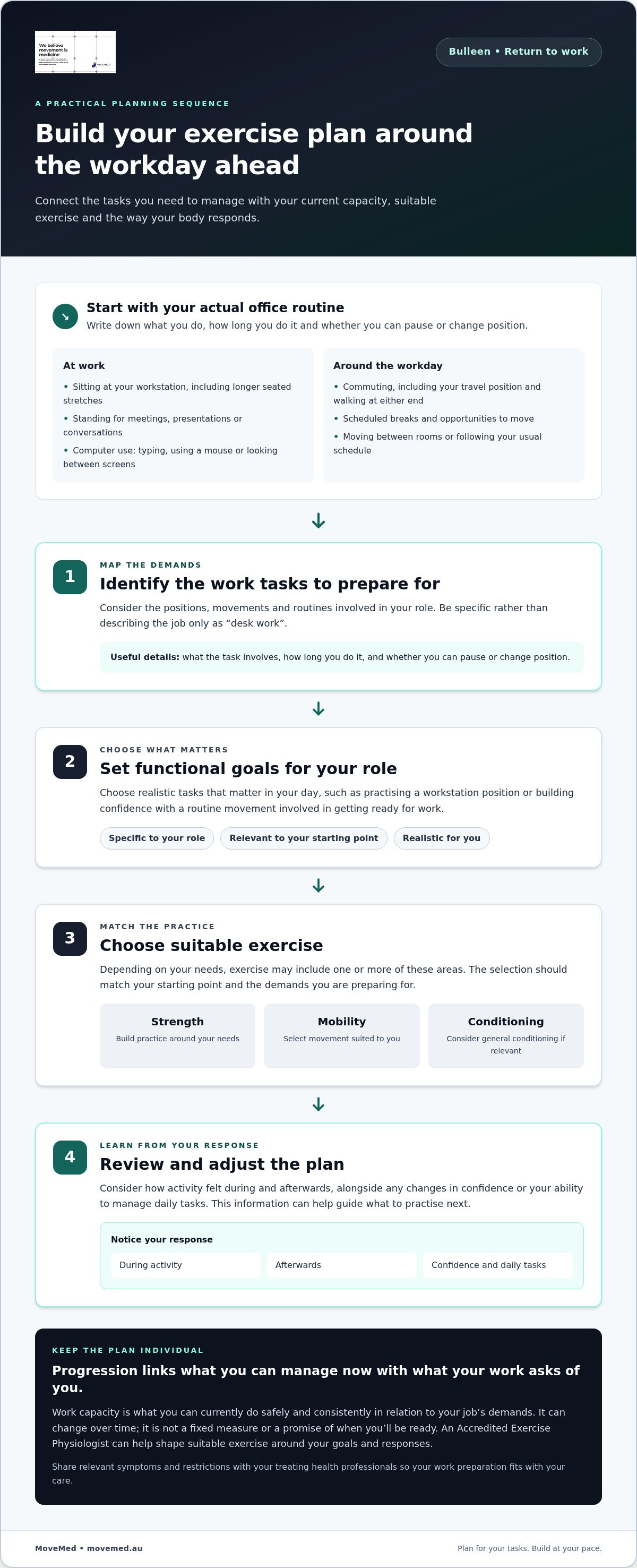
An Accredited Exercise Physiologist can shape the plan around your goals and responses. A useful planning sequence is:
- Identify the work demands. Consider the positions, movements and routines involved, such as computer use, getting up from a chair or travelling to work.
- Set functional goals. Choose tasks that matter to your role, such as managing a work-related position or completing a routine movement more comfortably.
- Choose suitable exercise. Depending on your needs, the plan may include strength, mobility or general conditioning, with exercises selected to match your starting point.
- Review your response. Consider how the activity felt during and afterwards, alongside any changes in confidence or your ability to manage daily tasks.
Exercise progression should reflect both what you can manage now and what your work asks you to do. That link keeps practice relevant, rather than adding activity without a clear purpose.
Which goals can guide your exercise progression?
Useful goals describe something meaningful in your day, rather than a target chosen only because it sounds like exercise. You might aim to practise a position used at your workstation or build confidence with a routine movement involved in getting ready for work. Keep goals specific, realistic and relevant to your role. Your starting point depends on your individual assessment, so don’t treat a general exercise schedule as a prescription.
Strength, mobility, general conditioning and confidence may all be considered, but they are not automatic components for everyone. An Accredited Exercise Physiologist can adapt exercises to your presentation and adjust the plan as your capacity changes. The aim is considered progression, not simply doing more.
How can you track your response as activity increases?
A simple personal log can help you notice how different activities affect you. Record what you did, the context, any symptoms during or afterwards, and how you felt later. For example, note whether a work-related position felt manageable and whether you returned to your usual activities afterwards. These observations are not a pass-or-fail test. They are useful details to discuss with your treating clinician.
There isn’t one symptom score or progression threshold that suits everyone. Your clinician can interpret your notes alongside your health needs and work goals, then help decide whether to maintain, adapt or progress an activity. If you’d like guidance shaped around your goals, MoveMed’s exercise physiology consultations can support planning with an Accredited Exercise Physiologist.
Return-to-work exercise plan concerns: pain, sitting and setbacks
It’s understandable to worry that exercise or a long stretch at your desk could bring pain back. Pain doesn’t automatically mean every movement is harmful, but discomfort shouldn’t be ignored or pushed through without thought. Your response depends on your circumstances, the activity and how symptoms change. The aim is to make informed adjustments with your treating clinician, not to decide whether a movement is safe based on a single sensation.
It also helps to distinguish everyday movement from rehabilitation. Changing position or taking a brief movement break during desk work may help vary your posture, but it is not the same as a clinically guided exercise plan. A plan for work participation considers your individual presentation, the tasks you’re preparing for and how activity is progressing. Exercise selection and progression should be individualised, not copied from a generic routine.
Does pain mean you should stop all exercise?
Not necessarily, but there is no single rule that says you should continue or stop every activity. Consider your symptoms in context: what you were doing, how they changed and whether they affected your usual activities. If symptoms are new, worsening or concerning, discuss them with your treating clinician rather than trying to interpret them alone. They can work with you to consider whether an exercise should be adjusted, paused or approached differently.
This is a collaborative decision. Share what you noticed, including the movement or work task involved and when symptoms appeared. Those details can help your clinician consider your response alongside your goals and current capacity. Avoid using someone else’s exercise plan or a general online routine as a guide to what you should tolerate.
What if your symptoms change during the return?
Changes don’t automatically mean you’ve failed or that your whole plan is unsuitable. Work tasks, activity levels and symptoms can shift as your routine changes. Keep a short record so you can describe what’s different and discuss whether the plan needs review. You might note:
- Which work task or activity you were doing, and whether it differed from your usual routine.
- What symptoms changed and when you noticed the change.
- How your activity level compared with recent days.
- Whether the change affected your confidence or usual activities afterwards.
This information gives you a clearer starting point for a conversation with your treating clinician than trying to remember every detail later. Together, you can consider what the change may mean and whether an exercise or work-related activity should be modified. Don’t rely on a universal pain score or threshold to decide what’s safe for you. If you’re following a return-to-work exercise plan for office worker Bulleen, regular review can help keep the exercise relevant as your symptoms, routine and work demands evolve.
Build a practical return-to-work plan around your Bulleen office routine
Preparing for work involves more than practising exercises. Your commute, daily schedule and agreed work duties all affect how your return fits into real life. Mapping these details before you go back can help you and your treating clinician connect exercise goals with the routine you’re preparing to manage.
What should you map out before your first week back?
Write down the main parts of your workday, including tasks that feel manageable now and those that may need adjustment. Be specific. For example, note whether you’ll travel by car or public transport, how you get from the stop or car park to the office, and which tasks involve extended computer use or frequent position changes.
- Work tasks: List your main duties, including computer work, meetings, standing or moving around the office.
- Postures and breaks: Note when you’ll usually sit or stand and what opportunities you have to change position or pause.
- Commute: Consider the travel involved and any walking or transitions at either end.
- Usual schedule: Record your expected start and finish times, work pattern and any agreed staged arrangements.
- Current tolerance: Note what you can manage in your daily routine and what currently brings difficulty or means you need to change activity.
This isn’t a test you need to pass before returning. It makes the demands visible so you can discuss how exercise goals relate to your actual role and agreed work arrangements. Where appropriate, discuss suitable duties or a staged return with relevant workplace contacts. Exercise planning can support preparation for work, but it doesn’t replace decisions made by your employer or treating clinician.
How can you make the plan easier to follow?
Keep your exercise goals realistic alongside work and home responsibilities. Rather than adding a demanding routine to an already full day, discuss how suitable activity can fit around your schedule and current tolerance. If you keep a brief log, use it to note changes in activity, symptoms or work tasks that may be useful to share with your treating clinician.
Your plan should reflect your needs, not a one-size-fits-all list of exercises. A particular type of exercise may be worth discussing as one part of a broader plan. For example, Clinical Reformer Pilates in Templestowe may be relevant if it aligns with your individual goals and guidance from your clinician.
If you’re preparing to return to an office in Bulleen, an Accredited Exercise Physiologist can help connect your work demands with a personalised exercise plan. Explore local exercise physiology support as a practical next step in planning your return.
How MoveMed can support your return-to-work exercise plan in Bulleen
Planning a return after time away can feel uncertain, especially if you’re unsure how your symptoms or stamina will respond to office tasks. MoveMed’s Accredited Exercise Physiologists can turn your work-related goals into a personalised, evidence-based exercise management plan. The focus is on building relevant capacity through clinically guided exercise, with progress shaped around your needs rather than a standard routine.
What can an Accredited Exercise Physiologist contribute?
Accredited Exercise Physiologists are university-qualified allied health professionals who design, deliver and evaluate safe and effective exercise interventions. For an office worker, this may involve considering how exercise could support the physical tasks in your role and help you develop confidence in managing them. Your plan is individualised: its goals and exercise choices depend on your presentation, current capacity and the demands you’re working towards.
An initial conversation can focus on what you want to achieve, which work tasks concern you and what you can currently manage in everyday life. You might discuss computer work, sitting tolerance, your commute or routines that have felt more difficult since time away. Sharing what has helped, what has been challenging and what you hope to return to gives your practitioner useful context for planning.
Exercise physiology can contribute to your rehabilitation, but it doesn’t determine your workplace duties or set a guaranteed return date. Those decisions sit with the relevant people involved in your care and workplace planning. Your exercise plan can complement that process by helping you practise and build capacity for agreed work-related goals.
What is a sensible next step for a Bulleen office worker?
Before discussing your plan, jot down the tasks you need to manage, what currently feels manageable and what you’d like help working towards. Bring up any concerns about symptoms, confidence or daily activity. This gives you a practical starting point with an Accredited Exercise Physiologist and helps connect your personal goals with a structured exercise approach.
MoveMed supports people in Bulleen and nearby suburbs, including Templestowe Lower, Templestowe, Doncaster, Doncaster East, Bulleen, Warrandyte, Lower Plenty, Balwyn North and Box Hill. MoveMed provides WorkCover-funded therapy, with funding eligibility depending on your circumstances. Discussing your goals and current challenges with MoveMed can help you explore a suitable exercise physiology approach.
You don’t need to have every detail of your return mapped out before starting the conversation. Begin with the tasks you’re concerned about and the changes you’ve noticed, then work with your practitioner to consider an appropriate plan. Talk with MoveMed about exercise physiology as a practical next step towards preparing for office work with personalised support.
Take your next step towards work with confidence
Returning to work can be an opportunity to clarify what a manageable and meaningful workday looks like for you. Consider what would help you feel more prepared, which parts of your routine matter most and what questions you’d like answered before taking the next step. You don’t need to have everything settled to start that conversation.
Your return to work exercise plan for office worker Bulleen journey is personal. Keep your priorities at the centre of the decisions ahead, and give yourself room to build confidence in a considered and sustainable way.
Ready to talk through what comes next? Talk with MoveMed about your return-to-work goals and identify a practical next step towards the working life you want to resume.
Frequently Asked Questions
Can exercise help me return to office work after an injury?
Exercise can be one part of rehabilitation after an injury, alongside the care and workplace planning relevant to your situation. It may help to discuss how everyday tasks relate to your work role, such as carrying a laptop bag, reaching for office supplies or moving between meeting rooms. These examples can make your goals more concrete. Your treating team can advise how exercise fits with your overall care.
What exercises should an office worker do before returning to work?
There’s no universal exercise list for office workers. Before starting something new, gather any exercise guidance you’ve already received and note which activities you’re unsure about. This gives an Accredited Exercise Physiologist useful context to discuss what may suit your needs. Avoid treating social media routines or a colleague’s rehabilitation exercises as a prescription for you, since they may not account for your injury or other health considerations.
How do I build up to sitting at a desk for a full workday?
Alongside clinician-guided preparation, consider practical ways to make your workstation routine easier to manage. Keep frequently used items within comfortable reach, set reminders to check your posture or change position, and plan how you’ll manage tasks that require sustained screen use. These adjustments don’t replace clinical advice, but they can help you identify which parts of the desk routine need further discussion before your workday resumes.
Should I exercise if I still have pain when I return to work?
Don’t assume you need to ignore pain to keep exercising. If you’re uncertain about an activity, note what you were doing and how symptoms changed afterwards, then raise it with your treating clinician. Include whether the change affected sleep, everyday tasks or your ability to work. This practical context can help your care team consider what support or advice is appropriate for your circumstances.
Can WorkCover fund exercise physiology in Victoria?
MoveMed provides WorkCover-funded exercise physiology therapy. Whether it is funded for your workplace injury depends on the details of your individual claim, and approval and payment aren’t guaranteed. Keep relevant claim information and correspondence together so you can refer to the same details when discussing your care.
How can I find return-to-work exercise support near Bulleen?
MoveMed provides exercise physiology consultations for people in Bulleen and nearby suburbs, including Templestowe Lower, Templestowe, Doncaster, Doncaster East, Warrandyte, Lower Plenty, Balwyn North and Box Hill. When getting in touch, have a brief description of your role, the work tasks you’re preparing for and any questions you want to raise. You can also mention whether you’re returning to your usual duties or discussing changes at work, so the conversation starts with the practical context that matters to you.


