
What if progress after a crash isn’t about pushing through pain, but finding movement that feels safe and builds confidence over time? Ongoing pain can affect sleep, mobility and everyday routines, so it’s understandable to be unsure whether exercise will help or make things worse. This guide to managing chronic pain after a car accident Box Hill residents can use explains why pain may persist and when to seek further clinical advice.
You’ll learn how a tailored plan can focus on restoring function rather than following a one-size-fits-all approach. We compare exercise physiology, hydrotherapy and Clinical Reformer Pilates, including how an Accredited Exercise Physiologist can help you discuss a suitable starting point based on your symptoms and recovery goals. You’ll also find practical questions to ask when discussing TAC-funded exercise physiology with a local provider. MoveMed serves Box Hill and nearby communities with clinically guided exercise support. The right next step depends on your circumstances, so discuss your options with your treating health professional.
Key Takeaways
- Persistent pain after a crash doesn’t always mean an injury is getting worse. Seek clinical advice to understand what may be contributing to your symptoms.
- When managing chronic pain after a car accident in Box Hill, a tailored movement plan can focus on function, confidence and recovery goals.
- Compare exercise physiology, hydrotherapy and Clinical Reformer Pilates by considering your needs, the setting and the guidance you’re seeking.
- Track your activities, symptoms and changes in everyday function so you can discuss progress and next steps with your health professional.
- Ask a local provider whether a service may suit your needs and how TAC-funded exercise physiology could apply to your circumstances.
Managing chronic pain after a car accident in Box Hill: start with the right questions
Pain that continues after your initial injuries have been assessed can be frustrating and unsettling, especially if it affects sleep, movement or daily tasks. You may wonder whether it’s part of recovery or a sign that something needs another look. Both are reasonable questions. Ongoing pain deserves attention, even when its cause isn’t immediately clear.
This guide offers general information, not a diagnosis or a substitute for advice from your doctor or another treating clinician. If you’re looking for guidance on managing chronic pain after a car accident in Box Hill, use it to prepare questions and explore options with the health professionals involved in your care. Recovery varies, so recommendations should reflect your symptoms and circumstances.
What does chronic pain after a car accident mean?
Persistent pain continues beyond the initial injury period or expected early recovery. The experience is real, but pain alone can’t confirm what is happening in your body. Physical changes, the way the nervous system processes signals, sleep, stress and other personal factors may all be relevant. These factors differ from person to person, so a clinician needs to assess your situation rather than assume a cause.
For instance, neck discomfort after a crash may be discussed as part of whiplash-associated disorders, but a general overview can’t determine your diagnosis or predict your recovery. Your symptoms, medical history and clinical assessment matter.
When should you seek further medical advice?
Arrange a review with your doctor or treating clinician if your pain changes, worsens, isn’t settling as expected or starts to limit everyday activities. Explain what has changed and how it affects tasks such as walking, driving, working or sleeping. Seek urgent medical assessment if you develop new or rapidly worsening symptoms that concern you. If you’re unsure how urgent the situation is, contact a health professional for advice.
An Accredited Exercise Physiologist can assess your movement and help plan clinically guided exercise, but doesn’t replace a doctor’s diagnostic assessment. If you’re unsure whether exercise is appropriate, check with your doctor, particularly if your symptoms have changed.
When comparing support in Box Hill, check a provider’s current appointment arrangements and service access directly. MoveMed serves Box Hill and nearby communities, and offers exercise physiology, hydrotherapy and Clinical Reformer Pilates. Contact the clinic to discuss your goals and ask which service may suit them. It may help to have relevant medical advice and a brief record of your symptoms and daily activities ready for the conversation.
Why pain can persist after a crash, and how movement may help
Pain can continue after the first injury checks are complete. That doesn’t automatically mean tissue is still being damaged, and pain intensity alone can’t identify its cause. Recovery is individual. Your symptoms, health history, sleep, stress and daily demands may all be relevant. A clinician can assess your situation and guide decisions about suitable activity.
Persistent pain continues beyond the initial injury period, but it doesn’t by itself identify the cause or show whether an injury is still present. The National Institute of Neurological Disorders and Stroke explains that chronic pain can continue beyond the time an injury takes to heal. This general information can help you frame questions, but it can’t explain your individual symptoms.
How can the nervous system influence ongoing pain?
One possible factor is pain sensitisation, when the pain-processing system becomes more sensitive and signals may feel stronger or more persistent. This isn’t a diagnosis, and it won’t explain everyone’s pain after a crash. Pain intensity alone can’t confirm sensitisation or identify an injury. A qualified clinician should consider your symptoms and history.
What role can guided exercise play in recovery?
When appropriate, carefully selected movement can help you work towards strength, mobility and everyday tasks. That might mean building up to a short walk, returning to a household activity or practising a movement that feels difficult. The aim is to improve function and confidence over time, not to push through symptoms or promise a particular result.
An Accredited Exercise Physiologist can consider your goals, current capacity and response to activity when planning exercise, then adjust the activities as your needs change. A plan might begin with manageable movements and progress gradually, with changes guided by your assessment and feedback. The right activities and pace vary from person to person. If symptoms worsen or change, discuss this with your treating clinician before continuing or progressing your plan.
If you’re managing chronic pain after a car accident in Box Hill, useful questions to discuss with your clinician include:
- Which daily activities would be realistic goals to work towards?
- How should I monitor my symptoms during and after activity?
- When should I pause, adjust an activity or seek another review?
For a clinically guided discussion about exercise physiology and your recovery goals, you can explore MoveMed’s exercise physiology service. A conversation can help you ask about suitability and possible next steps, alongside advice from your treating health professionals.
Exercise physiology, hydrotherapy or Clinical Reformer Pilates: compare your options
There isn’t one movement option that suits everyone after a crash. Your symptoms, current capacity and recovery goals can help guide the choice, alongside advice from your treating health professional. Exercise physiology, hydrotherapy and Clinical Reformer Pilates each offer a different way to approach supported movement.
| Option | Purpose and setting | Supervision | Questions to discuss |
|---|---|---|---|
| Exercise physiology | Tailored exercise to work towards goals such as strength, mobility and everyday function. Activities are selected to match your needs. | An Accredited Exercise Physiologist can consider your needs, develop a plan and adjust it as your goals or capacity change. | What goals should we start with? How will we adapt activity if symptoms change? |
| Hydrotherapy | Tailored, water-based movement that may suit some people’s goals and preferences. | MoveMed provides water-based therapy under expert supervision. Discuss whether this approach is appropriate for you. | Could exercising in water suit my symptoms? What should I know before starting? |
| Clinical Reformer Pilates | Specialist-led reformer exercises adapted to individual needs and goals. | Clinical experts select and adapt sessions to address specific physical conditions and support mobility. | Can the exercises be adapted to my symptoms? Which functional goals could they support? |
When might exercise physiology be worth discussing?
If you want a structured way to rebuild capacity after an accident, exercise physiology may be worth discussing with your care team. MoveMed’s Accredited Exercise Physiologists create personalised, evidence-based exercise plans. Activities can be reviewed and adjusted in response to your symptoms, goals and progress. This is exercise support, not a replacement for medical assessment or advice.
How do hydrotherapy and Clinical Reformer Pilates differ?
Hydrotherapy involves guided movement in water, while Clinical Reformer Pilates uses specialist-led exercises adapted to your needs. Neither is automatically the better choice. Suitability depends on your circumstances and assessment. You can read MoveMed’s hydrotherapy recovery guide to learn more. If back symptoms are part of your experience, see the guide to Clinical Pilates for back pain.
Harvard Health Publishing discusses how physical activity can play a helpful role in managing chronic pain. The type and pace of movement still need to suit you. If you’re managing chronic pain after a car accident in Box Hill, ask your treating professional which option fits your goals and whether you need further assessment before starting.
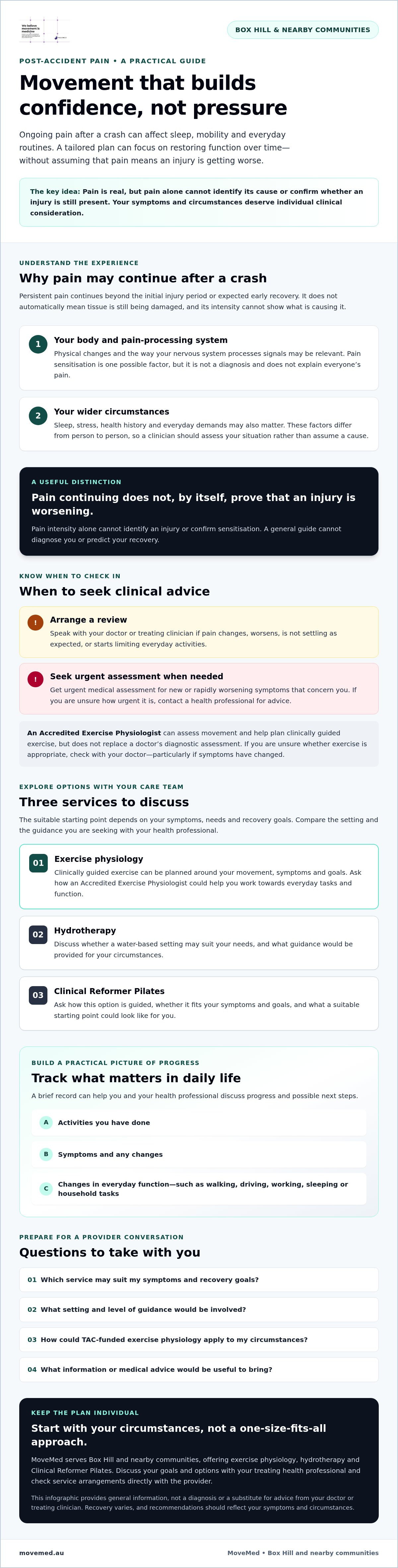
How to build a safe, practical pain-management plan after a car accident
A useful plan gives you a clear next step without expecting every day to feel the same. When managing chronic pain after a car accident in Box Hill, focus on practical goals and regular communication with your treating team. A plan can change as your symptoms, confidence and daily needs change.
Your plan should respond to your symptoms and the activities that matter to you, with progress reviewed alongside your health professional. This simple sequence can help you get started:
- Clarify your goals. Choose activities you’d like to manage more comfortably, such as walking to the shops, sleeping better or returning to a household task.
- Seek assessment. Discuss your symptoms and health history with an appropriate clinician before starting or changing exercise.
- Choose support. Explore suitable options with your treating team, including clinically guided exercise if appropriate.
- Review progress. Check whether your plan is helping with function and whether activities need adjusting.
Keep a brief record of what you do, how symptoms respond during or afterwards, and any changes in daily function. This can make progress easier to discuss than relying on memory alone. Pacing means balancing activity with rest and adjusting effort to your current capacity. It isn’t a fixed timetable. Your treating professional can help you find an approach that suits you.
What should you prepare before speaking with a provider?
Before an appointment, note the care you’ve received since the accident, your main concerns and the activities you want to regain. Bring relevant medical advice or restrictions, and write down questions about exercise, symptom response and how progress will be reviewed. For example, ask what to do if an activity increases your symptoms and how to tell whether the plan needs adjusting.
How can you discuss TAC-funded exercise physiology?
MoveMed lists TAC-funded therapy, including exercise physiology. This doesn’t confirm your individual eligibility or the current requirements for your claim, so check with the TAC and the provider. Ask who is responsible for documentation, whether any approval needs to be confirmed before services begin, and how the provider communicates with relevant parties. You can also ask what information to have ready before discussing your situation.
If you’re considering exercise physiology, contact MoveMed to discuss your recovery goals and TAC-funded exercise physiology. Ask about suitability and current arrangements, then confirm any claim-related details directly with the TAC.
Getting support for post-accident pain near Box Hill with MoveMed
Finding the right support starts with a conversation about what you’re experiencing and what you hope to do more comfortably. MoveMed serves Box Hill and nearby communities with exercise physiology, hydrotherapy and Clinical Reformer Pilates. These options can be discussed in light of your goals, symptoms and relevant clinical advice. A conversation can help you understand possible next steps, but it can’t guarantee that a particular service or funding arrangement will suit you.
What can you expect from a personalised exercise physiology plan?
An Accredited Exercise Physiologist can consider your needs, goals, current capacity and advice from your treating health professionals when planning exercise. You might want to build confidence with walking, return to a household task or manage daily routines more comfortably. These goals can shape the conversation and give you practical ways to review how the plan is working.
As your symptoms and function change, your exercise approach may need review and adjustment. MoveMed’s Accredited Exercise Physiologists develop evidence-based management plans, but the activities and pace that suit you depend on individual assessment. Exercise physiology can support your movement goals. It doesn’t replace medical care or promise that pain will go away.
How can you take the next step from Box Hill?
If you’re considering MoveMed, confirm current access for Box Hill clients and ask about appointment availability and which services may fit your goals. Explain what has been difficult since the accident, what activities you’d like to work towards and any advice or restrictions you’ve received. This gives the provider useful context for discussing suitability and possible next steps.
MoveMed lists TAC-funded therapy, but this doesn’t confirm eligibility, approval or funding for your individual circumstances. Ask the clinic what information it needs to discuss TAC-funded exercise physiology and which requirements you should verify directly with the TAC. Confirm arrangements before assuming a service will be funded.
Searching for managing chronic pain after a car accident in Box Hill can bring up many options, but you don’t have to decide on a plan alone. A conversation can help clarify what support is available and what questions to take back to your treating team. Talk with MoveMed about your options.
Take a considered next step towards recovery
Living with pain after a crash can make everyday choices feel uncertain. A useful next step is to focus on what you want to do more comfortably, then discuss suitable movement and support with your treating health professional. When managing chronic pain after a car accident in Box Hill, remember that persistent pain can have different influences, and a plan should reflect your individual symptoms and goals.
MoveMed offers exercise physiology with Accredited Exercise Physiologists, alongside hydrotherapy and Clinical Reformer Pilates. The clinic also lists TAC-funded therapy, but your eligibility and funding arrangements need to be confirmed for your circumstances. A conversation can help you ask about service suitability, current access and possible next steps.
You don’t have to work out every detail before asking for guidance. Talk with MoveMed about your recovery options and take the next step at a pace that feels appropriate for you.
Frequently Asked Questions
Can exercise help with chronic pain after a car accident?
Appropriately selected exercise can form part of a pain-management plan after a car accident. A tailored programme may help you work towards strength, mobility and everyday activities while building confidence in movement. An Accredited Exercise Physiologist can adapt the plan to your needs and progress. Exercise isn’t a guaranteed way to remove pain, and your doctor or treating professional can help assess what’s suitable for you.
Is it safe to exercise when you still have pain after a car accident?
Exercise may be appropriate with ongoing pain, but the safest approach depends on your symptoms and clinical circumstances. Ask your doctor or treating clinician for advice, especially if pain has changed, worsened or is limiting daily activities. If exercise is considered suitable, a guided plan can start at a manageable level and be adjusted according to your response. An exercise physiologist doesn’t replace a doctor’s assessment.
What type of therapy is best for chronic pain after a car accident?
There’s no single therapy that’s best for everyone. Exercise physiology offers tailored exercise support, hydrotherapy involves guided movement in water, and Clinical Reformer Pilates uses specialist-led exercises adapted to individual needs. Your symptoms, goals, medical advice and preferences can help determine what may suit you. Discuss the options with your treating professional, and ask a provider how activities are selected and adjusted for your circumstances.
Can I use TAC funding for exercise physiology after a car accident?
MoveMed lists TAC-funded therapy, including exercise physiology, but that doesn’t confirm whether your individual treatment will be funded. Check current eligibility and requirements directly with the TAC and the provider before making arrangements. Ask what information or documentation may be needed, who will communicate with relevant parties, and whether any approval needs to be confirmed. Funding and service suitability depend on your circumstances, so don’t assume they’re guaranteed.
How do I find chronic pain support near Box Hill?
Start by discussing your needs with your doctor or treating clinician, then contact local providers to ask about services, suitability and appointment availability. If you’re managing chronic pain after a car accident in Box Hill, MoveMed serves Box Hill and nearby communities including Templestowe Lower, Templestowe, Doncaster, Doncaster East, Bulleen, Warrandyte, Lower Plenty, Balwyn North and Box Hill. MoveMed offers exercise physiology, hydrotherapy and Clinical Reformer Pilates. Confirm current access arrangements and explain your goals before deciding whether a service may fit.
How long does it take to manage chronic pain after a car accident?
There’s no standard timeframe for managing persistent pain after a crash. Your experience may depend on your symptoms, health circumstances, goals and how your plan is working for you. Rather than measuring progress only by pain levels, discuss practical changes such as moving more comfortably or returning to an everyday activity. Regular reviews with your treating team can help identify when an approach may need to be adjusted.


