

TL;DR: Clinical hydrotherapy in Doncaster provides clinician-led rehabilitation in 34°C to 36°C water, reducing joint stress by 90% for injury recovery and pain management.
- Private patients can self-book without a GP referral unless claiming through WorkSafe or NDIS.
- Expect a 6 to 8 week commitment with two 30-minute sessions per week for results.
- Choose clinical hydrotherapy over standard swimming for supervised rehab in water 6°C warmer than leisure pools.
- Avoid aquatic treatment during active infections, severe heart issues, or while managing open wounds. Warm water therapy (hydrotherapy) in a dedicated pool in Doncaster (clinical hydrotherapy pool) utilizes environments maintained at 34°C to 36°C to decrease joint stress by up to 90%. Tailored aquatic programs help accelerate injury rehabilitation, alleviate chronic pain, and restore mobility without heavy impact. Certified physiotherapists guide these individual sessions to ensure safe, effective movement.
Hydrotherapy in Doncaster Eases Chronic Joint Pain, Sports Injuries and Limited Mobility
Three situations show up often in clinic. Chronic joint pain: use buoyancy-led sessions so load on painful joints falls (joint stress can drop by up to 90% in water held at 34°C to 36°C). Sports injury rehab: book guided aquatic work twice weekly so strength returns without heavy impact. Limited mobility after surgery or long stiffness: start with supported entries (steps or hoist) and short, supervised blocks so range of motion rebuilds safely.
People with chronic joint pain, sports injuries, or mobility limitations gain clear value from targeted water exercise. Buoyancy takes weight off painful joints while gentle resistance builds strength, and the water acts as a cushion that protects the body during movement. Our team pairs those movements with personalised care so recovery stays on track. You can review how tailored programs run at Exercise Physiology & Hydrotherapy | MoveMed Templestowe.
Conditions such as arthritis, post-injury stiffness and post-operative weakness respond well when an experienced clinician leads the session in a dedicated heated pool, so each visit stays at a comfortable therapeutic temperature.
You Can Start Hydrotherapy in Doncaster Without a GP Referral
You do not need a GP referral to start warm water therapy as a private patient in Doncaster. Direct self-booking lets you access a clinical hydrotherapy pool straight away. A medical note becomes necessary if you claim compensable care. According to WorkSafe Victoria's 2026 guidelines, formal medical approval ensures structured funding for workplace injury recovery.
Self-referral suits private clients who want faster pain relief; GP pathways suit third-party claims. During your initial assessment, qualified clinicians evaluate your movement goals and set safe limits. You can schedule your first entry through the MoveMed, MoveMed intake portal.
Tip: Check with your private health insurer prior to your first session, as many clinical aquatic programs qualify for immediate rebates under extras cover.
Doncaster Hydrotherapy Pricing Aligns with Extras Cover, NDIS and WorkSafe
Private health insurance extras often cover warm water therapy when a registered practitioner manages the sessions.
Claiming under specific item codes needs an initial individual assessment first. Private health funds classify these services differently depending on whether an exercise physiologist or a physiotherapist leads the session. You can compare care pathways on Exercise Physiology & Hydrotherapy | MoveMed Templestowe and set a realistic budget. Group classes usually lower out-of-pocket cost while still giving guided movement in a clinical pool.
| Service Type | Funding Options | Provider Requirement |
|---|---|---|
| Initial Assessment | Private Health Extras, Medicare (CDM) | Qualified Practitioner |
| Individual Session | Extras Cover, NDIS, WorkSafe | Accredited Professional |
| Group Session | Health Fund Rebates, Out-of-Pocket | Certified Instructor |
Your rebate depends on your cover level, so ask your fund for exact figures. Clear funding choices help keep treatment sustainable over the full rehab block.
Among MoveMed's Google reviews, Julie (5★) wrote:
"Arthur and the team really made a positive impact on my husband’s wellness. Very professional and knowledgeable in the type of care that was needed. We would highly recommend them."
Transparent fees plus clinician-led care support steadier long-term outcomes.
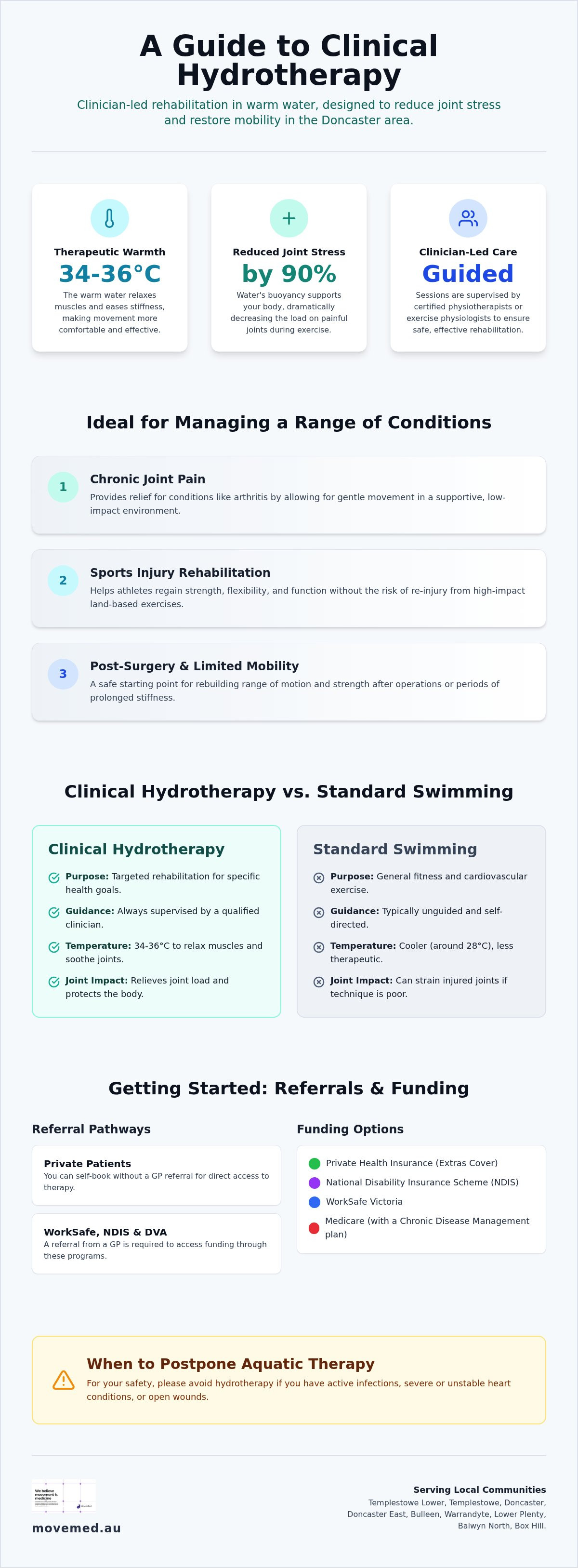
Guided Warm-Water Hydrotherapy Protects Joints in Ways Lap Swimming Does Not
Hydrotherapy uses targeted exercises in heated water under professional guidance; standard swimming focuses on unguided cardio laps in cooler pools.
When technique slips, swimming can strain injured joints. Aquatic treatment in a controlled setting relieves joint load and lowers the chance of further irritation. Standard swimming suits general fitness for healthy people; clinical pool care suits people managing pain or recovering from injury. Therapeutic water stays around 34°C to relax muscles, unlike regular lap pools that feel cold.
Each drill has a defined rehab purpose. Read how plans are built on Services | Exercise Physiology & Hydrotherapy, Templestowe. A dedicated practitioner adjusts movements session by session so load stays appropriate. Think of hydrotherapy as physical therapy that uses water resistance, while swimming remains an unguided full-body workout; structured rehab is where the heated, supervised format fits.
Clinical Hydrotherapy Water Runs Warmer and Under Stricter Hygiene Than Leisure Pools
Yes: a clinical pool runs at a higher therapeutic temperature and follows precise chemical controls built for rehabilitation.
Patients often settle faster once buoyancy fully supports aching joints. Therapeutic water balance also depends on strict hygiene protocols. According to the World Health Organization 2006 guidelines, specialized aquatic facilities must maintain stringent water quality standards to protect vulnerable individuals.
A standard leisure facility operates much cooler than a dedicated hydrotherapy space. You also receive expert supervision from clinicians who lead the session, something a community leisure pool cannot match for medical oversight. For severe mobility limits, that controlled setting is what makes the work both tolerable and productive.
Five Steps Take You from Assessment to Steady Aquatic Rehabilitation
Noticeable progress often follows guided sessions twice weekly for six to eight weeks. Booking continuous weekly slots helps recovery stay steady; many people work with two 30-minute appointments each week.
- Initial Assessment: You discuss your health goals and physical limitations with a physiotherapist.
- Customized Planning: Your therapist designs targeted movements inside a warm-water setting.
- First Entry: You enter the clinical pool using gentle steps or a hoist.
- Active Treatment: The treating practitioner guides you through supported exercises.
- Progress Review: Your team reviews response to the program and adjusts future movements.
Gentle buoyancy unloads sore joints so motion stays tolerable. Structured coaching keeps each step clear from first entry through progress checks. Ask the clinic to hold a recurring weekly slot once your plan is set.
Pause Clinical Water Therapy During Infection, Severe Heart Issues or Open Wounds
Certain health conditions make aquatic treatment unsuitable. High therapeutic water temperature can stress the body during active infections, severe heart issues, or open skin wounds.
Pushing through known contraindications can slow overall healing, so screening comes before pool entry. Land-based rehabilitation fits people with unmanaged medical issues until those issues settle. Confirm safety with your clinician before you book water sessions; if aquatic care is deferred, a land program can still maintain momentum.
Local Hydrotherapy Near Doncaster East Keeps After-Care Travel Short
When chronic joint pain flares on daily walks, warm-water therapy near Doncaster East can reduce that load without a long trip. A short journey to a clinical pool often improves attendance, and less time in the car afterward means less stiffness on the way home.
At the clinic, who leads the session matters as much as the map pin: the team explains the purpose of each drill while holding water in the therapeutic range. Plans can address arthritis, sports injuries and post-surgery recovery with the same supervised format. Contact the Doncaster team to outline your rehab goals and reserve an assessment time.
Frequently Asked Questions
What is hydrotherapy?
Warm water therapy uses the buoyancy of water to relieve pressure on your joints during gentle exercise. Floating in a specialized clinical pool allows you to move with far less pain, and targeted treatments support recovery under clinician guidance.
What conditions can it treat?
Warm water therapy addresses arthritis, sports injuries, and back pain, among other physical problems. The water supports your weight so movement becomes easier and rehab drills stay achievable.
How warm is the water?
The water temperature is usually kept between 33°C and 36°C. That heat helps sore muscles settle so you can complete the planned exercises.
Who runs the sessions?
A qualified clinician leads each appointment, guides your movements, and monitors individual progress so comfort and safety stay in view throughout.
Where can I attend sessions?
You can access these services at a designated local clinical pool in Doncaster. Facilities offer accessible changing areas and ramp access for easier entry and exit.
Reclaim Your Movement in 2026
Warm water therapy helps you cut pain and rebuild confidence in the same controlled way the opening outline described: heated water, sharply reduced joint load, and clinician-led drills without heavy impact.
Clinician-led care is matched to your recovery goals, with physiotherapists guiding each aquatic session in a warm clinical pool in Doncaster. Contact our Doncaster team today to request a quote and schedule your initial assessment.


